
 888-825-8800




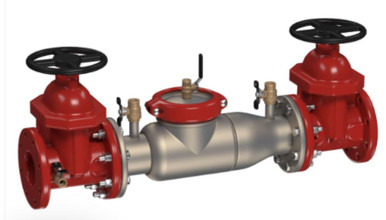
Backflow Prevention Devices
Posted by Gilbert Welsford, Jr on Feb 10th 2026
According to the American Backflow Prevention Association, 24 gallons of asphalt emulsifier, intended for dilution in 8,000 gallons of water, were pumped back into the city water main in 2016 in Corpus Christi, Texas. The emulsifier, which can burn skin and cause respiratory problems, entered the potable water system because no backflow preventer was in place. And that is just one example of why backflow preventers are a crucial component in water systems.
In this blog post, we discuss what backflow prevention devices are, why they are important, how they work, and how to choose the right one for your application.
Backflow
Backflow is the unintended reversal of fluid flow due to a change in pressure. It can occur wherever a cross connection links a potable water system to a non-potable water system, such as a fire hydrant or sprinkler system connected to the clean water supply.
A good example is a home sprinkler system that connects to the home's main water supply. Many homeowners use pesticides and fertilizers in their yards, and it isn’t uncommon for water to pool around the sprinkler heads. If there’s a loss of pressure in the system, that contaminated water can be sucked back into the water supply for the home, meaning that the same water can end up flowing through your kitchen faucet.
What is a Backflow Prevention Device?
A backflow prevention device prevents non-potable water from flowing back into potable water systems. Backflow takes two different forms: backsiphonage and backpressure.
Backsiphonage occurs when there is a negative or sub-atmospheric pressure on the supply side, and it works much like sipping from a straw. You create a partial vacuum in your mouth to sip from a straw, and a loss of pressure on the supply side of a water system creates a vacuum that pulls water back into the main water supply. This loss of pressure can be due to issues like a break in the water main or the use of a fire hydrant. As a result, water can be sucked out of irrigation lines or swimming pools and into the potable water main.
Backpressure occurs when the downstream pressure becomes higher than the supply pressure. Instead of being sucked back into the potable water system, the non-potable water is pushed back into it. Examples of what can cause this include a booster pump for sprinklers, a high-elevation water tank, or a boiler that can generate more pressure than the city main.
Why is Backflow a Problem?
Backflow can be extremely dangerous. For example, in 2010, an elementary school in Bowling Green, Kentucky, had students drink glycol after a repair contractor accidentally triggered backflow while working on the school’s HVAC system.
In Lenexa, Kansas, two dozen people became ill in 2009 at the Mi Ranchito restaurant, and this wasn’t the first time diners had become ill. The cause? The soda machine had backflow issues that caused carbonated water to come into contact with copper lines, exposing diners to copper poisoning.
Another example comes from Commerce City, Colorado, where a family was struggling with a fishy smell in their water. After hiring Aquakleen to install a water softener, the family discovered their drinking water had been cross-connected to a sewer line. The family was awarded nearly $1 million in damages after a jury found the company negligent and in violation of consumer protection laws.
Types of Backflow Prevention Devices
There are several different types of backflow prevention devices, and we’re going to discuss the most common ones.
Atmospheric Vacuum Breaker (AVB)
Atmospheric Vacuum Breakers (AVBs) are well-suited for low-hazard applications. These devices combine a simple spring-and-float design for the valve. The pressure of the incoming water provides enough force to lift the float against the force of the spring. When the system loses pressure, the float falls and seals off the valve. This is the simplest backflow prevention device, and it works well for single sprinkler zones or hose bibs. Note that they must be placed at least 6” higher than the highest outlet.
Pressure Vacuum Breaker (PVB)
Next, we have the Pressure Vacuum Breaker (PVB), which is more robust and works well for low to medium-risk applications (e.g., irrigation system or sprinkler system). PVBs combine the mechanical properties of a spring, check valves, and a critical vacuum. Under normal conditions, the pressure of incoming water pushes the spring-loaded check valve open and simultaneously forces an air vent (the poppet) shut, allowing water to flow safely.
When there is a pressure drop, the spring-loaded check valve closes, and the poppet opens to allow atmospheric pressure to break the vacuum that caused the pressure drop. These work really well for standard residential irrigation systems. However, they must be placed 12” higher than the highest outlet to work properly.
Double Check Valve Assembly (DCVA)
A Double Check Valve Assembly (DCVA) is more complex than the other backflow prevention devices we’ve discussed so far. They're a better choice for certain high-risk applications like fire sprinkler systems or indoor systems with no chemicals.
The DCVA has two independent, spring-loaded check valves within a single body. During normal water flow, the pressure of the water forces both check valves open. If the pressure downstream becomes higher than the supply pressure, or if the supply pressure drops, the springs snap the check valves closed. Because this assembly has two check valves, if one check valve gets stuck open, perhaps by debris or a mineral deposit, the second valve is a backup to ensure that contaminated water goes no further.
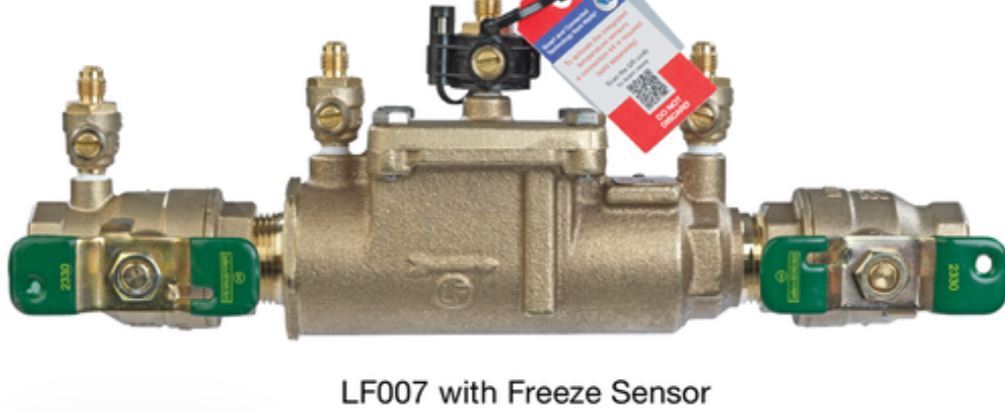
Below you can see a Watts LF007 Series double check valve assembly that includes a freezer sensor and a modular, compact design.
Reduced Pressure Zone Assembly (RPZA)
A Reduced Pressure Zone Assembly (RPZA) is more advanced than some of the other listed options and is recommended for use when the hazard level is high (toxic). These assemblies are among the most comprehensive backflow prevention systems on the market. In applications where it's vital to prevent contaminated water from entering your main water supply line, the RPZA system is ideal. They are commonly used with car washes, hospitals, or systems with fertilizer.
Basically, incoming water pushes the first check valve open. It has a stiff spring, so lifting against the spring reduces the pressure by about 5 to 10 psi as the water flows through it. This causes the zone between the two check valves to be at a reduced pressure, hence the term reduced-pressure zone.
The relief valve remains closed as long as the supply pressure is higher than the zone pressure. If the check valve fails, if there’s a drop in supply pressure, or if the pressure downstream spikes, the zone pressure is going to go up. Once the difference between the zoned pressure and the supply pressure drops below a threshold of around 2 psi, the relief valve opens, and the water is dumped out of the zone and onto the ground. These valves must be placed above ground and must have a floor drain.
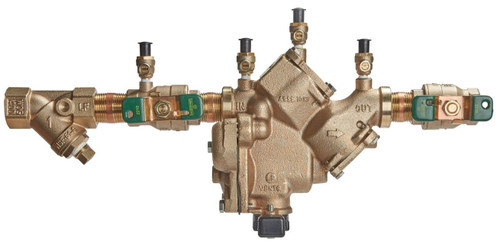
An example of an RPZA is shown below. This is a Watts LF909 Series RPZA that includes a flood sensor with SentryPlus Alert technology that will detect excessive water discharges from the relief valve, alerting users when backflow occurs.
Choosing the Right Backflow Preventer
Here’s a table to make it easier to choose the right kind of backflow preventer for your needs.
| If your project is... | And your layout is... | Use this device: | The "Catch" |
|---|---|---|---|
| Small & Simple | A single garden zone or hose. | AVB | You need one for every valve. |
| Standard Lawn | Mostly flat (no high hills). | PVB | Must be the highest point of the system. |
| Hilly / Sloped | Sprinklers are higher than the pipe. | DCVA | Usually needs a professional to test. |
| Indoor / Hidden | Inside a basement or in a pit. | DCVA | Cannot be used with chemicals/toxins. |
| High Risk | Using fertilizers, pools, or labs. | RPZ | Will dump water on the floor if it fails. |
And here’s a simple comparison of the different kinds of backflow preventers we’ve discussed:
| Device | Typical Cost | Ease of Install | Can it be Indoors? |
|---|---|---|---|
| AVB | $ | Very Easy | No |
| PVB | $$ | Easy | No |
| DCVA | $$$ | Moderate | Yes |
| RPZ | $$$$ | Hard (Needs Drain) | Yes (with drain) |
Conclusion
Backflow prevention devices are critical to prevent backsiphonage and backpressure into the potable water supply. Having a solid knowledge of what these devices are and how they work can help you select the right solution for your application.
ValveMan has over 65 years of experience in valves and has a carefully curated inventory of high-quality backflow valves from major manufacturers. If you’re in the market for backflow prevention devices, contact the Valveman experts today!

Gilbert Welsford, a renowned valve industry expert and third-generation owner of FS Welsford Company, is the visionary behind ValveMan.com, a leading platform for valve-related products. Gilbert's profound understanding of fluid dynamics and precision engineering plays a pivotal role in designing and applying various valve types. Known for his collaborative approach and outstanding communication skills, he builds strong relationships across multiple sectors and consistently ensures successful project outcomes. Committed to innovation and excellence, Gilbert remains at the forefront of industry advancements, consistently delivering solutions that exceed expectations.