
 888-825-8800





Data Cooling Centers and Sanitary Valves
Posted by Gilbert Welsford, Jr on Dec 20th 2025
Overheated data centers pose a massive challenge, and the global data center cooling market is growing rapidly, with experts predicting growth from USD 11.8 billion in 2025 to USD 24.2 billion in 2032. That rapid growth has driven advanced research into liquid cooling, which is expected to be the primary cooling method in data centers by 2030.
Data Center Cooling Systems: Liquid Cooling Leads
Traditional cooling methods just can’t keep up. High-performance computing systems are now generating so much heat that conventional HVAC systems that blow chilled air into the server room are inefficient and insufficient.
Their performance issues are where closed-loop liquid cooling and direct-to-chip cooling come in. The closed-loop cooling approach to cooling can handle the increasing heat demands of modern data centers, and it comes with a host of benefits. In liquid cooling, the non-conductive coolant is contained in a sealed system that circulates it through a closed network of pipes and lines to provide direct cooling to equipment. This approach creates a dedicated microclimate for the data center hardware, significantly reducing power consumption. Direct-to-chip cooling is a type of liquid cooling and involves circulating the coolant directly over cold plates are attached to heat-generating chips like CPUs and GPUs.
In addition, closed-loop cooling systems are moving away from traditional steel Schedule 40 piping, which is challenging to work with because it is harder to install, has severely limited bend dimensions, and requires many connections. Instead, engineers are moving to sanitary tubing. Sanitary tubing greatly simplifies the routing of cooling lines in dense server rack environments because it is thin-walled and highly flexible, and supports simple, modular layouts. However, sanitary tubing requires sanitary valves.
Sanitary Valves
Sanitary valves, also known as hygienic valves, are engineered to minimize the potential for microbial growth. For a valve to be considered appropriate for sanitary operation, it must meet several requirements. For example, these valves eliminate all internal gaps and pockets where fluid can get trapped and stagnate. All materials are corrosion-resistant (e.g., stainless steel), and the seals must be FDA-approved polymers (e.g., PTFE) or elastomers (e.g., EDPM). Sanitary valves also have standards they must comply with, including the 3-A Sanitary Standards (3-A SSI) and approval from the FDA and USDA. Some valves may also be USP Class VI if they’ve been designed for medical and pharmaceutical applications.
Sanitary valves have highly polished surfaces to prevent bacteria from adhering and make them easier to keep clean. These valves are compatible with cleaning methods such as CIP (Clean-In-Place) or SIP (Sterilize-In-Place), and are self-draining, so no liquids are left behind after cleaning. In addition,anitary valves use hygienic quick-disconnect, crevice-free connections (such as Tri-Clamp).
Sanitary Valve Solutions for Closed-Loop Cooling Systems
Liquid cooling systems for data centers require supply and return lines, heat exchangers, distribution manifolds, and control valves. This, in turn, requires solutions for activating emergency shut-off sequences, controlling flow direction, switching between active and standby loops, and isolating for maintenance and reconfiguration. ValveMan has a wide range of such sanitary valve products. Here are just a few of them.
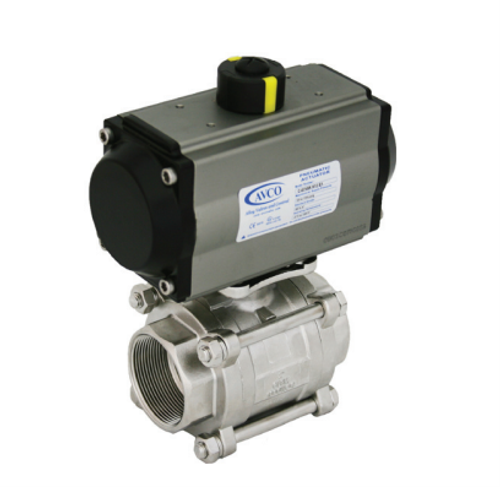
The AVCO 500 Series of pneumatic-actuated sanitary ball valves, for example, is made from 316 SS and features a cavity-filled TFM seat. These valves are used extensively with thermal fluids and feature an anti-static device, an ISO direct-mounting pad, a spring-return pneumatic actuator, and a built-in coupler.
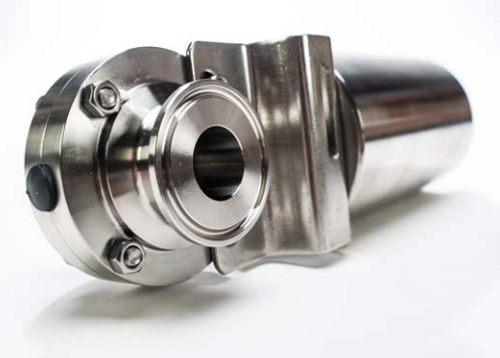
The Sanitary Solutions SSABFV is an air-actuated clamp butterfly valve with a 316L stainless steel body and either a silicone or EPDM seat. With its compact design, this sanitary butterfly valve is an excellent option for closed-loop cooling system design.
The Sanitary Solutions SS11MPR3WAY three-way rubber plug valve is made from 316 Stainless Steel, polished to 32 Ra or better, with nitrile rubber seals. This sanitary plug valve is designed for low-pressure applications up to 25 psig and temperatures up to 95°F.

Conclusion
With the rising popularity of closed-loop cooling systems for data centers, the need for sanitary valve solutions is growing. If you’re in the market for sanitary valves, then ValveMan would like to be your source. Contact us today!

Gilbert Welsford, a renowned valve industry expert and third-generation owner of FS Welsford Company, is the visionary behind ValveMan.com, a leading platform for valve-related products. Gilbert's profound understanding of fluid dynamics and precision engineering plays a pivotal role in designing and applying various valve types. Known for his collaborative approach and outstanding communication skills, he builds strong relationships across multiple sectors and consistently ensures successful project outcomes. Committed to innovation and excellence, Gilbert remains at the forefront of industry advancements, consistently delivering solutions that exceed expectations.