
 888-825-8800





Explosion Proof Ultrasonic Level Transmitter
Explosion Proof Ultrasonic Level Transmitter
Shop Explosion Proof Ultrasonic Level Transmitter Shop Now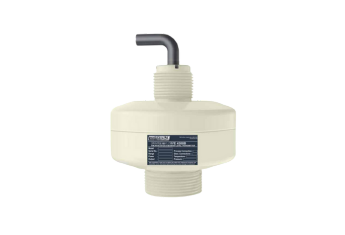
Radar Level Transmitter
Radar Level Transmitters
Shop Radar Level Transmitters Shop Now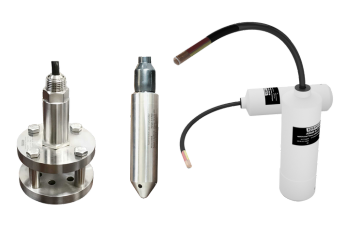
Submersible Level Transmitter
Submersible Level Transmitters
Shop Submersible Level Transmitters Shop NowSubmersible Level Solutions
Contact level measurement solutions include submersible level sensors. These level sensors are lowered to the bottom of the body of liquid and measure the hydrostatic pressure, representing the weight of the fluid, to calculate depth.
Submersible solutions are ideal for streams, groundwater wells, and lakes where continuous data is necessary. And they may be the only viable option for deep groundwater wells or boreholes. Submersible levels are unaffected by foam or vapor on the surface. While these sensors are accurate and reliable, they need to be calibrated regularly because of their tendency to drift over time. In addition, because they sit in liquid, sludge or algae can clog the sensor diaphragm.
Ultrasonic Level Solutions
Ultrasonic level measurement tools emit a sound pulse that bounces off the liquid's surface. The time it takes for the sound's echo to return from the liquid’s surface is converted into distance. This option works extremely well in water storage, wastewater treatment plants, and chemical tanks.
This approach is low maintenance because of its non-contact nature and happens to be very easy to install (i.e., it screws into the top of a tank). Ultrasonic level measurement does have some problems when foam is present, which absorbs sound and may never return it. Another potential issue would be vapors and steam, which lead to a change in air density that can slow down the sound waves and lead to inaccurate measurements. Finally, ultrasonic level measurement tools have a dead zone in front of the sensor face where they cannot read levels.
Radar Level Solutions
Radar level measurement tools work on a principle very similar to ultrasonic: microwave radio signals are bounced off the surface of the water, and the time it takes for the signal to return is converted into distance. Using radio signals that travel close to the speed of light, this approach is impervious to most environmental factors.
These liquid level tools work very well with industrial tanks, including those with foam, dust, extreme temperatures, and vapor, and they happen to be low maintenance. They can also “see” through vapor, steam, and even foam. Radar levels are often used in chemical processing, wastewater treatment plants, and food & beverage production. Radar level measurement is generally more expensive than its ultrasonic counterparts and requires more advanced installation.
Which Should I Choose?
If you have a closed tank with condensation, foam, high temperatures, or chemicals, your best bet is probably going to be radar. On the other hand, if you have a simple water tank or open channel and you’re looking for a balance of performance and price, consider ultrasound. Finally, if you’re measuring a deep well, river, or lake where mounting a sensor overhead is going to be a problem, or when the depth is greater than about 50 ft, consider a submersible solution.
ValveMan is your one-stop-shop for all your level measurement needs. Our team of experts can help you configure the level measurement solution you need – and if you don't see what you're looking for, just ask us, and we’ll source and order it. ValveMan is waiting to hear from you!