


How a Vietnam Vet Built a Valve Empire | Rick Wentzell on Legacy, Innovation & Resilience
In This Episode
For the inaugural episode of the Fully Open Podcast, host Gilbert Welsford Jr. — third-generation valve entrepreneur and founder of ValveMan.com — sits down with Rick Wentzell, co-founder of Bonomi North America, who was quite literally on the ground floor of the ball valve business in America.
Wentzell's story starts as a platoon sergeant with the 101st Airborne in Vietnam and runs through Watts Regulator — which grew from $16 million to $1 billion during his years there — to the Saturday-morning phone call from Aldo Bonomi that launched Bonomi North America in 2003. This interview took place during his 54th year in the industry, and he is still training salespeople and engineers on how valves actually work.
If you run a plant or an industrial distribution business, this conversation is part oral history of the quarter-turn valve, part masterclass in selling through education.
Key Takeaways
- Automation has gone small. In the late 1970s, the average automated ball valve was three inches; today it is under three-quarters of an inch, driven by labor costs and computer-run plants.
- Full port has become the de facto industry standard. Manufacturers realized a full-port ball costs little more to make but is far more valuable, retiring the old "standard port" (reduced port) compromise.
- Low-torque engineering unlocked compact automation. Truly round balls, touch-type seats backed by O-rings, and mirror-finish stems dropped torque enough to mount small actuators directly on an ISO square stem.
- Buying the valve and actuator from one manufacturer ends finger-pointing. When Wentzell bought outside actuators at Watts and Apollo, every failure became a blame game; Bonomi builds both, so "the buck stops here."
- Know your competitor's product as well as your own. Wentzell could identify whose valve was on the pipe in a chemical plant from 50 feet away.
- Education is marketing. Wentzell learned to keep a room of apprentice plumbers awake by varying his pitch and asking questions — a method he still trains with today.
- Let the job come to you. His advice to his 25-year-old self: have patience, ask customers about their lives before talking product, and listen.
Fired on a Friday, a New Company by Saturday Morning
Wentzell had built two successful divisions at Conbraco (the maker of Apollo valves) when ownership troubles handed the company to the banks — and senior management was shown the door.
"That was on a Friday afternoon. On a Saturday morning, I'm sitting in my living room in my underwear feeling sorry for myself, and I get a call from Aldo Bonomi."
Wentzell had met Bonomi while sourcing a private-label ball valve in Italy — the Apollo 64 Series, a huge success. When he hesitated at selling brass ball valves for the rest of his life, Bonomi answered, in his broken English, "I own other companies" — a carbon steel and stainless steel facility, an actuator company, and a brass company. They opened Bonomi North America in Rock Hill, South Carolina, in 2003. Today the group spans 12 companies in Italy, and Aldo Bonomi is preparing to manufacture in the United States.
The Ground-Floor History of the Ball Valve in America
Wentzell watched the American ball valve grow up. Jamesbury built the first high-pressure designs for the submarine industry after World War II and was the first to seat a valve with Teflon — a DuPont material developed in 1938 and used on the Manhattan Project. Apollo adapted the idea in bronze with a bigger bore for the commercial market, and Worcester Controls invented the three-piece maintenance-style valve. In those days, there was no such thing as full port, and automating a valve meant brackets and oversized actuators.
"The other thing that's changed is automation. When I was early in my game, in the late '70s, the average automated ball valve in the industry was three inches. Today it's less than three-quarters."
Bonomi's Italian engineers attacked the torque problem directly — machining the ball round, using touch-type seats backed by O-rings, and cutting mirror-finish stems on a lathe — and helped bring the ISO 5211 direct-mount standard to the United States. Because Bonomi builds the actuator and the ball valve as a married package, the stem fit is tight enough to eliminate slop, and accountability is never split between vendors.
"If we do have a problem — which we don't, but if we did — we have answers right away, because we manufacture actuators and direct mount ball valves, both pneumatic and electric, and very few people in the world can say that."
Sell Through Education, Not Promotion
Wentzell's marketing philosophy was forged in a Boston trade school auditorium, where the young "kid" from Watts looked up ten minutes into a relief valve presentation to find 30 or 40 apprentice plumbers asleep. He learned to vary his pitch and turn lectures into question-and-answer sessions. The second lesson stuck even harder.
"To sell your own product, I do believe you have to know your competitor's product in and out, as well as you know your own."
For Wentzell, marketing is the light bulb — the idea — and sales is pulling the chain: execution. His trainings at Bonomi, which the entire ValveMan team has been through, still run on codes, standards, and good-natured humor.
Let the Job Come to You
Asked what he would tell his 25-year-old self starting out at Watts Regulator, Wentzell didn't hesitate: let the job come to you.
"If I had to do it all over again, I would have had more patience. I would talk to the person I'm trying to sell to and ask them questions — ask them about their lives, not mine, not my product."
Gilbert closes with a story that proves the point: his father, at 19, watching grandfather Fred Welsford spend 55 minutes at a DuPont plant talking about everything except valves — and calling it the worst sales call ever. Fred's reply: "Son, that's the best call that you'll ever have." People buy from people.
About Rick Wentzell
Rick Wentzell is the co-founder of Bonomi North America and a 54-year veteran of the valve industry. After serving as a platoon sergeant with the 101st Airborne in Vietnam, he joined Watts Regulator as a territory salesman, became its ball valve product manager, and built an industrial division from nothing to $50 million in seven years. He later led commercial products at Conbraco (Apollo) before founding Bonomi North America with Aldo Bonomi in Rock Hill, South Carolina, in 2003.
Watch the full conversation above, subscribe on YouTube so you never miss an episode, and browse every conversation at the Fully Open Podcast hub.
Read the Full Transcript
Transcript is auto-generated from the episode audio and lightly edited for readability. Tap a timestamp to jump the video to that moment.
In those days, the late '60s, the fear was being drafted into the army. Spent a year over there as a platoon sergeant in the 101st Airborne. When I came home, I didn't know what I wanted to do, and spent six months just finding myself, as they said in those days. It was Christmas Eve. I had to go fix a circulator pump in a very nasty area, and when I fixed it and came out of the basement at midnight, I was robbed on the spot. On Christmas Eve. Yes. That was on a Friday afternoon. On a Saturday morning, I'm sitting in my living room in my underwear feeling sorry for myself, and I got a call from Aldo Bonomi. Welcome to the show. I'm Gil Welsford, third-generation valve entrepreneur and founder of ValveMan.com. Join me as I hear stories, learn wisdom, and get industry insights. This is more
than valves. It's business, legacy, and resilience. Let's get into it. Hey guys, how are you? My name is Gil Welsford, and we are here at the Fully Open Podcast. This is our inaugural recording with Rick Wentzell from Bonomi North America. Rick is a great guy. Every single time I get together with Rick — and I mean this in the best way, Rick — I always just laugh when I'm with you. You always have great stories and a lot of great stuff to talk about. So, a ton of valve experience and just life experience. I'm excited to chat with you today, Rick. Thank you so much for being on the podcast. I'm looking forward to it. Thanks for
inviting me. So Rick, where I'd love to start out is maybe you can just give us a little bit of a background of what your experience in the valve industry has been, where you started, and how you got to where you are today. Let's start by graduating from college, a small college up in Vermont called St. Michael's. I graduated — this is in 1969 — and in those days, the late '60s, the fear was being drafted into the army, and I was. I was one of the last draftees of the Vietnam War, and I spent a year over there as a platoon sergeant in the 101st Airborne, up at the DMZ. When I came home, I didn't know what I
wanted to do, and I kind of spent six months just finding myself, as they said in those days. Okay, I want to find myself. And that fall, my mother got on my case and said, "You're getting lazy, Rick. You've got to go look for a job." Stop finding yourself. Stop finding yourself. So I stopped finding myself. My dad died when I was younger, but I remember he was in the plumbing and heating business — he sold plumbing and heating supplies — and one of his contacts told me to go talk to a company called Watts Regulator, which I did. I interviewed with them, and they gave me a job, and I was a little salesman with a territory outside of Boston — part of Boston and outside. And that's where I started the business
in the plumbing sector. I'll never forget my first — it was December, and my first job was to pick up... they had a national sales meeting, and I was the bus driver. Since they gave me a car, I had to go pick up people from the airport and shuttle them back and forth. That's all I did. After that, I remember it was Christmas Eve. I had to go fix a circulator pump in a very nasty area, and when I fixed it and came out of the basement of the house at midnight, I was robbed on the spot — my wallet. So that was my... On Christmas Eve. Huh? On Christmas Eve. Yes. Oh my goodness. So those were exciting times to start as a young salesman. But after that territory start, they decided to send me to Chicago,
and I assisted the regional manager out there, and it's at that point that I got into the valve side of the business. When I say the valve side — certainly at Watts we made all kinds of valves: backflow preventers, relief valves, check valves, you name it, we made it. But the up-and-coming valve in those days was a valve called a ball valve, and it was marketed by two companies. One was Jamesbury on the industrial side, and one was Apollo Conbraco on the commercial side. Out in Chicago, we discovered this, and they asked me to do some marketing research on ball valves, and I did. Consequently, it brought me back to New England, back to Watts in North Andover, where I became the product manager of the ball valves,
and it was there that we learned more about marketing than sales. I had been a salesman for a handful of years by then, and marketing is what I really fell in love with, because the way we came to market, if you will, was design, okay, and education — teaching others how to sell the product, the features and benefits and so on — advertising and whatnot. So I became that singular person and enjoyed it, and we started an industrial division from there, where I became the national sales manager, and we went from nothing to $50 million within — wow — a seven-year period. So it was an exciting time. The company went public after that, from a privately owned company, which —
I started with them when they were $16 million, and I left when they were a billion dollars. Oh my goodness. You must have seen a lot of changes. And it wasn't fun. But I survived, and I decided to get out of there, and I went to a company called Conbraco, down in the Charlotte, North Carolina area, where I am today. They put me in charge of the commercial products, because they weren't doing well. So I wasn't necessarily doing Apollo at the time, but I was doing the commercial side, with backflow preventers and heating products and relief valves. Eventually I ended up with ball valves as well. So it was an exciting time. They were privately owned. It was like going back in time with Watts. Sure.
And we built two divisions there. Very successful. And then in 2003 — 2001 — there was a difficult time at the company and the family, and they lost control and had to get rid of warm bodies. So we were at the top of the list. But during that time period, however, we were buying a valve off of a guy in Italy. I had gone to Italy to look at different ball valves that we could private label — have private-labeled for us at Apollo. Sure. And I ran into a guy named Aldo Bonomi, and he and I got together, and we had a new ball valve with the Apollo name on it, called the 64 Series, and it was a huge success. But right after that, the deterioration of the ownership
forced them to sell. The banks took over temporarily, and the first thing that happened, they got rid of senior management. So we all lost our jobs. That was on a Friday afternoon. On a Saturday morning, I'm sitting in my living room in my underwear feeling sorry for myself, and I get a call from Aldo Bonomi saying he wants to start his own company in the United States. And I said, "Oh, Aldo, I don't think I want to sell brass ball valves the rest of my life." "Oh, I own other companies. I own other companies," in his broken English. And we went over there to see what he had, and it was an amazing story. He had a carbon steel and stainless steel facility, he had an actuator company, and a brass company. So it was exciting, and we started the company in the United States, in Rock Hill, South Carolina, in 2003.
That's it. Now, today — I don't know if we want to get that far ahead of ourselves — but today, Aldo has gone out and bought other companies. He owns 12 companies now in Italy, and he's about to land himself in the United States as a manufacturer. Prior to that time, we were taking all his companies and marketing them throughout North America from Charlotte, and now we're going to manufacture in the United States. Yeah, I'm very, very excited to see how that works. So Rick, one of the things that I notice in your story is that it seems like you've always been really on the ground floor. I mean, you were on the ground floor of ball valves. And the way that you and I met is actually through ValveMan, when we launched our business 15 years ago. You — Bonomi — was one of the first businesses
to say, "Yeah, let's try this." And you really took a risk on us when we launched ValveMan, because going online wasn't very popular, right? We were very, very early, but we have had a really great relationship because of that. And I think that doing that has worked out well for you guys and for us, and it's one of the reasons that we have such a great working relationship, because we've had other people that say, "Hey, we want to be online," and we say, "Well, you know what, we've been working with Bonomi for 15 years. They took a flyer on us, and we've worked really, really well together." So I'd love to hear, though — since you were on the ground floor — you were saying Jamesbury was on the industrial sector, Apollo was on the commercial side, and then you brought in Watts at the beginning of the
ball valve. I mean, that's like an amazing story. Tell me, how has the ball valve industry changed from the beginning? You were really there on the ground floor. I'd love to hear that. Well, that's a good question. As I recall — I've been in the industry, this is my 54th year. Wow. And I remember those first years looking at ball valves. I didn't really understand them in those days, in the '70s. There was no such thing as full port, to start. How's that? Sure. And they used this term "standard port" — I think it's sometimes still used today. What that means is a reduced port. So the flow came out of the ball reduced. You had other valves in the market, like gate
valves — if you raised the gate, you had full flow. If you wanted control, you had a globe valve, with a disc going up and down on a small opening seat. Right. Sure. Yep. All multi-turn, as they called it. And there were a few other plug valves. Plug valves were this conical shape, and they had an opening. The early plug valves were metal-to-metal with some grease thrown in, okay, so you could turn them. But they were a quarter-turn — that was the first type of quarter-turn. Butterflies hadn't come about as yet. So the ball valve — as an early factor, Jamesbury designed a high-pressure — their very first valve was more high-pressure, for the submarine industry after World War II. Interesting. Yeah, for hydraulic service, and they
developed a valve, and they were the first ones to use Teflon. Okay. Teflon was developed in 1938, and it was patented by DuPont, and it was also used initially on the Manhattan Project. So the guy that — that's interesting — started Jamesbury was working for another company, and he started using Teflon as a seating option for a spherical valve he developed on his own. So he started Jamesbury and got sued by a bunch of his ex-companies, but he was very successful. He got the submarine contract, and that's how he got going, and he developed further and further into the pulp and paper industry, and they're still a leader there today.
And that was Jamesbury — that was the beginning parts of Jamesbury. Now, when I went to Apollo — wow — excuse me, when I was at Watts, I was in Chicago, and I went to an industrial show where I had a tabletop, and next to me was the Apollo manager of the rep agency. So we got yakking — this is in the '70s — and I said, "Hey, those valves, those ball valves..." I was trying to pick his brain, because I was right next to him. He goes, "Well, I used to be the Jamesbury rep, but Jamesbury fired me. They wanted to put their own people in Chicago, so they stopped using manufacturers' reps. And I had this other line of boiler trim from Conbraco, out of North Carolina. The owner and I were friends — Carl Mosack — and I convinced him to make a ball valve like Jamesbury, but with a bigger hole in
it, and make it out of bronze instead of steel, and we can sell it into the commercial market." And that's the story he told. By the time I got to Apollo, 15 years later, I asked Mr. Mosack, "Is that the story? Is that true?" And he goes, "Yes." So that's how they got into it — from copying an early Jamesbury model. Yeah. And then you had Worcester Controls, who were out in the area where Jamesbury was, in Worcester, and they had some engineers leave, and they wanted to start a ball valve company. They were next in line. And they developed the very first three-piece — the maintenance style, where you have a center section and two end caps, and you take the bolts out of the center section, you roll it out and change the seats. And that went on forever as a great feature, until the labor got too expensive. And today it costs more to repair the valve than to put a new
one in. Right. So, right — that industry's changed. The other thing that's changed is automation. When I was early in my game, in the late '70s, the average automated ball valve in the industry was three inches. Today it's less than three-quarters. Wow. So everything is being automated, and of course the reason is labor. Yeah. And I would say that, and also just — these systems — everybody wants their plants to be running via a computer, right? I would say probably 80 to 90% of the quarter-turn products that we sell are automated, and I know you guys have similar types of numbers. We were actually talking the other day in a sales meeting about how the full port valve has become just the industry standard,
where most ball valve manufacturers do still have a standard or reduced port, but manufacturers realized, "Well, you know what, making a valve full port doesn't really cost us that much more money, but it's just so much more valuable — we might as well do that." So I feel like that's really become the standard in the industry. It is, and ball valves have become the most versatile valve. In fact, I still do a lot of training on all valves — Valves 101, if you will. And if you look back, the interesting thing — why is a ball valve, I don't know what the word is, used in every industry more than any other valve? There's a reason for that: it's versatility. In the early days, the ball valve was very difficult to turn this way and that
way, because the torque was so high. The seat dimensions, or the seat designs, were not as unique as they are today, and they only used a certain type of seat, like a Teflon or a filled Teflon — that was it. Today is different. Early on, the ball valves had double-D stems — what I mean by double-D, they were milled stems. In order to automate them, they needed a bracket, and the actuator was up here, and it was a big actuator. Well, the seat designs have changed so much that they've brought the torques down, and the whole packages are small. Now you take the actuator and lop it directly on top of an ISO square stem. What I'm saying is, they're more versatile today because the port is full — so you don't need a gate valve. It wipes itself clean on its Teflon
seat, so it lasts longer. Right. And to actuate it is simpler and less expensive. So all these things have developed over the last 30 or 40 years, and they've changed the seats. When I started, it was a Teflon or PTFE seat, and today they make them in every material known to man — metal-to-metal. So, talking about when it comes to mounting — the ISO 5211 mounting pad, right? Direct mount. I love the package that you guys sell with your — I don't even know what you call it — I call it the really sexy little actuator, that little rectangular actuator on top of a direct mount valve. I mean, it's just such an awesome, compact product. When did that come around, and did that change the industry at all when it did come around?
Dramatically. What our Italian engineers did was develop the real low torque, and the way they did that — a standard hand-operated ball valve you buy at the hardware store, or at the wholesaler, or wherever it is, let's say it's brass or it's stainless steel: you open it and you close it, and it takes a lot to open and close it. The torque's fairly high. That's normal. Okay? Because Teflon moves, and it grabs the imperfections of the ball, and when the temperature goes up and down from the summer to the fall and so on, the Teflon moves and grabs and grabs and grabs. So that's normal. What they did was develop a way to machine the ball round, and to develop a touch-type seat upstream and downstream, and back it up with O-rings, and take the
Teflon out of the stem and use O-rings there. By doing so — and making the stem, excuse me, on a special lathe instead of a screw machine, so that it was pure and it had a mirror finish, etc. — they made these mirror-finish balls and stems with less Teflon in the ball. By doing so, they dropped the torque. Now, Bonomi also makes an actuator. So they also made the actuator and the ball valve as a married package, meaning that the stem fit so tight that you couldn't have any slop, as we call it, between the two. And that's been the success. And they pioneered this thing in Italy — or Europe — and we in the United States were still probably 10
years behind the times at that. And finally, they came over and started educating. They had an ISO standard — the only thing we knew in the '90s for ISO was the quality standard, if you will, manufacturing standards, ISO 9001. Well, now in Europe they had developed design standards for products and valves under ISO, and Bonomi is one of the companies that brought that technology to the United States. I didn't know that. So Bonomi is one of the first manufacturers to bring the ISO 5211 mounting pad to the United States. Correct. Oh, that's so interesting. Yeah, that's awesome. And Aldo didn't educate me — I had to go over there and talk to their engineers and understand what it was all about, and it was all Greek to me. But I learned, and today it's a standard throughout the world. Yeah. Yeah.
Absolutely. And I'm so grateful for that standard. I think one of the things that we talk about with some of our newer sales guys, though, is that a direct mount is not always the best option, because sometimes you have temperature issues with the actuator being too close to the valve. But it just decreases that potential for failure, decreases that potential for what you refer to as slop, right? And it just makes the valves a lot more compact, and the least amount of components you can put into an assembly, the least amount of failure. Let me give you an example where that comes into play, Gil. When I was at Apollo and at Watts, we had actuators we bought from the outside, okay? We made the valves and bought actuators, and we had issues with them. When we had issues, the actuator company
blamed the valve — it wasn't designed right — and the valve company blamed the actuator company, because that didn't have what they said it did, blah blah blah. At Bonomi, we make both. Where they're the manufacturer of both, the buck stops here. And so if we do have a problem — which we don't, but if we did — we have answers right away, because we manufacture actuators and direct mount ball valves, both pneumatic and electric, and very few people in the world can say that. Yeah. And that's one of the reasons that we love working with you guys — because you do have that. But on top of that, you also have such great stock there in Charlotte. I've been to your facilities, I've walked the facilities, and you have so many products that are sitting on the shelf, and you're able to get the products out in a very timely manner, which is awesome. I just
love being able to service our customers at ValveMan with these automated packages that are built. A lot of people think, "Oh, they're already sitting on the shelf." No, they're literally built to order, but you guys are normally able to get them out fairly quickly. So that's always a huge help, because some other folks will need to order an actuator from here and a ball valve from there and put them together. I feel like that's decreasing a little bit in the industry, but you guys have such an amazing amount of stock on the shelves. It's great. I remember, though, when I was probably 14, 15 years old, getting into this industry as a third-generation guy in the valve industry — my dad made sure that, man, before you sell a valve, you need to know how to size an actuator and make sure you know what your delta Ps are. So, you have to
upsize your actuators — or are you putting in 50/50 seats and you have to upsize, or 60 pounds available air pressure instead of 80, that kind of stuff. But you guys have great packages that already do that, right? Before your dad taught you that, the pipe, valve, and fitting houses used to have their own actuator expert, back in the '70s and '80s and into the '90s. And he was the guy that chose whose actuator they would sell and whose valve they would sell. And it wasn't always a made type thing — it could have been this guy, that guy, whoever called on this particular person in the back of the PVF house. Eventually, he either took another job, went on vacation, or finally retired — and the world ended. He took the knowledge with him. No, this is factual throughout North America. He took the knowledge with him,
and those PVF houses eventually disappeared from doing actuation on their own. Interesting. Yeah. So now the new regime comes in — folks like you that come in and get trained by their dads, or what have you, and decide what you want to do and how you want to align yourselves with the right vendor, if you will. And yeah, that's the way it's changed dramatically today. In the old days, you had the guy in the back, and he did everything, and he didn't train anybody. He had job security, right? So he wasn't going to train anybody. Yeah. And he wasn't going to pass that knowledge along. But today, the knowledge is there for everybody to use. Yeah. Well, so Rick, speaking of knowledge — that's one thing that I always appreciate about you. And hearing your story is amazing, because I didn't
realize that — you mentioned at the beginning of our conversation, you put marketing and education as the same. And I think that's a very unique position. You're a marketer. I mean, that's who Rick Wentzell is. When I think about Rick Wentzell, I think about a marketer. But you do it in such a different way than most people do. You're not just promoting, promoting, promoting — you're actually educating, because you guys do have a different product, or you know your competitors probably better than your competitors know you. So tell me a little bit about that — how do you continue to do that? I have a great story on that. Okay, I'd love to hear it. I was young, and I used to have to go to these trade schools to train the apprentice plumbers at night in Boston,
okay, on relief valves, for Watts. And so I would go up there — it was about an hour, an hour-and-a-half presentation. These kids — and I was a kid, by the way; they used to call me "the kid" in those days — these kids would come in off the job at 6:00, and we'd have to start at 6:30, 7:30, and be done by 8:00, every two weeks. It was for the state of Massachusetts at the time, and this was part of their training on relief valves. And I had no experience in terms of talking to people. So I'd get started, and 10 minutes into the presentation, I'd look over in this big auditorium at this trade school, and there's 30 or 40 kids, and they're all asleep. They're not listening to
anything I'm saying. I was so embarrassed. I didn't want to do it. What I learned from that was how to keep kids awake. And what I learned was, when I did presentations: high and low pitch. There you go. And concentrate on the big sleeper — talk, ask them questions. So we changed our method of training into asking questions of the audience, and they stayed awake. That's the first thing I learned. The second thing I learned was, to sell your own product, Gil, you had to know your competitor as well as you knew your own product. You had to know their product — the pluses, if it was good. In those days, the Apollo valve was a great valve. So we knew how good it was, but we also knew the drawbacks of it. So we would promote our
product and compare. And I got to the point, industrially, after it went on for a few years, that I could go into a plant — a chemical plant, whatever — and I could tell you whose valve was up on the pipe from about 50 feet away. And that's where I got to. So what I'm saying is, to sell your own product, I do believe you have to know your competitor's product in and out, as well as you know your own. Yeah. And marketing is the idea. And you remember the old comic strips — well, you're not old enough — but in the old comic strip, the guy had an idea, and there was a puff of white smoke. Sure. And a light bulb would go off — an idea, right in the comic strip. Well, that's marketing to me. Sales is taking your hand on the long chain from the
light bulb and turning it on. Execution. So what we did was, when we started doing training — which I still do a lot of — we talk about codes and standards. The codes and standards haven't changed at all. If we look at ASTM and ANSI — which is now ASME, all right — they're from 1918 and 1920, from the military ships, right? Wow. And we're doing that in our industry today. ASTM governs the materials, right — or cast — and ASME governs the design, right? Now, ANSI never had a police presence — you would just self-certify yourself, right? Well, today, after ANSI and ASME have merged, ASME — used to be the governing body, and still are, for tanks and reservoirs and compressors and
water heaters and boilers, right? Everything's ASME vessels. Sure. But they could come into your plant with 24 hours' notice, look at your valves that are ASME rated, and tell you whether you pass and can still use their stamp. That's the way they were. They still are today. So now you have a police escort from ASME governing whether these meet ANSI standards or not. It's faster. That's changed. Yeah, that is. Wow, that is fascinating — I didn't know that. And thank you for the wisdom on training. I like that: high and low, ask questions, and know your competitors better than they know themselves. That's great. One of the things — if anybody that's listening to this has not been to a training with Rick Wentzell at Bonomi, I highly recommend it. It is —
I've done it. All of our team at ValveMan goes through it, and it is very, very educational. You need a sense of humor, though, don't you, Gil? You have to have a special sense of humor, Rick. But you're going to be picked on, though. Yep. Yep. I love it. It's great. It makes a lot of our younger sales folks have to step out of their comfort zone, which I always appreciate. But they all talk about how amazing your trainings are after they go through them. Oh, I didn't know that. Sorry. They do. They do. Yeah, they love it. So, awesome. Well, Rick, I have one final question, and I just want to first thank you so much for being on the show — being on the inaugural show. It's great to have you, and we're looking forward to continuing
working together. But if you had to give one piece of wisdom or advice to yourself — Rick Wentzell, when he's 25 years old, starting out at Watts Regulator — and now, I think you said, you've had a 54-year career in the industry — what is one piece of wisdom or advice that you'd give yourself? Woo. There are a number. But the number one thing, if I had to do it all over again, I would say: let the job come to you. What I mean by that is, I was so excited and so ready to go. Maybe it was the way I was, coming back from the war, I don't know. But I was nervous and ready, jumpy, and ready to attack,
and sell, and do what had to be done. If I had to do it all over again, I would have had more patience. I would talk to the person I'm selling to, or trying to sell to, and ask them questions — ask them about their lives, not mine, not my product. The first thing I would do is talk about them and what makes them tick, and listen. And I think you're going to open up a better dialogue with your customer by listening. So: have more patience and understanding of your customer's needs, and ask them, without talking about your product. I would have done that first. That is great, great wisdom. So I'll just close out here with a quick story
about that. My dad, Gil Senior, tells me this story often, and in turn I've told it many times as well. When he was 19 years old and he was learning the valve industry, he went on the road with my grandfather, Fred Welsford, and they went to a DuPont plant in Delaware. And my dad's learning — he's a young gun trying to set the world on fire. And they go in — this is when you could walk into DuPont; there was no guard, and you just walked through the plant. So they walk into this guy's office, deep in the chemical plant, and they sit down, and Fred has this conversation with the customer — about a 55-minute conversation about something. I don't know — hunting, fishing, I don't know what it was, right? Just talking about
the guy's life. And in the last five minutes, he said, "Hey, by the way, here's my line card. If you need anything, please let me know." And the guy said, "Of course, Fred. You know you're my guy." So my dad and my grandfather walked out of that guy's office, and my dad said, "Dad, that was the worst call ever. We didn't talk about valves. He didn't give us any opportunity." And my grandfather said to my dad, "Son, that's the best call that you'll ever have." Because the reality is, people buy from people. And sure, we have a lot of knowledge around valves, we have a lot of great vendors like Bonomi and others, but at the end of the day, people like to work with people. And that is really, really great wisdom that my dad told me.
And it honestly takes a lot of the pressure off, because it's fun to talk to people, and I love to make relationships. And I know you and I have broken bread together down there in Charlotte, and that's how we start our time together, and it's just so much fun to do that. And it makes it so much more enjoyable when you're talking and you're having real conversations with real people and getting to know them. And sure, hopefully we work together — but if not, it's okay, we just got to make a friend. So — how many guys, Gil, that you've called on — you go into their office, and they have a picture of a Little League team, or they have a picture of a college team or a pro team, or what have you — that it doesn't get your interest to learn more about that person? Yeah. Why are they into that? Maybe he's a coach, maybe he finances it, maybe he's just a great fan. That's
more fun to start off with in life. It is. It is. Absolutely. Absolutely. Well, awesome, Rick. Thank you again so much for taking the time to be on this show. I'm really appreciative, and looking forward to having more folks like yourself on the show. Thank you for inviting me — we appreciate it, and I look forward to working with you. Yeah, looking forward to it. We'll get some barbecue down there in Charlotte soon. You got it. Thank you, Gil. Thanks. Bye.
Frequently Asked Questions
Who is Rick Wentzell?
What is Bonomi North America?
Who made the first ball valves in the United States?
How has valve automation changed since the 1970s?
What advice does Rick Wentzell give young sales professionals?
Your Host

Gil Welsford
Founder and CEO of ValveMan, a B2B industrial valve distributor, and a third-generation leader of a family business founded in 1965. Gil is also the host of the Fully Open Valve Podcast. A valve nerd from around 4 years old, he's spent his career helping engineers, contractors, and facility teams source the right valves for the job.
About the Guest
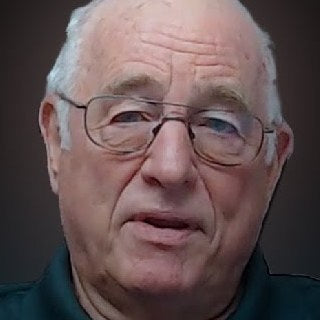
Rick Wentzell
Rick Wentzell is a 54-year veteran of the valve industry and co-founder of Bonomi North America, which he started with Aldo Bonomi in Rock Hill, South Carolina, in 2003. A Vietnam War platoon sergeant with the 101st Airborne, he began his career at Watts Regulator — becoming ball valve product manager, then national sales manager of an industrial division he helped grow from nothing to $50 million — before leading commercial products at Conbraco (Apollo). He still leads hands-on 'Valves 101' training across the industry today.


