


Industrial Valves
Steam Traps
and thermodynamic steam traps for all types of applications in industrial and commercial applications. Steam traps are built to withstand high temperature and high pressure environments. If you need help picking the right trap for your system we have experts who can help you pick or source the right trap.
Shop Steam Traps by Category
9 categories


All Steam Traps
1496 products




About Steam Traps

What's in This Collection
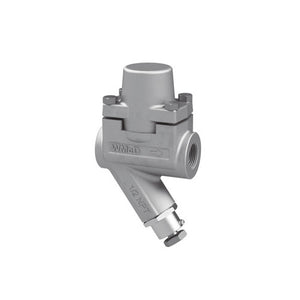
A steam trap is a self-contained automatic valve that discharges condensate and non-condensable gases while staying tight to live steam. This collection is organized around the four working types: float & thermostatic (F&T), inverted bucket, thermodynamic disc, and thermostatic (bimetallic and balanced-pressure). Those map to the three operating principles: mechanical traps act on density, thermostatic traps on temperature, and thermodynamic traps on kinetic energy. Bodies come in cast iron, carbon steel, and stainless, with NPT, socket weld, and flanged connections.
Match the Trap to the Application

The application picks the type before pressure or size does.
-
Drip legs on steam mains and outdoor duty take a thermodynamic disc trap. It has one moving part and shrugs off water hammer and freezing.
-
Modulating heat exchangers, coils, and process heating take an F&T trap because it discharges continuously as the load swings.
-
Steam tracing, startup air venting, and low-load service take a thermostatic trap; it clears air and cold condensate fast at startup.
-
Inverted bucket traps are the other mechanical option here. On a straight replacement, stay with the type already on the line unless the application changed.
Stuck between an F&T and an inverted bucket on a process line? Call a ValveMan engineer at 888-825-8800 — real engineers, not a call center.
Sizing and the Two Ways Traps Fail

Size on running condensate load times a 2x–3x safety factor, calculated at the actual differential pressure across the trap. Push the factor to 4x for heavy startup loads or fast heat-up. ANSI/FCI 13-1 covers how to determine the condensate load itself.
One selection error stalls whole systems. A mechanical trap that sees more differential pressure than its internals are rated for closes and quits passing condensate. Check actual differential against the trap's rated differential every time.
Failure runs in two directions, and both cost you. A trap failed open on a 150 psig line with a 1/8-inch orifice blows roughly 65 lb/hr of live steam. A trap failed closed backs condensate into the line and invites water hammer. DOE data puts failure rates at up to 30% of traps in systems that go 3–5 years without maintenance. Install a Y-strainer upstream of every trap to keep pipe scale out of the orifice.
Not sure your differential number is right? Have the datasheet in front of you and call 888-825-8800. We'll size it with you before you buy.
Next Step

Filter this collection by trap type, then confirm differential pressure and condensate load against the datasheet before you order. Have those two numbers plus the application ready and call 888-825-8800, or send them through our contact page. We've been matching traps to steam systems for 60+ years.
Talk to a Steam Trap Engineer

Give us the differential pressure, condensate load, and application, and our engineers in Exton, PA will match the trap to your line — real engineers, not a call center. Call 888-825-8800 or reach us through our contact page.