

Two Jobs, Two Valve Behaviors
An on/off valve has one role. It starts flow or stops it, sitting either fully open or fully closed, with no positions being held in between. A modulating control valve works across its entire stroke; it moves to any intermediate position and keeps adjusting continuously to hold a process variable such as flow, pressure, temperature, or level at its setpoint value.
That one functional difference drives everything else on the spec sheet. It decides the control signal, the actuator, whether you need a positioner, the valve body and trim, and how you size the whole assembly.
Match the valve to the duty. Isolation, batch filling, tank dumps, and emergency shutdown are two-position jobs where the valve spends its life at one end of travel or the other. A PID loop holding boiler feedwater temperature, or a dosing skid metering chemical into a stream, needs a valve that throttles and never really settles. Both kinds of hardware get lumped together under the heading of control valves, which is why buyers end up comparing products that were never meant to compete. This article separates them the way a data sheet should.
Control Signals: How Each Valve Gets Its Orders
An on/off valve takes a discrete command. Energize a solenoid, close a relay contact, or flip a discrete output on the DCS, and the valve drives to its opposite position. There are two possible commands and two possible states, so the wiring and the logic remain simple.
A modulating control valve takes an analog signal. The three common signals you'll see on data sheets are 4-20 mA current, 0-10 VDC voltage, and 3-15 psi pneumatic. The mapping is direct: 4 mA, 0 V, or 3 psi commands the valve closed, and 20 mA, 10 V, or 15 psi commands it fully open. A 12 mA signal parks the valve at 50% of travel.
Of the three, 4-20 mA dominates industrial modulating service. Current signals resist electrical noise, which matters when the loop wiring runs hundreds of feet through a plant alongside motor leads and VFD cables. A voltage signal degrades over that distance, while the current loop holds its value.
Positioners: What Makes Modulation Accurate

A pneumatic actuator on its own will get a valve near the required position. However, 'near' is a problem in throttling service. Packing friction and the pressure forces acting on the plug or disc may push the stem off target, and a loop that thinks the valve is at 40% while it actually sits at 46% will keep hunting.
The positioner fixes this. It compares actual stem position against the incoming control signal and keeps adjusting actuator air pressure until the two agree. It's a small closed-loop controller bolted to the valve, and it turns a pneumatic actuator into a precise throttling device.
Two types cover most of the field. A pneumatic positioner takes a 3-15 psi instrument signal directly. An electro-pneumatic positioner takes 4-20 mA in and delivers air out, which lets an electronic control system drive a pneumatic actuator without a separate transducer. Digital versions of the electro-pneumatic design do the same job electronically.
Every actuated valve in throttling service should carry a positioner. You can skip it in two cases; for on/off duty, where the valve only ever needs to reach its travel limits, and for electric modulating actuators, which handle positioning internally with their own control electronics.
Not sure whether your loop needs a positioner or if your electric actuator handles it internally? Call 888-825-8800 and talk to a ValveMan engineer — real engineers, not a call center.
Electric vs Pneumatic Actuators for Each Duty
Electric actuators achieve modulation through an internal positioning board that accepts a 4-20 mA or 0-10 VDC signal that drives the motor until the shaft position matches the command. There's no air supply to run, no positioner to mount and calibrate, and position feedback is built in. For a remote skid or a facility without instrument air, electric is the practical answer.
Pneumatic actuators modulate through a dedicated positioner as described above, either pneumatic or electro-pneumatic. While this means more parts and accessories, it also means better stroke speed and stall tolerance. A pneumatic actuator can sit against a load indefinitely without damage, and reposition the valve plug accurately all day long. That behavior suits continuous throttling.
Here's something that you should always spec when ordering actuated control valves: duty cycle. Many electric actuators sold for on/off automation carry an intermittent duty rating, S2 being the common designation, which assumes the motor runs briefly and then rests. This makes sense for on/off control, however, a modulating control loop repositions the valve constantly. If you put an S2-rated actuator in continuous throttling service, the motor will likely overheat. Modulating-rated electric actuators are purpose-built for continuous repositioning without overheating, and they cost more for that reason. S4 or S4 rated actuators are recommended for modulating control applications. Always spec the duty rating in writing, and treat any quote that lists an electric actuator without one as incomplete.
Fail-Safe Action Belongs on the Data Sheet
Ask what the valve does when the signal, power, or air disappears, because it will happen. A spring-return pneumatic actuator answers with mechanics: lose air and the spring drives the valve to a fail-closed or fail-open position, which is specified when you order it. A double-acting pneumatic actuator and a standard electric actuator both fail in place, holding whatever position they had when the supply died. Depending on the actuator design, true fail-in-place performance with zero drift may require additional accessories.
Our position after 60+ years of speccing this hardware: if the process can hurt people or damage equipment on loss of air or power, use spring-return pneumatic and choose the fail direction deliberately. Fail-closed for heat sources and fuel. Fail-open where blocked flow is the hazard, for example cooling water. Write it on the data sheet as its own line item.
Getting fail-safe direction wrong is expensive. Before you order, run the actuator and fail action past a ValveMan engineer at 888-825-8800 — we'll help you spec it right.
Valve Body Selection: Why Throttling an On/Off Ball Valve Wrecks the Seat
A standard ball valve is a superb on/off device and a poor throttling one, and the reason is valve geometry. Hold the ball partly open and a large pressure drop occurs across a small crescent of open area. Velocity through that crescent climbs sharply. The high-velocity jet erodes the soft seats, and the pressure recovery downstream invites cavitation that chews trim and generates noise. The valve will work for a while. Then it will leak at shutoff, which defeats the one job a ball valve is supposed to be good at.
For isolation duty, buy tight shutoff and protect it. Soft-seated isolation valves should target ANSI/FCI 70-2 Class VI leakage, and they keep that class by operating at the ends of travel; fully open and fully closed.
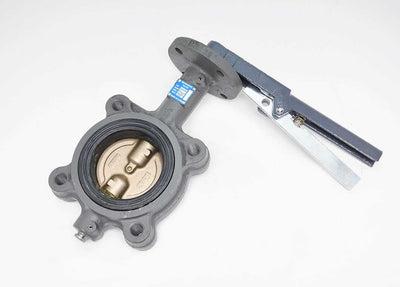
Throttling duty belongs to bodies designed for it. Globe valves with contoured plugs are the classic modulating body, built to take a pressure drop across trim designed for that very purpose. Rotary options have closed much of the gap: V-port ball valves with characterized trim allow flow to rise more proportionally with rotation (modified equal percentage), which lets a ball valve modulate credibly instead of dumping most of its flow change into the first quarter of travel. High-performance butterfly valves earn their keep when throttling large lines where a globe body would be enormous and expensive.

The hybrid case deserves consideration, because one valve doing two jobs saves real money. A V-port ball or a high-performance butterfly can cover isolation plus moderate throttling on the same line. The trade-off is that you're accepting less control resolution than a globe valve delivers, and you're asking the shutoff seat to survive throttling duty. On a forgiving loop with clean fluid, that trade-off might be worth making. On a tight temperature loop or a severe-service drop, it usually costs you the valve seat.
Flow Characteristics in Plain Selection Terms

A valve's flow characteristic describes the relationship between flow rate and valve opening percentage, and it should match the application duty. An equal percentage trim delivers small flow changes at low openings and large ones near full open, which suits temperature control loops and processes with wide load swings. Linear trim gives flow proportional to travel and fits level control and systems where the valve sees a roughly constant pressure drop. Quick-open trim provides large flow at low openings, making it ideal for on-off service, safety relief systems, and rapid dump valves.
Tell Us the Service. We'll Tell You the Valve.
Body, trim, valve characteristic, actuator, fail action, signal; get any one of these wrong and the valve hunts, the seat leaks, or the motor overheats. Since 1965, ValveMan has helped engineers and facility managers match the valve to the duty, instead of guessing off a signal input. Call 888-825-8800 or reach out to our team in Exton, PA — real engineers, not a call center.