


Industrial Valves
I/P Transducers
fast reaction time, good accuracy, and are stable. They are commonly used in the process industries of chemicals, pharmaceuticals, oil and gas, and other. We have lots of options of I/P transducers such as ranges, mounting styles, environmental ratings, etc. Not sure which model will work for your setup? Our team can help or even find the exact solution for your needs!
All I/P Transducers
471 products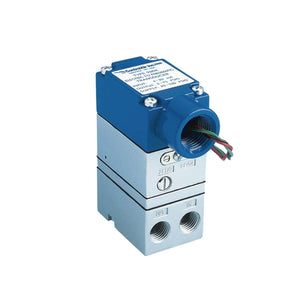
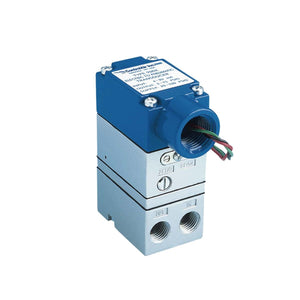
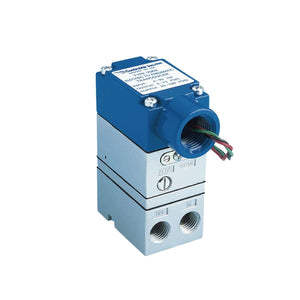

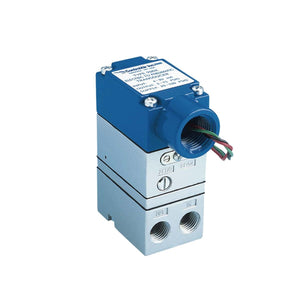
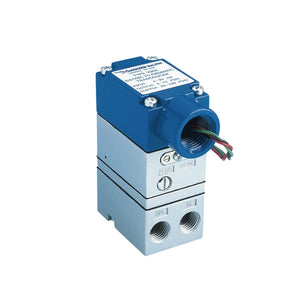
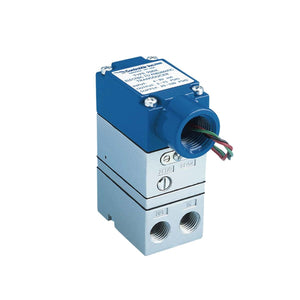
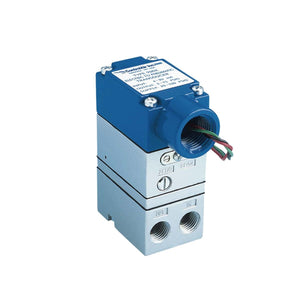
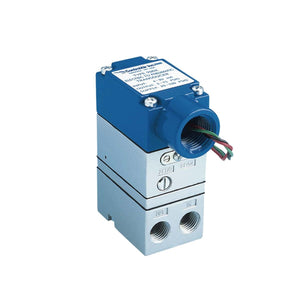
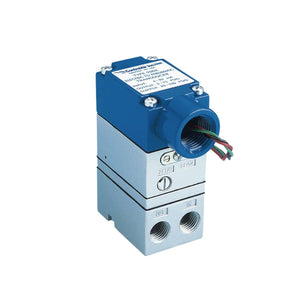
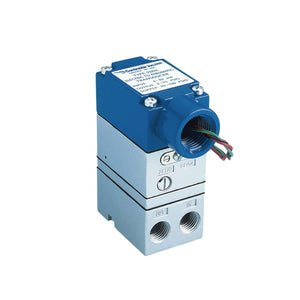

About I/P Transducers

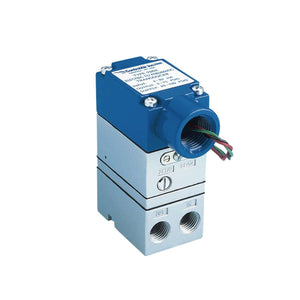
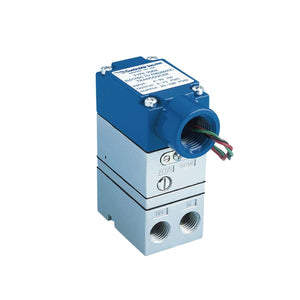
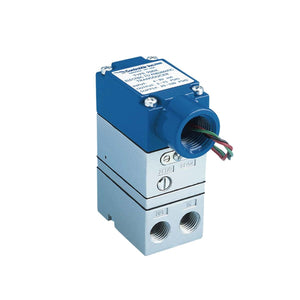
An I/P transducer converts a 4-20 mA current signal into a proportional pneumatic output, most commonly 3-15 psi (0.2-1 bar). That output drives valve positioners, pneumatic actuators, dampers, and web-tensioning brakes.
What's in This Collection
This collection centers on ControlAir Type 500, 550, 900, and 950-class units, along with E/P variants that accept 0-5, 0-10, or 1-9 VDC voltage input instead of current. Current-generation units use internal electronic feedback to self-correct for vibration, mounting position, temperature, and supply-pressure swings, so orientation on the pipe stand matters far less than it used to.
How to Choose an I/P Transducer
-
Match the input signal first. A 4-20 mA loop calls for an I/P; a voltage output card (0-5 or 0-10 VDC) calls for an E/P. Buy for what your PLC actually sends.
-
The standard output range is 3-15 psi. Larger actuators may need a higher output range.
-
Supply pressure must run at least 5 psig above maximum output, so a 3-15 psi unit needs 20 psig minimum at the supply port. Undersized supply is the most common startup complaint we hear.
-
Classic analog units spec around 1% linearity, 1% hysteresis, and 0.5% repeatability, while high-performance models hold ±0.10% of span. Pay for the tighter spec only where the loop demands it; on a damper, 1% is plenty.
-
Figure the bleed into operating cost. Units in this class consume around 3.0 scfh (1.5 Nl/min) of air, and that runs around the clock across every instrument in the plant.
-
Flying leads with a 1/2 in NPT conduit connection is the most common electrical hookup. DIN connectors and terminal blocks are also offered.
Stuck between an I/P and an E/P, or unsure what output range your actuator needs? Call a ValveMan engineer at 888-825-8800 — real engineers, not a call center.
Hazardous Locations and Clean Air

Explosion-proof models like the ControlAir Type 950 carry Class I Division 1 & 2, Groups A-D ratings in NEMA 4X (IP65) enclosures. If the area is classified, buy the rated unit up front. Retrofitting later costs more than the price difference ever will.
Decide acting direction before you order. Reverse-acting units output 15 psi at 4 mA and 3 psi at 20 mA, which sets fail-open or fail-closed behavior on loss of signal.
Feed every I/P clean, dry instrument air through a filter regulator. Oil and moisture in the supply drift the output and kill the unit early.
Working a Division 1 area or setting fail-safe direction? Get it right the first time — talk to a ValveMan engineer at 888-825-8800 before you spec the I/P transducer for your loop.
Spec Help From ValveMan

Send us three things: input signal, output range, and area classification. Our team in Exton, PA has 60+ years in industrial valves and instrumentation and will match you to the right unit. Call 888-825-8800 or send us your specs online.
Get the Right Unit the First Time
Tell us what your PLC sends and where the transducer mounts, and we'll match the input, output, and area rating to your loop. Call 888-825-8800 or send your specs to a ValveMan engineer — real engineers, not a call center.