


Industrial Valves
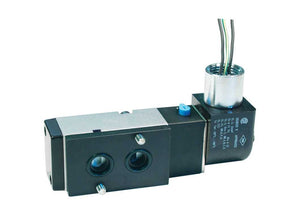
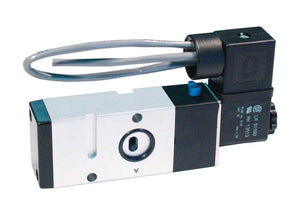
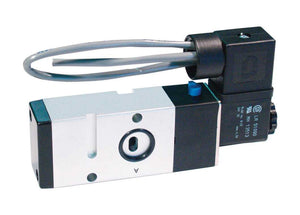
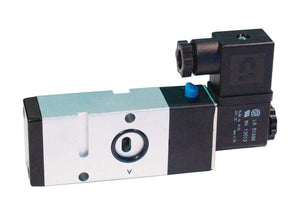
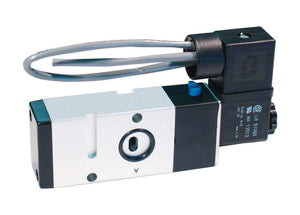
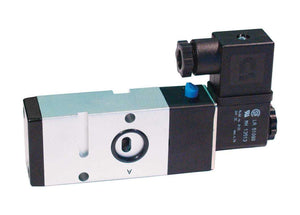
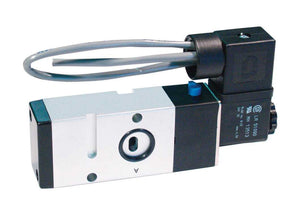
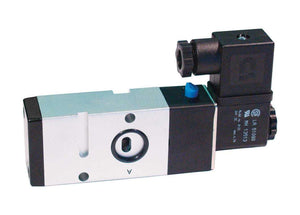
Automation Solenoid Valves
tough industrial environment. We have a large selection of materials, pressure ratings, response times and voltages for your specific application. Not sure which model is appropriate for your process? We can help, or we can find exactly what you need!
All Automation Solenoids
134 products









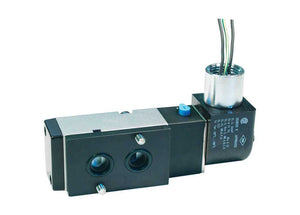
About Automation Solenoids
What is a Process Solenoid Valve?
A process solenoid valve is an electromechanical device used to automatically control the flow of liquids or gases. It combines an electromagnetic coil and core (the solenoid) with a precision valve body to start, stop, mix, or redirect fluid flow.
How do Solenoid Valves Work?
A solenoid is activated when an electric current passes through the solenoid coil. This generates a magnetic field that moves a ferromagnetic plunger (also called a spindle or armature). This plunger opens or closes the orifice in the valve body. If it's a normally closed valve, the plunger keeps the valve closed until the solenoid is activated. For normally open valves, the valve remains open until the solenoid is activated to close the valve. When the current stops flowing to the solenoid, the magnetic field collapses, and the spring (or some other type of restoring force) returns the plunger to its default position.
Different Types of Solenoid Valves: Positions / Flow Paths
The most common way to categorize process solenoid valves is based on the number of ports and positions they have. Positions and flow paths define how air or fluid is directed to an actuator.
To understand how a solenoid valve works, it helps to stop thinking about valves and start thinking about railroad switches. A solenoid valve's job is to direct a fluid along a specific path. The industry uses two specific words to describe this: Ways and Positions.
The 3-Way, 2-Position Valve
Consider a single-acting cylinder with an internal spring return. To move it, you just need to fill it with air. To let it come back, you just need to let that air out so the spring can push the piston home.
A 3-Way valve is perfect for this because it has three specific ports:
- Inlet (P): The power port where high pressure waits.
- Work Port (A): The hose connected to the machine/cylinder.
- Exhaust (E): The Exit where fluid escapes
How the 2 Positions work:
- Position 1 (Off): The power is blocked. The Work Port is connected to the Exhaust. The spring in the cylinder pushes the old air out the exit.
- Position 2 (On): The solenoid clicks. The inlet is connected to the Work Port. High-pressure fluid rushes in, pushing the cylinder out.
The 4-Way, 2-Position Valve
Some cylinders don’t have springs. To get them to move back, you have to physically pull them back with pressure. These are called Double-Acting cylinders.
A 4-Way valve is like a clever toggle switch. Instead of just "Fill or Empty," it swaps the pressure between two different hoses. Here’s how the 2 Positions work:
- Position 1 (Extend): The valve sends pressure to Port A (pushing the piston out) and opens Port B to the exhaust (letting the air on the other side escape).
- Position 2 (Retract): The valve flips. Now it sends pressure to Port B (pushing the piston back in) and opens Port A to the exhaust.
|
Valve Type |
Number of Ports (Ways) |
What it does in simple terms |
Best used for... |
|
2-Way, 2-Position |
2 |
A simple On/Off switch. It either lets fluid through or stops it. |
Turning a water sprayer or air nozzle on and off. |
|
3-Way, 2-Position |
3 |
Fill or Vent. It sends air to a device to move it, then vents that air to let it return. |
Single-Acting Cylinders (the kind with a built-in spring to push it back). |
|
4-Way, 2-Position |
4 or 5 |
Directional Switch. It pushes air into one side of a motor/cylinder while letting it out the other. |
Double-Acting Cylinders (where air is used to both extend and retract). |
|
4-Way, 3-Position |
4 or 5 |
Directional + Stop. It can push, pull, or "freeze" the cylinder in the middle. |
Precise positioning or holding a heavy load in mid-air. |
Process Valve Actuation
Direct-Acting Solenoid Valves

In these valves, the electromagnetic plunger is physically attached to the seal. When energized, the magnetic force lifts the seal directly off the orifice. It’s much like lifting a plug out of a drain by hand. These automation solenoid valves are used for both pneumatic and hydraulic applications. Direct-acting solenoid valves are used for small air cylinders, vacuum applications, or as pilot triggers for larger valves.
In hydraulic applications, they are often used in low-flow hydraulic systems or as safety shutoffs. When used with hydraulics, the valves must be very powerful to move large volumes of fluid because of the weight and pressure involved in moving liquids.
Pilot-Operated (Indirect) Valves

With this type of valve, the solenoid opens a tiny hole (the pilot hole), creating a pressure imbalance. This imbalance forces a larger diaphragm or spool to shift, so the solenoid doesn’t move the main flow – the system’s own pressure does that. This design allows a compact, low-power coil to control high-pressure, high-flow systems by leveraging the pressure differential of the media.
Pilot-operated valves are the standard for industrial air automation. It allows a tiny, low-power 24VDC coil to move a massive 1-inch spool that can shift a heavy cylinder. Most high-pressure hydraulic directional control valves are pilot-operated (often called solenoid-controlled, pilot-operated) because the force required to move a spool against 3,000 PSI of oil is far too great for a simple magnet.
|
Feature |
Direct Acting |
Pilot Operated |
|
Power Source |
Pure Magnetism |
Fluid Pressure + Magnetism |
|
Minimum PSI |
0 PSI (Works anywhere) |
Usually, 20+ PSI is required |
|
Flow Capacity |
Low to Medium |
High to Very High |
|
Response Time |
Instant |
Slight "pilot" delay |
Returning Spool to Normal Position
There are also two ways to return the spool to its normal position. With spring-return single-solenoid valves, the spool returns to a home position when power is lost. For air-return double-solenoid valves, the valves remain in the last position until the opposite coil is energized.
Options for Automation Solenoid Valves
Mounting Styles
There are two primary mounting styles for process solenoid valves:
- In-Line: uses threaded ports (1/8", 1/4", 3/8", 1/2") that allow the valve to be mounted directly in a pipe run.
- NAMUR Mount: a specific standardized mounting pattern intended for direct installation onto rotary pneumatic actuators (common for process automation, like ball or butterfly valves).
Center Positions (for 3-Position Valves)
The 4-way, 3-position valves can be further categorized by their "center" state:
- Closed Center: All ports are blocked in the middle position.
- Exhaust Center: Work ports are vented to the atmosphere in the middle position. In the center position, pressure is blocked and both work ports are vented. This allows a cylinder to be moved manually by hand while the valve is in neutral.
- Pressure Center: Pressure is applied to both work ports in the middle position.
Other
Other options include the voltage, which includes 12VDC, 24VDC, 24VAC, 110/120VAC, and 220/240VAC. There are also valves for special service that include explosion-proof versions of some valves that are intended for use in hazardous environments.
Frequently Asked Questions About Solenoid Valves
What is the main difference between a direct-acting and a pilot-operated solenoid valve?
A direct-acting solenoid valve uses the magnetic force of the solenoid coil alone to open or close the valve, making it ideal for low-flow applications or systems with 0 PSI. A pilot-operated valve uses that same magnetic force to open a small pilot hole, which then uses the system's own pressure to move the main valve seal, allowing a small coil to control a very high-flow valve.
What does the "way" in a 2-way or 3-way valve mean?
"Way" refers to the number of ports a valve has for fluid to enter or exit. A simple 2-way valve has two ports (in and out) for on/off control. A 3-way valve has three ports, allowing it to do more complex tasks like diverting flow or venting a cylinder.
Can I use any solenoid valve for natural gas or steam?
No. You must use a solenoid valve specifically rated for the media. Valves for aggressive media like steam or flammable gases like natural gas require specific body materials (e.g., stainless steel, brass) and seal materials (e.g., FKM, EPDM) that can handle the temperature, pressure, and chemical properties. Using the wrong valve can lead to failure and dangerous leaks.
What is a NAMUR mount solenoid valve?
A NAMUR mount is a standardized mounting pattern that allows a solenoid valve to be bolted directly onto a rotary pneumatic actuator (the kind used for ball or butterfly valves). This eliminates the need for extra tubing and fittings, creating a cleaner, more reliable automation assembly.

Your Partner for Process Automation
From simple on/off control to precise positioning in hazardous environments, ValveMan is the definitive source for process solenoid valves. Our application engineers have seen it all and can help you select, configure, and source the exact valve for your system. If you need an expert to confirm your selection or have a complex application, we are ready to help.