

Power car washes are a common sight now, but that wasn't always so. And as they have evolved into the automated wonders we have today, their demand for valves has grown. In this article, we'll look at car washes, the valves that are most commonly used, and where to get them.
A Brief History of Car Washes
With the modern convenience of today’s automatic car washes, it may be difficult for one to remember what the industry looked like before the world got so high-tech. The history of car washing dates back to 1914, when two men from Detroit, Michigan, opened what they called the “Automated Laundry.”
Interestingly enough, there was nothing automatic about it. Cars were pushed manually through an assembly-line-like tunnel, where one attendant would soap the car, another would rinse, and a third would dry. Talk about running on empty. This process became too laborious and difficult for workers to carry out on a daily basis.
By 1946, a man named Thomas Simpson is credited with solving this manual labor issue by inventing the first semiautomatic car wash in Detroit, Michigan. It had a conveyor belt that hooked to the bumper of automobiles, an overhead water sprinkler with three sets of manually operated brushes, and a 50 HP air blower to help dry.
Then in 1951, the idea to fully automate the car wash was born. Now, cars could be pulled through the tunnel while machines sprayed soap on them, big brushes scrubbed them, nozzles rinsed them, and giant blowers dried them. Needless to say, this was a big hit! Soon, many other car wash owners were installing automatic equipment in their car wash businesses.
Today’s car washes are quite literally strong, lean, cleaning machines that depend upon the performance and operation of the equipment in use. While there are many integral components that work together to power car washes, most agree that valves are at the top of the list.
Types of Valves Used to Power Car Washes
Solenoid valves
Solenoid valves play a critical role in nearly all types of car wash equipment. They are electromechanically actuated valves that control the flow of liquids and gases. Essentially, when power is applied to its coil, the solenoid becomes activated. The most common types used in a car wash are closed solenoids. These normally stay closed until receiving power, at which point they become energized and open up, allowing flow through the valve. Their primary uses are to permit soap and wax to be metered into high-pressure pumps, as well as to control all low-pressure functions such as foam brushes, tire cleaner, and presoak. When a function is selected in the bay, power is sent to the solenoid for that function, causing it to open and allow product to be delivered to the bay and onto the car passing through.

Pressure Relief Valves
Piston and plunger pumps are ideal for use in car washes, pressure washes, water jetting, misting, reverse osmosis, and carpet cleaning applications. Both feature two or three plunger or piston assemblies that produce pump flow and pressure. These pumps are usually powered by electric motors, hydraulic motors, and gas or diesel engines. High-pressure plunger pumps and high-pressure piston pumps are members of the positive displacement pump family, meaning that they can be run in continuous-duty applications. The only kicker is they require full discharge of pump flow or bypass of a portion of the flow through pressure relief valves. It is then the pressure relief valve’s job to automatically open and relieve any dangerous system pressure overloads, which could end up harming equipment. This valve usually returns the flow to the water supply tank or can also recirculate back into the inlet side of the pump.

Ball Valves
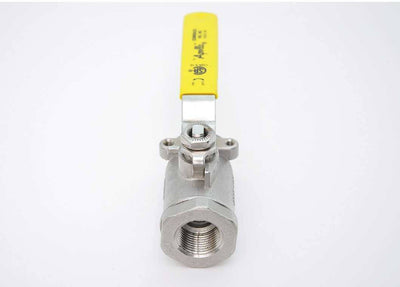
Ball valves can act as an on/off switch for regulating liquid and air. They can be used in a variety of applications, including the control of the water flow coming out of a tank, or to change over from high-pressure sides of the pump. A ball valve’s importance in a car wash lies within its ability to temporarily stop water flow through the pressure hose without shutting down the machine in its entirety. This means car washes are able to change water flow quickly between different applications like spray guns to flat surface cleaners, extension wands, or water brooms.

Where to Purchase Valves for Power Car Washes?
It is estimated that two out of every three car owners visit a car wash at least once a month. Because valves in the car washing industry are exposed to jet streams and chemicals in the washing system, it is essential that their valves are robust. The ValveMan.com valve store has a large selection of ASCO solenoid valves and ball valves that will help you streamline the car washing process. For over 60 years, ValveMan has provided unparalleled expertise in the engineering and distribution of high-quality valves.
Here at ValveMan, you can expect only the best valves from the best manufacturers. Simply put, ValveMan is a one-stop shop for all your valve needs.