

The ball valve is the most common isolation valve in industrial piping, and it's also the most commonly mis-specified. Buyers read "600 WOG" as a steam rating, put floating valves where a trunnion belongs, and throttle with valves built to run fully open or fully shut. We've been spec'ing valves since 1965, and the same handful of mistakes shows up on the phone every week. This guide covers the mechanism, the floating-versus-trunnion decision, port styles, pressure ratings and markings, seat and body materials, governing standards, actuation, and a spec sequence you can run on your own line conditions.
⚙️ Key Takeaways
- Use ball valves for fast on/off isolation, not routine throttling
- Choose floating balls for most small-bore service and trunnion-mounted balls for high pressure, large bore, DBB, or trapped-liquid duty
- Select full port only when pigging, low pressure drop, or uninterrupted flow is required; use reduced port for most isolation service
- Verify the actual pressure-temperature rating and seat material, not just “WOG” or an ASME class number, against the process media, pressure, and temperature
What a Ball Valve Is and How It Works

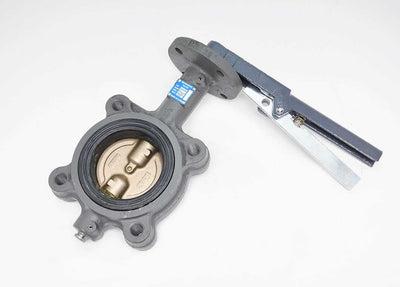
A ball valve is a quarter-turn shut-off valve. A polished ball with a bore through its center sits between two seats. When the bore lines up with the pipe, flow passes at nearly full pipe capacity. Turn the stem 90 degrees and the solid face of the ball blocks the line. That single quarter turn is the whole operating cycle, which is why ball valves isolate in seconds while a gate valve of the same size takes a dozen handwheel turns.
Position is readable from across the room. Handle parallel to the pipe means open. Handle perpendicular means closed. During a lockout or an emergency isolation, that visual confirmation matters more than most datasheet lines. If you want a deeper walkthrough of the internals, we cover the stem, seats, and seals in our post on how ball valves work.
Use a standard ball valve for on/off duty only. Left partially open, the ball edge and the downstream seat sit directly in the flow stream, and erosion cuts a groove through both. Once that groove exists, the valve will never seal bubble-tight again. The V-port design, covered below, is the one exception built to modulate.
Speed cuts both ways on the quarter turn. Slamming a ball valve shut on a long liquid line stops a moving column of water almost instantly, and the resulting pressure spike (water hammer) can crack fittings and lift relief valves. On larger sizes, spec a gear operator and close deliberately.
Floating vs Trunnion-Mounted: The Design Decision That Drives Everything Else
Floating Ball

In a floating design, the ball hangs on the stem with a small amount of lateral play. Upstream pressure pushes the ball into the downstream seat, and that contact makes the seal. The design is bi-directional, mechanically simple, and cheap to build, which is why it dominates small-bore service.
The same mechanism sets its ceiling. Seat load equals line pressure times the projected area of the ball, so as bore and pressure grow, the force crushing the ball into that polymer seat grows with them. Torque climbs, seats cold-flow and deform, and shutoff degrades. A floating valve also can't provide double block and bleed, because only the downstream seat is energized at any moment.
Trunnion-Mounted Ball
A trunnion valve anchors the ball on stub shafts top and bottom, so the ball never moves downstream. Spring-loaded seats travel to the ball instead. That reversal cuts operating torque sharply and holds a seal at large bores and high pressures where a floating ball would destroy its own seats. The typical break point is larger line sizes and Class 600 service and above.

Trunnion construction is also what makes double block and bleed possible. Both seats seal independently, so you can close the valve, open the body vent, and bleed the cavity to atmosphere to prove isolation before anyone breaks a downstream flange. API 6D pipeline work specifies DBB and DIB configurations for exactly this procedure.
The body cavity brings its own hazard in liquid service. Close a valve with liquid trapped between the seats, let the sun or a heat trace warm the body, and the trapped liquid expands with nowhere to go. Cavity pressure can climb far past the line rating. Self-relieving seat designs vent that excess back to the line automatically; in trapped-liquid service, confirm your valve has them.
Our rule of thumb from 60+ years on the phone: at 2" and under in Class 150 or 300 service, floating is the default and there's rarely a reason to pay more. Large bores, Class 600 and up, pigging service, or any isolate-and-vent procedure puts you in trunnion territory.
Floating or trunnion on a borderline size? Talk to a ValveMan engineer at 888-825-8800 — real engineers, not a call center, working from your line pressure and temperature.
Port and Body Styles: Full Port, Reduced Port, V-Port

A full-port valve has a bore matching the pipe inside diameter. Pressure drop through the open valve is close to zero, and a pig or cleaning tool passes straight through, which is why API 6D pipeline specifications require full bore. The body runs effectively one size larger than the nominal connection, and you pay for it.
A reduced (standard) port runs a bore roughly one pipe size smaller. For most isolation duty, that's the right buy, and the Cv math shows why. The flow coefficient relates flow to pressure drop for water: ΔP = (Q/Cv)². Say you're moving 150 GPM through a 2" line, and the datasheets in front of you list a Cv of 400 for the full-port valve and 120 for the standard-port version. The full-port valve drops (150/400)² = 0.14 psi. The standard port drops (150/120)² = 1.56 psi. That 1.4 psi difference is invisible on most pump curves, so paying the full-port premium for isolation duty wastes money. Buy full port when you pig the line, when pump head is genuinely tight, or when a downstream instrument needs undisturbed flow. Buy standard port everywhere else.
The V-port ball valve carries a characterized V-notch cut into the ball, giving a predictable flow curve as the ball rotates. It's the one ball valve style built to throttle, and paired with an actuator and a positioner it handles real modulating control loops.
Body construction is a maintenance decision. One-piece bodies are cheap and disposable; when the seats wear, the valve gets replaced. Two-piece bodies are the industrial workhorse. Three-piece bodies let you swing the center section out and replace seats without cutting pipe, which pays for itself the first time a seat fails in a welded line. Top-entry designs allow in-line service on large pipeline valves where pulling the body is impractical. We break these down further in our guide to the types of ball valves.
Pressure Ratings and Markings: What 600 WOG and Class 150 Actually Mean

Start with the misconception that causes the most damage. ANSI/ASME Class 150 does not mean 150 psi. A Class 150 valve in common body materials carries roughly 285 psi at ambient temperature, and Class 300 carries about 740 psi. The class number is a designation; the actual allowable pressure comes from the ASME B16.34 pressure-temperature tables for the specific body material, and it falls as temperature rises. That 285 psi ambient figure shrinks substantially by the time your process runs a few hundred degrees hot. Build the habit: pull the B16.34 table for your body material and read the rating at your operating temperature, every time. The class number alone answers nothing.
The stamped markings on commodity valves follow a different system. CWP is cold working pressure, the maximum rating at ambient temperature, defined as -20°F to 100°F. WOG covers water, oil, and gas, excluding combustible gases. WSP (or SWP) is the steam working pressure, and it always reads far below the WOG number because steam temperature derates both the body and the polymer seats.
This is why a "600 WOG" brass valve and a "Class 600" steel valve are entirely different animals despite sharing a number. The brass valve carries 600 psi of cold water. The Class 600 steel valve carries roughly 1,480 psi at ambient per the B16.34 tables (about five times the Class 150 figure) and holds a meaningful rating at elevated temperature. And was designed under a code that accounts for both. Readers working to European specs will see PN numbers instead; the same discipline applies, so work from the rating table for the material rather than the number on the flange.
Reading a marking and not sure it matches your operating temperature? Call us at 888-825-8800 or send us your line conditions and we'll work the B16.34 rating with you.
Body and Seat Materials: Match the Metal and Polymer to the Media
Body material follows the media. Brass handles water, air, and inert gas in general-purpose service. Carbon steel (WCB cast, A105 forged) covers general industrial and hydrocarbon lines. 316 stainless steel is the answer for corrosive media, chemical service, and washdown environments. PVC serves low-pressure chemical and irrigation duty where metal is overkill or incompatible. For sour service under NACE MR0175, material callouts extend past the body to the ball, stem, and bolting; a compliant body with off-spec stem bolting fails the requirement.
Seats deserve equal attention. PTFE is the default: broad chemical compatibility, low friction, and a service range from roughly -50°F to 400°F cover the large majority of general, chemical, and water service. Its limitation is cold flow: under a sustained load or at the upper end of its temperature range, PTFE is going to deform permanently. That kind of deformation is why straight virgin PTFE seats lose sealing force over time in high-cycle or high-pressure duty.
RPTFE (glass- or carbon-fiber-reinforced PTFE) answers that limitation. The reinforcement resists cold flow and extends the usable pressure without giving up much of PTFE's chemical resistance. In fact, RPTFE is the default upgrade for high-cycle service and higher Class ratings.
PEEK is the next step up. It holds dimensional stability to roughly 500°F to 600°F. It resists cold flow far better than either PTFE variant, and tolerates higher pressure. Cutting it costs more, and its chemical resistance doesn't quite match PTFE's. Specify PEEK for hot oil, steam, and high-pressure/high-cycle service where PTFE would creep or degrade.
Beyond roughly 450°F to 500°F, polymer seats aren't an option at all. Metal seats (hardfaced stainless, Stellite, Inconel overlays) take over for high-temperature service in refineries, power plants, and steam systems, running well past 1,000°F where they'd melt a soft seat. The tradeoff is sealing performance: metal seats don't achieve the bubble-tight shutoff of a polymer seat, so they're a last resort dictated by temperature, not a first choice.
Get the Spec Right the First Time
Run the media, pressure, and temperature through the checks above and most selections fall out cleanly. When they don't — sour service, trapped-liquid cavities, a borderline floating-versus-trunnion call — get a second set of eyes before you order.
Call ValveMan at 888-825-8800 to talk it through with a real engineer, or send your line conditions here from our team in Exton, PA. Mon–Fri, 8:30 AM–6:00 PM.