


Grow or Die: Jeff N. Scott on Building NOSHOK for the Long Haul
In This Episode
Jeff N. Scott has spent over 50 years inside the same company. He started as “the third man” in a 400-square-foot storefront selling liquid-filled pressure gauges, and helped build that business into NOSHOK: an American manufacturer of pressure and temperature measurement instruments and needle valves that today runs roughly 70 people out of a 51,000-square-foot main facility, with an expansion already leased next door.
In Episode 5 of the Fully Open Podcast, host Gilbert Welsford Jr. sits down with Jeff to unpack what actually keeps an industrial business relevant for decades: digital process, uncompromising values, deliberate succession, and a flat refusal to coast. ValveMan has partnered with NOSHOK for years, and this conversation makes it obvious why.
If you run a plant, a distribution business, or a manufacturing team, this one is a masterclass in playing the long game.
Key Takeaways
- E-commerce in industrial is not a shopping cart — it's the whole digital way of doing business: shareable product data, engineered drawings that drop straight into CAD, shared inventory, and mobile-first tools for people standing in the field, not sitting at a laptop.
- Move certifications from paperwork to process. A certified calibration at NOSHOK once passed through five people; today the ERP generates it during assembly and calibration, ties it to a serial number and QR code, stores it forever, and can even remind the customer when it's time to recertify.
- Be easy on people and hard on process, and stay true to values — Jeff's two standing leadership rules.
- Doing the right thing when it costs you is what builds decades-long trust. When mill certificates said 316L but the metallurgy didn't match, NOSHOK cut off steel from those source countries entirely, accepting higher costs rather than risk a failure in a critical application.
- Capability and compliance are the real moat, not low price. Low-cost importers can take orders and ship them, but without quality programs, compliance, and infrastructure, they're not built for the long haul — NOSHOK staffs full-time compliance and is adding more.
- Succession is a decades-long project, not an announcement. Christian Cole came up through every stage of the company before being named president and CEO — a moment Jeff calls one of the proudest of his career.
- Grow or die: you don't get to coast. The business is bigger than any individual, and leadership's job is to leave the next generation a solid base to grow from.
E-Commerce Is a Way of Doing Business, Not a Shopping Cart
Jeff admits the “old-timers” at NOSHOK, himself included, initially dismissed e-commerce because they sell through distributor partners, and “e-commerce” sounded like ordering online. The realization that changed everything was that digital is about removing friction from the entire relationship.
“It's the whole digital way of doing business — eliminating mundane tasks that don't really provide value, being able to get answers and product and information to the customer much, much faster.”
That progression ran from being the first company in its niche with a mobile website — because nobody in the field can wait five minutes for a laptop to boot — to CAD-ready engineered drawings, shared inventory data, and API connections like the one ValveMan is building into NOSHOK's inventory systems today. The payoff shows up in traceability too: certifications that once took five people now live in the ERP, printed as a QR code on the instrument itself. As Jeff says, “it's not fluff, it's providing real value.”
Doing the Right Thing When It Costs You
The episode's most striking stories are about decisions that lost money on purpose. When metallurgy testing revealed stainless steel that didn't match its 316L mill certificates, NOSHOK didn't quietly switch suppliers. It banned steel from those source countries outright, because a needle valve on a hydrogen sulfide application is no place to save a couple of dollars.
Then there are the shutdown stories: meeting a customer's plane at the airport with two transducers during annual inventory, and calling a team in on a Saturday to overnight gauges and diaphragm seals to a downed West Coast refinery — with no expedite premium added.
“We thought, if they're willing to spend more for the freight than the cost of the product, they really need this. So let's not kick them when they're down.”
Gil shares the ValveMan version of the same value: a territory manager who authorized thousands of dollars in next-day air freight to keep a delivery promise a vendor had broken — and got congratulated for losing money on the order, because keeping your word is the whole brand.
Succession, Stewardship, and “Grow or Die”
Jeff calls naming Christian Cole president and CEO one of the proudest moments of his 50+ year career. Chris earned it the same way Jeff did — starting young, working summers, and coming up through every stage of the company — and the handoff was planned and talked through for years, not improvised.
“It's almost like the business doesn't serve us. We serve the business.”
That stewardship mindset is where the episode's title comes from. Leaders are accountable to employees, customers, and partners, and their job is to hand the next generation a solid base — because standing still isn't an option.
“You either grow or you die. You don't get to coast. It's like riding a bicycle, right? The only time you can coast is when you're going downhill.”
For NOSHOK right now, growing means investing in software, machine learning for forecasting and inventory, a dedicated AI specialist, and a customer support team that uses data — growth rate, portal activity, touch points — to decide which partners to invest in, rather than gut feel.
About Jeff N. Scott
Jeff N. Scott is Chairman of the Board of NOSHOK, a manufacturer of pressure and temperature measurement instruments and needle valves. He joined in 1972 as the third employee of the company founded by a former Meriam Instrument sales and engineering manager, and worked through shipping and receiving, calibration, assembly, inside sales, and outside sales before leading the company as president and CEO. Under his leadership, NOSHOK grew from a 400-square-foot storefront into a roughly 70-person operation with international reach, and he recently named Christian Cole as its next president and CEO.
Watch the full conversation in the player above, subscribe on YouTube so you never miss an episode, and browse every conversation at the Fully Open Podcast hub.
Read the Full Transcript
Transcript is auto-generated from the episode audio and lightly edited for readability. Tap a timestamp to jump the video to that moment.
I think that type of thinking — it's the way of the future. It's these steps along the way. It's like doing pins on all the products so that our partners could share those, so you can share the information with your customer base. Sharing inventory. It's just a progression. We have engineered drawings that are available to drop into CAD. Now it's a whole different way of doing business. I remember what we used to spend on postage. I don't know that we mail anything out anymore, and that goes to the way we do business now. When we upgraded to the current ERP system that we're on, one of the things that we saw the ability to do was to incorporate our certifications, which have become far more prevalent, into the actual order process. And that's what is going to really push companies to be relevant in the future. Welcome to the show. I'm Gil Welsford, third-generation valve entrepreneur and founder of ValveMan.com. Join me as I hear stories, learn wisdom, and get industry insights. This is more than
valves. It's business, legacy, and resilience. Let's get into it. Hey guys, how are you? Welcome to the Fully Open Podcast. We have Jeff Scott from NOSHOK here this morning. I am talking to you from the Valve Manufacturers Association headquarters here in Alexandria, Virginia. Very excited to have Jeff. We have partnered with him and his company for years, and it's always a pleasure to be able to work with them. So Jeff, thank you so much for agreeing to be on the show and for your time this morning. Oh, thank you, Gil. Happy to be here. Yeah. So Jeff, what I always ask people — and I love to sort of start the conversation this way — is tell us a little bit about... I believe you've been at NOSHOK for, maybe you don't even
know this, 51 years. That is a really, really long time. And I know you've had a whole career with NOSHOK. Let's start out from the very beginning of your career, and just give us a little bit of a background of how you started in business and in this industry. Yeah. So an opportunity came up that I was introduced to. At that time we were known as the O.W. Haymon Company, named after the founder. He had been the sales manager and engineering manager at Meriam Instrument. I was literally the third man at that point, and we operated out of a little 400-square-foot space — what essentially was a storefront — and it grew from there. We started with liquid-filled pressure gauges — the brass case liquid-filled pressure gauge — did some accessories, we
represented a couple different companies, and it's grown from there. Wow. So that's interesting. So you guys actually started with the pressure gauge, because I really think of you guys as a needle valve company first and foremost, and then you guys have pressure gauges and instrumentation and that kind of thing. But that's interesting. So you guys actually started in the pressure gauge business first. That's correct. And at that time we represented a needle valve product line — needle valves, flow control valves — and we sold those in our small market area direct to users, to OEMs. We had a couple of what at the time were called subdistributors or associate distributors, and it went on from there. So it was really not until the late 80s, early 90s when we started thinking about
doing our own valve. We had parted ways with the original company that we had worked with due to some quality and delivery issues, and we thought, gosh, this really isn't rocket science. We felt there was a need in the market. At that point we were operating on a national basis, and we had distributors that represented other valve product lines. They came to us and said, 'Help. Can you please do needle valves like you do gauges?' And that led us into it. We literally started with 16 part numbers — half of which were carbon steel and half of which were stainless steel. That's interesting. So when you started, you were the third man, like you said,
in the company. What was your role — what were you doing in that role, and then what were your subsequent roles? I know today you're chairman of the board of NOSHOK, but obviously you probably didn't start as chairman of the board, right? So what was that progression, and what did you do throughout your career? Yeah, so I went in and literally I started in shipping and receiving, learned calibration, learned more about the instruments, assembly, and from there moved into inside sales, and from there, outside sales. And when did you end up in management, and what was that like? Yeah. So you have to imagine, with three people there wasn't a lot of volume, and everyone did everything. Everything. Yeah. You have to start somewhere. And
honestly, the company was kind of started as a lifestyle business by the founder. He had had a long career working for engineering companies, working in the utilities, working at Meriam, and he wanted to be able to travel and sail, and he was a competitive shooter. He shot a lot of trap, and he wanted the freedom to do that. So the drive — the whole 'how do we go about building the business' — maybe wasn't super aggressive in that early time. Interesting. Unfortunately, really when he got to the point where he could do all those things, toward the middle of 1975 is when he became ill
and passed away at the end of '75. You hear that sad story far too often. Someone works and works and works and finally gets to the point where they can enjoy life and the things that they like to do, and it's taken away. At that point, we moved on from there, dug in a little deeper. Through a lot of different events we expanded beyond the geographic role that we had, just kept expanding outward, expanded the product line, and today we're just under 70 — maybe right around 68, 69, 70 people. We've made several moves over the years, but we've gone from 400 square feet — the main facility we're sitting in here is 51,000 square feet — and we just leased the building that is next
door to us. I'm not even sure what that size is, but with some of the additional manufacturing and fabrication that we're doing, and additional people, we're doing some expansion here at the main facility. Yeah, it's been a ride, as they say — a good one. That's great. Well, Jeff, one of the things — I was talking with Bruce Broxterman, whom I believe you know, from Richards Industries. He was on, I believe it's episode two, and one of my favorite quotes from that episode is he said, what better person to be the best salesperson in the company than the CEO. And coming from — I mean, you could probably even say what better shipping person than the CEO also, if we're taking it to Jeff Scott. But shipping and
receiving, calibration, inside sales, outside sales — you've done basically every single job in the company. Sure. How do you feel like that sets you up uniquely to have been the president and CEO, and now chairman of the board? Do you have a different perspective in your management style, how you look at the business, think about the business, since you have been in every one of those roles, from when it was three people to now being 70? I don't know that you'd think about it that way, because when you start out — we've all had goals, we've all had milestones, targets that we've aimed for — but I think it's almost innate. It's like, okay, I hit this goal. Let's celebrate for about five minutes, and then we're already on to the next one.
It's just rolling. It's not something that starts at the beginning of the calendar year and ends December 31st. With each step you take, your vision opens up. You see something different. Yes. There'll be another opportunity. You see another challenge, or an obstacle to avoid. And I don't think it's really conscious. We talked a little earlier — success: if you expect success, you'll achieve success. It may not be in the timeline that you want, it may not be in the exact way, but you will be successful. We see so many of our employees that graduated with degrees, and who knows what they were thinking when they
went to get the degree, because they're in a totally different field. Who ever thought about being in instrumentation and manufacturing? That wasn't something you thought about as a little kid. You wanted to be a policeman, a fireman, a lawyer, a doctor — something like that. It's like, hey, manufacturing — I want to do instrumentation, I want to do valves? No one thinks that way. I agree with you, and I think it's a shame, because this industry is such an amazing industry. I feel like I talk with every single person on this show about this, but there just aren't that many people that look like my brother Jason or myself coming into this industry. And I know you have Christian, you have Adam — you have a lot of younger people in your organization, which is incredible. And one of the reasons that I think our companies work very closely together is because you and your team see what the future looks
like, because of some of that younger energy, right? And that's one of the reasons that we're able to work so closely together. I know right now — you may not even know this, Jeff — but we're working on connecting our website to your inventory control systems through an API, so that we're able to give our customers real live data of what that looks like. There honestly aren't many companies, Jeff, that actually are thinking about that, and I think it's really a testament to your leadership that you're bringing in some of these younger people, because we're bringing in some younger people too. But man, when I go to Valve World down in Houston, Texas or wherever, there aren't that many young guys there. And there isn't a clear path to how to end up in this industry. It sounds like shooting
may be one of those paths, because my grandfather was a shooter, my dad's a shooter, I'm a shooter, and the founder was a trap shooter. I don't know — just saying. But yeah, I think it's interesting, and I do hope that more young people do end up in this industry, because it's such a great one. I say this a lot, and I've said it on other episodes — my dad says all the time, valves make the world go round, and that's not gonna stop. Well, the technology — valves, and what they control. You take a look at pressure, temperature, flow: these are the engineering units that have to be measured, that have to be controlled, in every manufacturing process, whether you're making Ticonderoga number two pencils or whether you're making automobiles, or whether you're taking crude oil and getting it out of the ground and turning it into gasoline or diesel or plastics. This is really what makes the world go
around. And for us, the technology is really a fun part right now. Yeah. Honestly, I would not have thought of some of the things that this team is doing, and some of the ideas that they have brought — we literally just scratched our heads and said, really? We should be doing that? Or, that's an idea — well, why not? So we started early on with the e-commerce side of the business. And when we say that, the old-timers — and I'll count myself in that — we thought, well, we can't do that because we work through partners, and e-commerce to us meant 'I can order something online.' And that's not what e-commerce means at all, as you know. Right. It's the whole
digital way of doing business — eliminating mundane tasks that don't really provide value, being able to get answers and product and information to the customer much, much faster. We were so proud of our website when we started, and when we started getting into the e-commerce, we realized it's not really good on a phone, and we can't really take five minutes to boot our laptop up when we're with a customer or when we're in the field. So we were the first company in our industry to do a mobile website. Wow. And of course now the websites are equal — all responsive — on your phone as they are on your computer. But it's these steps along the way. It's like doing pins on all the products, so that our partners could share those,
so you can share the information with your customer base, sharing inventory. It's just a progression. We have engineered drawings that are available to drop into CAD now. It's a whole different way of doing business. I remember what we used to spend on postage, and I don't know that we mail anything out anymore. Right. And that goes to the way we do business. Now, when we upgraded to the current ERP system that we're on, one of the things that we saw the ability to do was to incorporate our certifications — which had become far more prevalent — into the actual order process. So just to give you an idea, if you
would order an instrument and you wanted it certified — a certified calibration — five people would touch that certification. Wow. Five people. And then good luck finding it 20 years from now. Now everything is automated. Everything is tied into the ERP system. Right. One person does that. It's done during assembly, during the calibration. You just simply push — I hate to say it so simply — but you push a different key to get that certification. You get the serial number. You get the QR code on the product. It's on the paperwork. It lives on forever. I love that. One of the things that is so cool that's going to be happening — and it's already happening on some of the instruments — is you'll get a reminder when it's time to recertify, with that history.
Wow. So if we just take a look at these things — it's not fluff, it's providing real value. Yeah. I think that type of thinking is just the way of the future, and that's what is going to really push companies to be relevant in the future. I think especially with the advent of large language models as well, and ChatGPT and that kind of thing, it's a whole new world. We don't even know what the world looks like in the next year. The acceleration of technology, I think, is probably at its fastest pace that the world's ever seen, and literally today is extremely different from yesterday. And I know you guys are thinking through some of that stuff. And I had asked you a question
earlier, and you told me that one of your proudest moments of your career was naming Christian Cole as the president and CEO of NOSHOK, which to me was such an amazing — it's an extremely humble thing to say that elevating someone else was one of the proudest moments of your career. I just think that's amazing. But tell me about that. How did you identify your, I'll call it next of kin — the next person to take over the business — and how did you know that he was the right person to bring NOSHOK into this new world of technology and some of the stuff that we're talking about now? Sure. So I've known Chris since he was, I don't know, four years old, probably. His father and I were partners originally. And so Chris
has been a part of the business. We joke that he was the child labor at eight or nine years old, in the back on the weekends making boxes and so forth. Yeah. But Chris worked summers. We brought in a lot of his friends during high school, during college. And then he came on full-time after college, and literally came through every stage of the company, much like I did. So when you look at it — much like yourself and your company — it's not every second generation or third generation that can actually step up and run the organization, add value to the organization, and just as importantly, has the passion for the business. Because without the passion, you're going nowhere. Absolutely.
We sit back and we enjoy some of the spoils of our success a little bit sometimes. We're able to drive a nice car and go to nice places and eat at nice restaurants, but it wasn't always like that. We started out without credit cards, and we had phone booths that we had to go into in the rain. It's a process that you go through, and it's not about your size. It's not about the money. I remember when we hit our first million-dollar mark. It's like, wow, who would have thought? Like, this is real now. The second million in sales came way faster than the first, and it's
moved on from there. So I think you have to have the passion. It's about growing the business. It's about maintaining the culture, doing the right things, and the business will just grow. So, one of the pieces of wisdom that you had shared with me — well, you shared two, and I'm going to double tap on one of them, but I don't want everybody to miss out on both pieces. The one was: easy on people, hard on processes. Correct. And the second was: stay true to values. And I think what you're chatting about a little is values, and staying true to those values. So if you don't mind sharing, what are some of those values of NOSHOK, and how do you incorporate them
throughout the business and the culture, making sure that those values stay core to that culture? Yeah. So it's really about providing value. It's about providing solutions, doing the right thing for the customer. We were raised with words like character and integrity — and what is it? That's doing the right thing when no one's looking. Yeah. We came up with our three-year warranty in the very early days — actually even before I started; I started in 1972. So you have to look at doing the right thing for the customer, providing the best possible solution for them, even if it may not be the best thing for you or for your company.
Yeah. It's about doing the right thing, and everything stems from that. I'd like to say that we're perfect — we make mistakes along the way — but when we do, it's important to talk to the customer, to take care of it, not to dodge the bullet or try to hide behind a policy or something. And then when we do things — especially as we talk about e-commerce, and let's talk about sourcing and supply chain and how we do those things — I hope I'm not giving away proprietary information here, but many years ago we had an issue with a stainless steel material that came from one of our machining partners. Yeah.
They did the metallurgy on it, and it wasn't 316L. We had different grades. Although we had the certificates — material certificates from the mill; let's just say they were on the other side of the Pacific — that said 316L. And when we saw that, we immediately said, even though our costs are going up as a result of it, there'll be no more steel from these particular countries. Wow. Because we can't risk it. Some of these valves, as you know, in the oil field, may be on a hydrogen sulfide application. They're in critical applications, and for a percent or two, a couple dollars, we can't risk it. If there's an issue
with a shipment or something the customer needs, we just have to take care of it. If someone's down, we have to take care of it. And when we're making changes in policy and processes, we don't look at what's easy for us — we talk about that: don't hit the easy button. That's often the most expeditious thing to do. How is this going to impact our distributor partners and our customers? Is it going to be easier for them? And so that's part of the whole thing. And the other thing I would say is that the team at NOSHOK is pretty competitive — from shipping to assembly to calibration to engineering to marketing to sales. It's
a pretty competitive group. We work really hard together and we play hard together. We have soccer teams and softball teams, and we do a cookout every month. We do our parties. So we work hard together, we play hard together, and that's how you carry it forward. Yeah, I love that. And it reminds me of something that happened just at ValveMan the other week. There was a customer that needed a product by Monday. Our vendor said they were going to ship it out on Thursday, and it was going to get to them UPS Ground by Monday — no problems. Friday, we found out it didn't ship — and we just always follow up to make sure, hey, did it ship on time? — and it hadn't shipped. So,
unbeknownst to me — and it goes throughout our culture, the best B2B customer experience in the world — one of our territory managers, Josh, called the vendor and said, 'Hey, ship it next day air,' and it cost us thousands of dollars to get it to them. And we lost money on the order, but we did what we said we were going to do. We got it to them by Monday, because they needed it by Monday. It's a shame that the vendor didn't ship it out on time, but at the end of the day, our responsibility is to make sure that we're providing our customer value. And hopefully they recognize that and use us forever and ever, because that's who we are and those are our values. And I do think that a lot of this is having a really long-term outlook on
business, and not just a short-term 'I'm looking for the profitability at the end of this month or this quarter' — which is important, right? We need to make money so that we can continue to employ our team and everyone. But I think having that long-term outlook is very unique, and it's not something that I would say every business has. I know that there are other distribution companies where the owner would have said, 'What? You just authorized a $2,000 next day air shipment? You didn't ask me.' And I called Josh and I said, 'Great job.' And there's a big difference there. That's part of it — people have to feel comfortable with that. Yeah. And in congratulating him and
celebrating that with the team — we lost money on this order, but we did what we said we were going to do. That's right. We went round and round talking about Chris being that next guy. Yeah. He's earned it over the years. He's demonstrated that he's the right guy. He and I have worked very, very closely over the years. I primarily handled sales, finance — that side of the business. He's handled the operations side of the business. We back each other up on both of that. And he's obviously one of the owners of the company. But it didn't come from 'gosh, I deserve this' or 'I'm just next in line.' And so that's what made me feel so
good about it. It's like, this is what we've talked about. This is what we planned for, and it's time to do it. So yeah, it's a pretty good feeling. Yeah. Well, that's great, and congratulations on that, because I don't think it's easy to find. I feel very, very blessed that Jason, my brother, and I have extremely complementary skill sets — it sounds like you and Chris do too. Both of us actually had careers outside of the valve world for about 10 years, and both strategically decided to come back into the industry. It's very unique, and it's been so much fun to be able to work with my brother and have those complementary skill sets. And as you said, every single time you
grow, you identify the next opportunity, the next challenge. And I think that's one of the things — a lot of people in business think it's a destination. But the fun isn't in the destination. There isn't a destination. It's the journey to get there. I have a laundry list — it's in our project management software — a laundry list of different things that we could do, and there will always be a laundry list. And it's fun. It's so exciting to be able to build something worth building with people that you love and trust. We have employees that have come in that have worked for other companies where they said it was like there was a shroud there. It wasn't the excitement. It was
about protecting. It was about saving money. It wasn't about making money. It wasn't about growing. And you make mistakes when you're doing that. Yeah. There are things like you talked about — the next day air shipment. We've done that numerous times, where we thought we could get something out the door and it didn't go out the door, so we're shipping it next day air, because the customer told us, or the distributor partner told us, it has to be there on Monday, or it has to be there on Tuesday. I remember an instance — actually there were two different instances. We never really shut down — we do cycle counting and whatnot now — but we used to shut down for a couple days at the end of the year,
between Christmas and New Year, to do the big annual inventories. Nothing could ship. Nothing was happening. We got a call from an automotive customer — actually, the call came from the distributor salesperson. They needed two transducers. They were down. They were going to send a plane to the airport and have someone pick it up. Oh my goodness. Cab to our place. It would have been easy to say, 'No, we're shut down. We can't invoice that.' Instead it was, just have them call — we will meet him at the airport with the product. We can take care of the paperwork later. Wow. You do things like that. And we had a call — there was a refinery on the West Coast
that needed some gauges and diaphragm seals. Yeah. So this call came in on a cell phone on a Saturday, and they needed them. They were down. You think, wow, surely they could get them on the West Coast somewhere. But they worked with our distributor partner, and our distributor partner called us. We brought people in, we put their order together in the afternoon, got it out — FedEx or UPS, something overnight that would get it there Sunday morning — and they were in business. It's like, well, what's the premium for this? Well, there is no premium. You're paying the air freight, which was pretty hefty. Yeah, sure. You're not doing that if you don't really need these things. And at a
time when we had minimum orders, we automatically waived the minimum order if someone needed it air freight. We thought, if they're willing to spend more for the freight than the cost of the product, they really need this. Right. So let's not kick them when they're down. Yeah. And that again gets to the culture, the mindset — who you are, how you operate. And I think that's amazing, and I didn't know those stories, and it just proves why our companies get along so well and why we've been able to grow together so much — because you guys have a long-term mindset. You don't make those decisions if you're just counting the dollars and cents and only looking at a P&L. You're just not going to make those decisions. And unfortunately that is happening a lot in our industry, with the
consolidation of private equity and all this kind of stuff, where those things aren't happening much anymore. And there still are some family-owned companies, and those are the ones that we really, really love to work with — the privately held companies that have long-term outlooks in business, that just want to grow together, want to do right by the customer, and value a relationship. At the end of the day, it's all about relationships, right? It's not about the individual sale. You need recurring revenue, and that happens when you have the relationships, when you're solving problems. Absolutely. When you're providing value — and it's that ease of doing business. Yep. That's absolutely paramount, because in
today's world, there are lots of companies — and I have to be careful how I say this — that are not really capable. They're the low-cost, generally smaller importers. And I don't say that with any disrespect, because there's a place for that type of business, but they have none of the compliance. They don't have the quality programs. They don't have the compliance issues buttoned up. They don't have the e-commerce side of the business. They don't have the infrastructure to support growing businesses. They can take orders, they can ship them, they can maybe give you a lower price, but they're not in it, I don't believe in many cases, for the long haul. Yeah. We have a full-time compliance person. It was originally kind of like, oh, you do
these eight things and you're taking care of compliance as well — then it'll be a part-time position, then a full-time position. We're getting ready to add another. Wow. The standards that we have to adhere to, that we have to comply with, that we have to certify to — the list continues to expand, and we're dealing now on a worldwide basis. We've won the President's 'E' Award for export excellence in the past. So we're dealing internationally. There are things you have to do to play that game. Yeah. Where you say, 'I'm all in. This is what I'm going to do. I may not like it, but this is part of what we have to do so that we know that we're credible.' You want that — if you're going to the doctor, you want that MD certificate on the
wall, right? You don't want some 'stayed at the Holiday Inn Express' certificate. It's the same thing in our business. And we talk about some of the things that we're dealing with now, like fugitive emissions. You talk about the vapor recovery systems and some of the things that have come along — 10, 20 years ago, nobody... I remember the valve and regulator companies at FCI, when we were part of that, working on fugitive emission standards and packings and seals — gosh, 20 years ago now. Wow. Now they're real. And of course, you deal with that every day. We do. Not everyone can do that, and there's a cost to doing that. Yeah. No, I think these are all really, really great points,
and it's all that long-term outlook. We make our decisions — and I've talked about this on the podcast before — we're building our business for the fourth generation. And that is how we make our decisions: is this going to be good? Now, whether my kids want to come in or not, that's up to them. I'm not going to force it on them. But we make our decisions as if we're building a business for the fourth generation, not as if we're building it to sell tomorrow. It's a different way. Culture is important, values are important, people are important, the customer is important. That's why we try to create the best B2B customer experience in the world. And we don't ask our customers to place a purchase order this way and email this person and blah blah blah. If you want
to send us a carrier pigeon, that's fine. I really don't care. And again, I think that's actually very rare in this business. So it's great to hear you guys say the same thing, Jeff. I love it. We look at the business from a business perspective. NOSHOK is bigger than any of us. It's bigger than any of us individually. If I got run over by a truck pulling out of the parking lot this afternoon, the business is going to go on. If something happens with Chris, or with anyone — the business has to be self-sustaining. It has to be bigger than us. It's almost like the business doesn't serve us. We serve the business.
Yeah. We are held accountable to our employees. We're held accountable to our customers and to our partners, and we have to be good stewards of that. We're really here for a short time. So we have to make sure that whoever is taking the reins behind us has the right mindset and has a very solid base from which to grow, to continue to grow from. Because you either grow or you die. Yeah. You don't get to coast. It's like riding a bicycle, right? The only time you can coast is when you're going downhill. So if you're not growing, you're dying. I've heard that many, many times.
Yeah. It's not profound. It's just simple. Yeah. And especially in the world that we live in today, with technology just growing so much. If you're not — none of this is rocket science. Yeah. We have to invest in that technology. Who would have thought we'd put this kind of money into our software systems, our people? We have an AI guy here now. Yeah. And we do as well. Yeah, it's amazing. But this is part of how we're becoming a better business — that we're improving processes, that we're operating more effectively. And it's not what I was first introduced to with ChatGPT — like, it's not going to help me write a resume or
report better. This is machine learning. It's better predictability in how we run the financial side of our business, and how we run inventory, and how we run sales, and how we do things. I just want to share one quick thing with you here. Yeah. It kind of goes back to this. So we have a great, I believe, customer support team, with a really capable manager of the team. He's worked for some major corporations, and again, he shares our views — the long views. His goal, our goal — he wants it to be the best department in the company, the department everybody wants to move into. And that should be everyone's goal. So they came up with a program
where they were reaching out to certain partners to really dig in and find out: why do they like our e-commerce platform? Why do they use our portal? Why do they like dealing with us? On and on. And I'm like, man, that's awesome. So he told me who the first contact was, and I shook my head and I thought, really? I didn't say, 'No, don't contact them.' But — so how did you determine this? And there's a whole list of data points that they looked at to determine who was first, who was second, who was third. Now, they were not the partners I would have contacted. Sure. I would have contacted the people I know, of course.
Yeah. Maybe some of the bigger players. Mhm. But theirs was about rate of growth, touch points, number of times they're on the portal, number of times they're using the website — all this criteria. Yeah. And it's amazing the progress that they're making, and this outreach is driving so much new business. Wow. Again, it's using technology. It's not old school. Yeah. What I say all the time is, you've got to embrace it. Embrace the technology, because if you don't, you'll be left behind. To your point, it's bigger than any of us, right? Yeah, absolutely. That's great. So Jeff, I'd love to, as
we finalize here — something that you shared with me that I found really interesting when we were chatting before: I asked you who you look up to, or did you have any mentors, and the person that you referenced was your dad. Yes. And you said that your dad really pushed you and asked you a lot of good questions and that type of stuff. So we're going away from business here. I would love to hear from you — I have a four-year-old and an almost three-year-old; Gilbert III is going to be turning three here in about 10 days. How do I do the same thing that your dad did for you in challenging my kids? And maybe you can share a little bit about what your dad did for you.
Yeah, he was always a rock. That's just who he was — a naval officer. But he was always there. And lots of times I thought he was way too hard, but I knew he was always there. He was always fair. And as it turns out, he gave me, as they say, plenty of rope to hang myself with. As long as I held up my end of the bargain, he gave me more and more freedoms, more and more responsibilities. And again, he gave me the basis of right from wrong, faith, family. Those are the basics. That's the foundation of who we are. It's not the business. It comes
from the start. And through business — I know there are lots of friends that I have in business, and have had over the years, that had a mentor. This is especially true in larger companies — they had someone who took them under their wing. I've had a lot of folks that have taken me under their wing over the years, people that I've looked up to, people that I've learned from in business. Some were customers who became friends. There hasn't been that traditional 'this was my mentor.' If you talk to Jamie Dimon — he had a mentor, but he worked under him for 15 years and learned the financial business. We're not in that world. So I really tried to learn from everyone that I worked with
when I started out. It's hard to believe, but I was the young guy. I'm calling on guys that had been in World War II, guys that had been in Korea. Yeah. Guys that were in Vietnam and had built successful families, successful businesses. Some were train wrecks — you learn from them, too: this is not the way to do it. You learn from them when they had their failures, whether it was marriages, alcoholism, and so forth. I tried to learn from all of them, and to keep learning. I love that. And I was actually having a conversation this morning — I was at a Bible study that I go to on
Wednesday mornings, and one of the guys in the group was sharing that Aristotle wrote — thought a lot about — what is happiness, and what creates happiness. And he ended up at: happiness is found when there's joy in learning for the sake of learning, not to have something. Because a lot of people think about the ROI when they're doing something: oh, I'm going to have this conversation — what's my ROI? I'm going to do this thing — what's my ROI? But at the end of the day, Aristotle's point is that happiness comes from the joy of learning without any expectation of something in return. So I think that's a really
great perspective. I just recently saw that quote. Really? Oh my goodness. I just recently saw that quote. But think about when you feel best — you feel best when someone gives you something, or when you're able to give someone else something. Absolutely. Yeah, absolutely. And honestly, Jeff, that's the point of literally this podcast. The reason that we're having this conversation is because it's fun. I love to just learn from guys like you that have been in this industry for 51 years. And I think that too often, folks live these amazing careers and learn all this wisdom,
and it just sort of ends up fading into the sunset. And I want to be able to share some of that wisdom, and the opportunity to learn from guys like you, with the rest of the world. So I really appreciate you sharing today, and thank you so much for being on the show. This is such a fun conversation — I love it. I'd love to continue to stay in touch and chat. But thank you also to the entire team at NOSHOK. I really mean this: you guys are such incredible partners and so much fun to work with, and I know that we're going to continue to grow together. So thank you. Well, thank you, Gil. It's our pleasure — completely my pleasure. And again, I love working with you and your team, and I think
there's a big future for us working together. And I learn from guys like you too, every day. It's a lot of fun. It's what keeps us going. Yeah. Awesome. Well, thanks a lot, Jeff. I hope you enjoy the rest of your day. Have a good one. Thanks. You too, Gil. Bye now. Thanks for listening to Fully Open. If something stood out or sparked a thought, I would love to hear it. See you on the next one.
Frequently Asked Questions
Who is Jeff N. Scott of NOSHOK?
What does "grow or die" mean in this episode?
What does e-commerce really mean for industrial manufacturers?
How does NOSHOK handle calibration certifications and traceability?
What leadership rule does Jeff Scott live by?
Your Host

Gil Welsford
Founder and CEO of ValveMan, a B2B industrial valve distributor, and a third-generation leader of a family business founded in 1965. Gil is also the host of the Fully Open Valve Podcast. A valve nerd from around 4 years old, he's spent his career helping engineers, contractors, and facility teams source the right valves for the job.
About the Guest
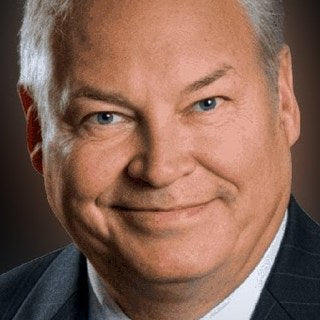
Jeff N. Scott
Jeff N. Scott is Chairman of the Board of NOSHOK, a manufacturer of pressure and temperature measurement instruments and needle valves. He joined the company in 1972 as its third employee, working his way up from shipping and receiving through calibration, inside sales, outside sales, and ultimately president and CEO. Over a 51-year career he helped grow NOSHOK from a 400-square-foot storefront into a roughly 70-person operation, and he counts naming Christian Cole as president and CEO among his proudest moments.


