


How AUMA Actuators Got 35% More Output With Zero New Hires | Matt Thiel
In This Episode
What would it take to get 35% more output from your operation without adding a single person to the payroll? For Matt Thiel, President of AUMA Actuators — the electric valve actuator manufacturer whose products run Pittsburgh's Point State Park fountain, the city's river locks, and once even tilted the giant Heinz ketchup bottles at the former Heinz Field — the answer wasn't squeezing people harder. It was a nine-year commitment to putting employees first.
In this episode of the Fully Open Podcast, recorded at Valve Manufacturers Association headquarters in Alexandria, Virginia, host Gilbert Welsford Jr. sits down with Thiel to trace his path from designing gas-leak-detection instrumentation at Industrial Scientific to leading AUMA's North American operations — and to unpack the "employees first, customers second, shareholders third" philosophy he learned from his mentor, Kent McElhatton.
If you run a plant, a distribution business, or a team of engineers, this conversation is a practical playbook: how to earn feedback people are afraid to give, and how culture change compounds into hard operational results.
Key Takeaways
- Employees first, customers second, shareholders third. Treat employees right and they do the right things for customers, which drives results — and that is what ultimately keeps shareholders happy, even if they bristle at being listed third.
- AUMA lifted output 35% with zero new hires by improving processes, giving people better tools, and fixing the pain points employees themselves surfaced — making jobs easier, not longer or faster.
- Culture change is an evolution, not a revolution. AUMA's path to Best Place to Work in Pittsburgh was a nine-year journey that started by using an annual workplace survey as an honest benchmark.
- Feedback only flows when leaders visibly act on it. Anonymous third-party surveys opened the door, but employees tested leadership first — credibility was earned through action, not promises.
- For engineers eyeing the executive track: take every opportunity outside your department. Thiel went from circuit design to product management to president by learning sales, manufacturing, marketing, and operations firsthand.
- Industry associations multiply your voice. Through the VMA, AUMA develops younger employees in working groups and joins a collective voice on government affairs that no single company could match alone.
- Family is first — even ahead of employees first. Thiel's advice to his 25-year-old self: don't stress out, don't miss the birthdays, and put the phone down when you walk in the door.
Employees First, Customers Second, Shareholders Third
The philosophy at the heart of this episode came from Kent McElhatton, the CEO who gave Thiel room to grow at Industrial Scientific — it was even printed on the company's business cards. Ranking shareholders third raised eyebrows at a publicly traded company, but McElhatton defended it openly, and thirty years later Thiel still runs on it.
"Employees first, customers second, shareholders third. With employees first, you have happy employees. You have people that want to come to work, that want to do the best things for their customers, which in turn drives results, which keeps the shareholders happy."
When Thiel later interviewed with one of AUMA's owners, who spoke about a family-oriented company that treats employees with the highest level of respect, he recognized the same vision instantly — "the German version of Kent McElhatton" — and jumped at the opportunity.
The Nine-Year Journey to 35% More Output
Becoming a Best Place to Work in Pittsburgh didn't happen with a slogan. Thiel used the local Best Places to Work survey as a benchmark to find out what employees actually felt needed to change. From there came breakout sessions, "Coffee with the President," and cross-functional teams from production, engineering, sales, and customer service working through survey results together. The worst thing you can do with feedback, Thiel warns, is ignore it — so leadership responded, visibly, year after year.
The payoff wasn't just morale. By hearing pain points and fixing them — better processes, better tools — AUMA grew its output 35% without hiring a single additional person.
"We're not here to make you work longer hours or work harder or work faster. It's: let's make it easier for you to do your job. If we make it easier for you to do your job, you're going to enjoy doing your job more, and then the results will follow."
Getting the Feedback You Need — Not What You Want to Hear
How do you keep employees from telling the boss what he wants to hear? Thiel's answer: it's cultural, and it took years. Early surveys were run anonymously by a third party, and even then the first responses were flattering rather than honest. So Thiel told his teams directly what he needed.
"Don't tell me what I want to hear. I need you to tell me what I need to hear, because if I don't know of the problem, I can't fix it."
Employees responded by testing leadership — offering a real problem to see if anything would happen. Each visible fix earned credibility, until today people run out to meet him on the production floor to share updates and flag issues unprompted.
What's Next for AUMA — and a Rule Worth Stealing
Thiel isn't slowing down: AUMA recently opened AUMA Canada, acquired Philadelphia-area electro-hydraulic actuator maker BAFCO, and has new product announcements coming in early 2026. But the episode closes on the advice he'd give his 25-year-old self: don't stress out — it's not as bad as it seems. After years of 14-to-16-hour days early in his career, he now preaches family first to every manager he mentors, and he enforces it on himself with a simple nightly ritual.
"When I get home and I walk in that door, the first thing I do is I put my cell phone down on the bookcase right next to the door with my car keys. And I don't touch it until the next morning."
About Matt Thiel
Matt Thiel is the President of AUMA Actuators, leading the electric valve actuator manufacturer's North American operations from Pittsburgh. An engineer by trade, he started as an electrical engineering designer at Industrial Scientific straight out of university, moved into product management and executive roles, and has spent nine of his ten years in the valve industry actively involved with the Valve Manufacturers Association, where he serves as immediate past chairman of the board. Under his leadership, AUMA has been recognized as one of the best places to work in Pittsburgh.
Watch the full conversation in the video above, subscribe on YouTube so you never miss an episode, and browse every conversation at the Fully Open Podcast hub.
Read the Full Transcript
Transcript is auto-generated from the episode audio and lightly edited for readability. Tap a timestamp to jump the video to that moment.
Employees first, customers second, shareholders third. With employees first, you have happy employees. You have people that want to come to work, that want to do the best things for their customers, which in turn drives results, which keeps the shareholders happy. Most people that come here retire from here. Don't miss your kids' birthday. Don't miss a Halloween. Try to be there for your family, because family is first. When I get home and I walk in that door, the first thing I do is I put my cell phone down on the bookcase right next to the door with my car keys, and I don't touch it until the next morning. Welcome to the show. I'm Gil Welsford, third-generation valve entrepreneur and founder of ValveMan.com. Join me as I hear stories, learn wisdom, and get industry insights. This is more than valves. It's business, legacy, and resilience. Let's get into it. Hey guys, welcome to Fully Open. I am
here at the Valve Manufacturers Association headquarters in Alexandria, Virginia, and I am excited to be talking with Matt Thiel from AUMA Actuators today. He has a long history with the Valve Manufacturers Association, which I'm sure we're going to get into. But Matt, thank you so much for being on the show today. I really appreciate it, man. Oh, you're welcome. It's my pleasure to be on. I'm looking forward to spending some time with you guys. Absolutely, brother. So let's just start out. Tell us a little bit about your background, sort of how you rose up the ranks to now be the president of AUMA. So, I've been in the valve industry 10 years. I started outside of valves. I was in instrumentation — gas leak instrumentation, actually, for industrial gas monitors. So I was looking for leaking valves and identifying those areas, and then I had the opportunity to come to AUMA to run
their North American operations, and it was great. Instead of looking for leaking valves, now we're opening and closing valves, which is a lot of fun. It's been a great experience. And it's just great people in our industry. Riveting stuff, man. It's funny — when I'm at a cocktail party or happy hour or whatever with my kids, people are like, "What do you do?" I'm like, "Oh, I sell the most exciting stuff in the world. Valves." They're like, "What are you talking about?" And it is. I mean, you and I, we talk at the VMA annual event or whatever, and it is exciting, right? Like, there is fun stuff, but to the layman, they're like, that is not exciting at all. You sell stuff that moves valves. Like, what? I mean, you're so right. And we're based in Pittsburgh, and we bring customers in, or people that aren't really familiar with our products, and they're from the local area. I always talk about Pittsburgh. I'm like,
"Oh, you know the fountain down at Point State Park, the big fountain they show on TV?" I'm like, "We control the flow of water to and from the fountain." And they're like, "Oh, okay." And then we have the rivers here, so we have locks and dams. And I say, "Would you ever go on the Gateway Clipper boat?" "Oh, yeah, we do that all the time every summer." "We open and close those." "Oh, okay." And then our most famous installation, that everybody across the globe is familiar with if they're a football fan, is when Acrisure Stadium was Heinz Field, we had the ketchup bottles up. We would tilt the ketchup bottles whenever the Steelers would enter the Heinz Red Zone, and everyone's like, "Oh, now we know what you guys do." A little bit unconventional use of electricity. We move more than valves, right? We move more than valves, but everybody can relate to it now. That is so cool. I love that. I think it is really awesome to have just a few instances that you can explain sort
of what you do to somebody when you're at your kids' football game or whatever, right? Yeah, oh, absolutely. Absolutely. So, in your background — I know you were a product manager at a company called Industrial Scientific, which I believe is a Pittsburgh-based company as well, right? So tell me a little bit. So you went from product manager — I know you were a VP, and then you joined as a VP, and shortly thereafter ended up as president. So tell me a little bit about that story of how you go from a product manager into sort of that executive leadership role. And what is a piece of advice that you would give someone that is looking to rise in the ranks from engineering or product design work into working with people every day?
Yeah. So, I'm an engineer by trade, and I was lucky enough to get hired by Industrial Scientific as an electrical engineering designer straight out of university, and I had the opportunity to design instrumentation. And they came to me and said, "Hey, you know how to talk to people, you know how to do this, but you know the technical aspects — do you want to be a product manager for us? You kind of do sales, marketing, still in engineering." And at a very young age, they gave me a lot of opportunities to grow and develop, and with them I was able to move production lines internationally, bring international production lines back to Pittsburgh. I just got involved with every aspect of the business, and to me, that opportunity allowed me to move up and become president of AUMA. I'm not just a
sales guy, but I understand sales. I understand manufacturing, understand engineering, understand the marketing aspect of it. And my advice to young folks is: learn, get involved, explore. If you're given an opportunity in a department outside of what you think you should be doing, take advantage of it, and see what you want to do in life. Because I learned very quickly as a design engineer that I don't like sitting behind a desk writing software and drawing circuits all day. That just wasn't my cup of tea. I was okay at it, but it's like, I don't want to do this the rest of my life. So take advantage of opportunities that come your way, and figure out what you want to do and what's going to make you happy. Yeah. And I think — I mean, a couple really great nuggets that you gave in there. So it sounds like: learn how to talk with people, right? I mean, people buy from people, people work with
people. That's really what it is at the base of business. But also learn what other parts of your business are and what they do — have an interdisciplinary aspect to your career. And that will allow you to look at the 10,000-foot level and have the owners and managers put trust in you, because you understand shipping and receiving, you understand product design, you understand marketing, you understand finance, all of these different things. I would think that helped you end up in the position that you are. Oh, absolutely. Absolutely. And I mean, you kind of nailed it there. People deal with people. So no matter where you're at in your career, no matter what department you're in, you have both internal
and external customers, and you've just got to deal with people on a personal level. And that's how you get things accomplished, and you've got to have everybody pulling in the same direction. And if you can bridge those gaps between the departments and get everybody working for the same positive goals, you move the organizations forward, and it's done on a person-by-person basis. And I know we're going to get into that a little bit more, because I know that AUMA is very, very good at that. So, one of the other things that you and I have talked about, and you've mentioned to me, is also the power of mentorship. I'm a huge proponent of mentorship. I have mentors in various aspects of my life, and I know that you have and have had mentors, one being
Kent McElhatton from Industrial Scientific. So tell me a little bit about that relationship, and perhaps how that helped you further your career, and maybe what you're doing now to give back and help the next person come up the ranks, or the stairs, if you will. Industrial Scientific was founded by a father-and-son combination, and Kent McElhatton was the son and CEO of the organization. And Kent was one of the ones that gave me a lot of freedom and flexibility at a very young age to develop within the organization. But his philosophy was something that has always stuck with me. I don't know if he came up with it, I don't know if he took it from someone else, but he preached it within the organization — and it was on our business cards: employees first, customers second,
shareholders third. And when you look at a business, you're like, shareholders third? At the time when I started there, we were a publicly traded company, and shareholders really don't like hearing that they're third on the list. So he would always sit there at shareholder meetings and employee meetings, and he would explain it. He goes, "Yeah, this is my vision, and my belief is: employees are first, customers second, shareholders third. With employees first, you have happy employees. You have people that want to come to work, that want to do the best things for their customers." And when you're doing the right things for your employees, they in turn do the right things for your customers, which in turn drives results, which keeps the shareholders happy. And that's something that over the last 30 years has just stuck in my mind. I left Industrial Scientific and went to a couple other companies along the way. They were publicly traded, private equity owned, and
their views and visions are a little bit different than other folks' — when you're driven by EBITDA instead of other things. So when I met the one owner of AUMA Actuators, a gentleman over from Germany, and I was interviewing, he started talking about employees: "We're a family-oriented company, and we treat employees with the highest level of respect." I'm like, "Oh my gosh, this is like the German version of Kent McElhatton." They both shared that same vision. And to be able to find two companies in your career that have such high values and standards for the employees is pretty rare. So I kind of jumped at the opportunity to come back into an organization that truly values the employees. That is so cool. And it's funny — Brian O'Leary from Reotemp and I had a very, very similar conversation to this
during a previous podcast episode — I think it was episode five — and we were talking about how, a lot of times, companies... and private equity gets a bad rap, right? And there's good private equity and there's not-so-good private equity. There's good public companies and there's not-so-great public companies. So it's not a generalization — well, a generalization is this, though: often those companies are just chasing EBITDA and shareholders and the next shareholder meeting and quarterly profits, and they don't make these long-term decisions. And I think employees first, customers second, shareholders third is really putting a trust in the process and that long-term outlook. And look, we're a third-generation company, and we're building for the fourth generation, and that's how we make our decisions — really long-term. So when I'm doing my
budgeting and my planning and all this kind of stuff, our numbers might not look as amazing as they do at a publicly traded company, but I warn anybody that comes to work at Welsford Company or ValveMan: most people that come here retire from here. And I'm like, "Hey, it's how it is." And I'm not saying you'd better, but it's just because we're such a family-oriented company. And I think having that creates long-term — I consider that shareholder, because they're shareholders, right? They're stakeholders in the business, and they end up having a really great experience, and we all get to go into work and really love what we do every day. I mean, it's so fun to go into work. Which brings me to — man,
you guys are the ultimate of that. I know that you guys have been featured as one of the best places to work in Pittsburgh. So tell me a little bit about building that culture. Obviously it stems from that employees first, customers second, shareholders third. But let's dive a little bit deeper — like, how do you actually implement this? How does it work day to day? So, that was a nine-year journey for us as an organization. Coming in as a new leader to the organization, a young leader to the organization, you kind of look around and see what's happening, and it's like, okay, what do we need to do to evolve as a company? And the philosophy that we had here was: it's an evolution, not a revolution. And you've got to get
the people behind you to be able to move things forward. So we initially started — one of the local organizations here, every year they do a survey for best places to work in Pittsburgh. And we're like, well, let's use this as a benchmark, and let's benchmark what we're doing and use it to find out what are the areas that the employees feel need to be improved upon. So we used that as a starting point. From there, we took it and we started having smaller breakout sessions, and we had lunch with the president, coffee with the president, and we pulled in groups of people — cross-functional teams from production, engineering, sales, customer service — and just started going through some of the items that came up on the surveys. And when you ask for people's feedback, the worst thing to do is ignore it and not do anything about it. So as soon as we got the results, we pulled people in
and started asking about the different questions and comments that were made, and people were like, "Wow, you're willing to listen." And then we started making changes — positive changes — as a result of the feedback that we got, and they're like, "Wow, this is great. Now you're actually doing things that we want to see happen." So it was an eight-year journey. We did the survey every year or every other year, depending on the frequency of it, and COVID and all that fun stuff. And we just continually developed and grew as a company, and made improvements, and evolved as an organization. And throughout all of it, we sat there and we worked with every department to make it better. And you see people come in — they're smiling, they're happy, they're glad to come to work. They're proud of the changes that we were able to make. We increased
our output 35% without hiring people — just by improving processes and getting people better tools to use, hearing what their pain points were, and just fixing them. And what a perfect way — employees first, customers second, shareholders third: the shareholders get to benefit from a 35% increase in output without having to add any people, right? Yeah. But it was an employees-first mentality that created that. And it was a long-term outlook, I'm sure. Long-term outlook. And we said, how do we make your life easier? We're not here to make you work longer hours or work harder or work faster. It's: let's make it easier for you — make it easier for you to do your job. If we make it easier for you to do your job, you're going to enjoy doing your job more, and then the results will follow.
And it was great, and we saw all of that. I love that last one so much. Yeah. So, how do you — when you're doing these employee interviews and surveys, when you're asking for feedback — how do you get the responses that you need to hear, not the responses that you want to hear? So your employees aren't saying what they think you want to hear, like, "Oh, this is the best place to work," but they're actually willing and able to be — I'll use the word critical, but constructive, I guess, is the right word. How do you do that? Is that a cultural thing? Are there certain mechanics to it, of anonymity or...? It's cultural. And it took us a while to get there. The initial surveys that we did were
from a third-party company, and they were all anonymous. So you knew which department the comments came from, but you didn't know the individuals that said it. And in the first one, people would come back and put in what we wanted to hear. And we sat down in the groups, and I said, "Guys, I don't want to hear that. Don't tell me what I want to hear. I need you to tell me what I need to hear, because if I don't know of the problem, I can't fix it. So let me know." And then, slowly, some people are like, "Okay, we'll give you a test, and we'll see if you're going to listen and do something about it." So then you have to respond. You've got to gain their credibility by your actions, and it just took years to be able to do that. But we got there, and now it's very open conversations. And I walked on the production floor — I've been traveling for like the last four or five weeks, and this week was the first
time I was in the office, and people come running out and say, "Hey, did you know that we did this, this, this, and this? Hey, we need you to take a look at this for us." And it's great to get that feedback. That is so cool. I take our employees' feedback — and I've never really put words to this, and you're probably helping me do that — but when I get, "Hey, it would really help us if this..." — dude, like nothing else matters in my life. I'm like, I need to make sure we fix this. I make it my personal goal to have at least an update, if it's a larger fix, or a resolve, by the meeting next week, because that's what I expect of our team — that they're going to be doing that for our customers and for each other, and all of that. And I think, you're right, I mean, it really does come from
the top down. And I mean, Matt, it's very obvious just talking to you — and anybody that hasn't met you — you're also just an absolute genuine, super awesome, amazing, nice guy. And I don't say that to puff you up. I just mean that. It really is — I'm sure that also is a huge contributor to the culture. I mean, you're just such a nice guy. Well, thank you. I appreciate that. So, let's talk a little bit about — so I'm sitting here at the Valve Manufacturers Association in Alexandria, Virginia. And before we hopped on, I asked you, I said, "Have you sat in this office before?" You were like, "Absolutely, I've been in that office many times. I've worked from there." So you are, I think, the immediate past president of the
board of the Valve Manufacturers Association. Is that correct? The immediate past chairman, yes. Past chairman, okay. Sorry. Past chairman, yes. Yes. Okay. So tell me a little bit about your decision — I mean, that takes a lot of time. I know you were just over in Italy and you spent some time there with the VMA and all this. So, getting involved with an industry association like VMA takes a lot of time and energy and effort, but at the end of the day, it is a part of work. And I'm sure if you weren't the president of AUMA, you probably would not have been that involved with VMA. So tell me a little bit about that experience, and maybe some encouragement for other people that are in other industries to get involved with their associations, or VMA in particular. Like, tell me about
VMA — why did you get involved? What has that experience been like? So, VMA — it's been a great organization to be involved with over the years. I've been involved nine out of my 10 years in the valve industry. In my first year, I was just kind of learning the business here and briefly got exposed to it. But for the past nine, I've been heavily involved in attending the meetings, being on different committees, being on the board, being on the executive team. And it's just one of those organizations that does good things for the entire industry. And that's where you see the value in it, because it helps with the employees — it's not just presidents of all the valve and actuator companies that are members. There are forums for everyday workers to attend. There's training classes, there's the
Valve Basics, the Valve Forum. We look at it as, hey, this is an opportunity to start elevating some of our younger employees, people that have aspirations to grow into management. So we try to get everybody involved in the different working groups, so they can work with their peers in the industry but also help improve the industry. And that's been a big push that the VMA has had over the last five years, really on the government affairs side of things, because there's a lot going on in our industry that, as a collective group, impacts every single one of us — and our collective voice is a lot louder than our individual voices. So it's something that helps all of us. I love that. And we have been a part of VMA for the last two years, and it's been such an amazing organization to be a part of. I mean, I love the educational resources, the people — just getting to know guys like you. I
mean, I've met you through VMA, and we've met a lot of other folks through the group. So you got involved on the executive side, and very involved when you were chairman of the board. So tell me a little bit about that experience. What were those responsibilities? And what has that been like, being a part of — really, an integral part of the organization? It was extremely valuable on a personal level, because the VMA is an evolving group. It's an evolving organization. Heather Rhoderick — she's been president of the VMA for a little over five years now. So working with Heather, and watching her develop in the role, and seeing her vision of how we need to change and do things a little bit differently —
again, not blow it up, but just look at things in a different light, in a different way, to help grow member benefits. Because that's what it is: how do we add value for all of our members? Not just an oil and gas valve maker, or electric actuator makers, or an individual group, but how do we add value for all of our members — to grow membership, but to really be that resource for folks? So it's been great watching the organization, and being part of the organization, evolve — improving our government relations, improving relations with other manufacturing organizations, and being seen as a respected manufacturing organization in the US. It's been wonderful. Very rewarding. Very rewarding to see. That's awesome. That's awesome. Yeah, for anybody that is in the valve industry, if you are not a member — especially valve manufacturers — if
you haven't been a member of VMA, I highly recommend at least attending an event. Check it out. I would suspect you're probably going to end up being a long-term member. There's a lot of benefits and a lot of educational resources. We just wrapped up our annual event down in Florida, and it was a great, great time. So, what's next for you, Matt? And what's next for AUMA? I'm sure you're a mover and a shaker. You're a guy that likes to grow things. And I mean, you've hit a lot of peaks. You were the chairman of the board of VMA. You hit the best place to work in Pittsburgh. So what's next for Matt Thiel and for AUMA Actuators? We still have tons of room for improvement here. We're continuing to grow. So, here in North
America, we just opened AUMA Canada, so we now have our own footprint in Canada. That's been a lot of fun. AUMA Canada is celebrating their five-month birthday this month. It's great to see the team up there grow and evolve, and being part of their development has been great for me. I just love being involved with a group like that. We've also expanded our product portfolio recently. We acquired a company over in the Philadelphia area that does electro-hydraulic actuators — that's BAFCO, Incorporated. And BAFCO has been part of the AUMA family for about two years now, and they're working on some really, really good things. They've been heavily involved in the oil and gas market, and they do things very well,
but we're looking at expanding their product portfolio and doing some things a little differently for them. So that's exciting to see. And we always have new products coming out, so there'll be some new product announcements early in 2026, with a lot of push on the new products here in the US and Canada. And we're helping our partners, our sister companies, in South America — we're helping them grow. So we're doing a lot of trainings for them, and that's been fun, getting involved in the international aspect of the AUMA business a little more than I had in the past. So there's always something to do, always a lot of fun, and I'm just enjoying it. Truly enjoying it. That's awesome. It sounds like you have your hands full, but I wouldn't expect anything less. I wouldn't expect anything less. That is awesome. That's exciting. So, I would love to wrap up our time here,
Matt, because going into this, one of the questions that I asked you is: what is something that you would tell your 25-year-old self? And you gave an answer that was really interesting, and not something that I think I've necessarily heard a leader like yourself say before. And what you said is: don't stress out, it's not as bad as it seems. Which — I think people almost know that you live that, just by the way you carry yourself. And you are, again, just a fun guy to be around. But tell me how that works in real life. I mean, that's a hard thing to do sometimes, especially as a guy — we get all puffed up and that kind of thing. So I'd love to hear how that is, how you've done that in your life, and how do
you have that not look like being too laissez-faire and not holding people accountable, right? But you're also not getting too stressed out. Sometimes I feel like there can be a little bit of a dichotomy, and I know you probably live that. So tell me a little bit about that. So, it's something I learned the hard way, because when you're young and full of energy and trying to make a name for yourself, and you're working 14-, 16-hour days — You're still young and still full of energy, by the way, Matt. Come on. Thank you. But when you're doing those things, and you start really worrying about the wrong stuff and getting stressed out over it, it doesn't do anything but bring you down and bring the people around you down. And
that's not good. And that's the one piece of advice that I give all my managers that I get involved with. I'm part of Leadership Washington County — I was part of that training group over here — and I always tell folks: just don't stress out. It's not worth it. Especially people that have young families — your family is first. My wife, God bless her, she put up with a lot of stuff early in our marriage. She's a special woman for doing that, and for allowing me to do the things I did to be able to get in the position that I am. And I tell folks, I'm like, she's a special woman, but don't make the same mistakes I made. Don't miss your kid's birthday. Don't miss a Halloween. Try to be there for your family, because family is first. At the end of the day, we say employees first here, but at the end of the day, it is your family first. That is the most important thing in your life —
make sure you find time for your family, and you don't want to be stressed out during family time. So, for me, I look at it and I say: when I get home and I walk in that door, the first thing I do is I put my cell phone down on the bookcase right next to the door with my car keys. And I don't touch it until the next morning, as hard as that is. And I've had people look at me like, "I can't believe you do that. How could you do that?" And other folks have come back and said, "You know what, we've tried that, and oh my god, we're happier for it. We get a good night's sleep." You're not looking at emails. You get that one email at 10 o'clock at night, and you read it, and you're just like, "Oh, I can't believe that went wrong." And then you're just upset about it, and you don't get any sleep. So it's not worth it. Don't stress yourself out over it, because tomorrow's another day, and it'll get better. That is amazing advice, and that's something I need to
reimplement in my life. I used to plug in my phone and not look at it, and I didn't sleep with my phone in my bedroom, and I have gotten away from that. And I think I need to reimplement that in my life, because you're right — getting good rest time and good time with your family is probably some of the best things you can do for your business. Yep. Because if you get a few hours of sleep, or you don't get restful sleep and all that, you come to work and you're anxious, and it's just — that's not good. So I think that's a really, really great piece of wisdom here. I mean, you dropped so many nuggets of wisdom throughout this whole thing, but that's a really, really good one, and something I need to reimplement in my life. One of the values that we have at the FSW Group — being Welsford Company and ValveMan — is
family. And family is — we really do truly consider, if you work within our company, you're family. I mean, it's — there's a whole — that could be a whole hour-long conversation. But it's also that we truly want everyone to be present with their family. We want them to spend time with their family — dedicated time with their families. Because at the end of the day, why do we do all this? Yeah. That's right. Right. It's like, what are you doing? I mean, I've just seen so many people that work, work, work, and they end up, when they're 70 years old,
and they don't have a relationship with their kids, or this and that, whatever. Their life was always just work, and it's just like — why would you do that? That doesn't make any sense to me. So I think that's a really, really good piece of advice. So thank you for that. I love it. Oh, you're welcome. So, any parting words, Matt? Oh, I mean, this was a pleasure. Thank you for having me on. I truly, truly enjoyed our time. I love the questions that you asked, because they're great questions, and it's things that I'm passionate about. When you have good people surrounding you, both at home and at work, like you said, it just makes things so much fun in life. So, I appreciate your time, and I appreciate you having me. Yeah. Well, Matt, I just want to thank you so much. You embody leadership, and it's
through and through you. And it's not with an iron fist — it's with joy and grace. And I just want to thank you for showing that to our industry. I'm sure the people in Pittsburgh at AUMA, and BAFCO, and everywhere else appreciate it as well. But I just want to thank you for showing that to me, because it's not as common as it should be. So thank you. Oh, you're welcome. It's been my pleasure. Awesome, brother. Well, I hope you enjoy the rest of your day. Looking forward to seeing you at the next VMA event very soon. Sounds good. Thank you much. We'll see you soon, Gil. Have a good one. Bye. Thanks. Bye-bye. Thanks for listening to Fully Open. If something stood out or sparked a thought, I would love to hear it. See you on the next one.
Frequently Asked Questions
How did AUMA Actuators increase output by 35% without hiring anyone?
What does "employees first, customers second, shareholders third" mean?
Who is Matt Thiel of AUMA Actuators?
How do you get honest, critical feedback from employees?
What is Matt Thiel's "phone down" rule for work-life balance?
Your Host

Gil Welsford
Founder and CEO of ValveMan, a B2B industrial valve distributor, and a third-generation leader of a family business founded in 1965. Gil is also the host of the Fully Open Valve Podcast. A valve nerd from around 4 years old, he's spent his career helping engineers, contractors, and facility teams source the right valves for the job.
About the Guest
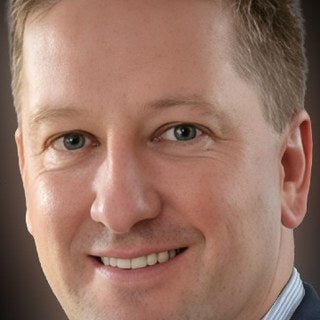
Matt Thiel
Matt Thiel is the President of AUMA Actuators, leading the electric valve actuator manufacturer's North American operations from Pittsburgh. An engineer by trade, he began his career designing gas-detection instrumentation at Industrial Scientific before rising through product management and executive roles, and he has spent nine of his ten years in the valve industry deeply involved with the Valve Manufacturers Association, where he is the immediate past chairman of the board.


