

Check valves are vital to so many different applications, but one of the questions that comes up quite often is whether they affect the water pressure in a piping system. In this article, we review what check valves are (and how they work) and how they impact system pressure.
What are Check Valves?
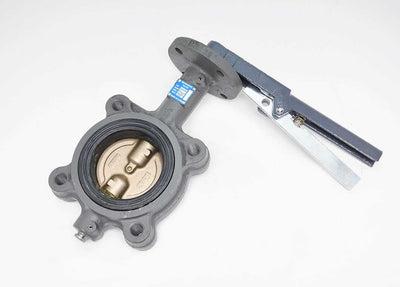
Check valves, also known as "one-way" valves, are autonomously operated unidirectional valves that allow fluid to flow in a singular direction, thus reducing or preventing backflow. They are created with some key factors in mind, like the fluctuating nature of the closing assembly and pressure changes in the fluid flow upon closing of the flow restrictor. One of the most important considerations to be taken while installing a check valve is the orientation in which it is to be installed.
Various accessories such as hinges, pistons, screens, and flaps are employed in the different types of check valves. In simplistic terms, however, a flap of some kind is used to allow flow in one direction while restricting it in the other, hence the name “one-way valve”. How the flap is adjoined to move with the fluid flow is where most check valves differ. It may be supported with a spring (double door check valves), with help from the force of gravity (swing check valves), or with a combination of the two. Types of check valves include the ball check valves, Y-type check valves – sometimes used in conjunction with a swing or ball check valve – and foot valves, which incorporate a screen and, as the name implies, are used at the end of a pipeline or the foot of it.

Water Flow and Pressure in Piping Systems
Water pressure is usually defined as the force exerted on water to push it through the pipeline. It may be naturally (gravity) or artificially (pumps) created. Water flow, on the other hand, is the amount of water running through a pipe at any given time. Given the same pipe area, we can say that the greater the amount of water flowing, the greater the pressure. The flow-pressure relationship is not a simple one, though. When we increase the flow through a valve or pipe section, it also increases friction loss, which results in a pressure loss as we go downstream.
There is the cracking pressure of the water check valve you are going to use. This is the upstream water pressure at which the valve ‘cracks’ open, allowing a measurable flow of fluid through. The cracking pressure is affected by the force required to open the check valve, which may depend on the tightness of the spring or the weight of a gravity-operated flap.
While overall system usage plays a significant factor in the pressure drop taken across a check valve, three key factors pertaining to the implementation of the valve itself influence this calculation: the specific gravity of the fluid, the flow rate of the media, and the flow coefficient, also known as the Cv characteristic, of the valve in question.
Increasing the flow rate of the media through the valve will yield a higher pressure drop. Likewise, increasing the specific gravity of the flowing media will also lead to a higher pressure drop. Conversely, a larger flow coefficient equates to a lower pressure drop.
Which Check Valve to Use
Generally, gravity-supported water check valves, such as swing and tilting disk check valves, are the best to use horizontally and for low water pressure situations because force required to open the restricting flap is minuscule. However, they may be problematic in vertical applications. The valves employing spring force, however, require higher water pressure to function, as they come with the capability of a tighter backflow resistance, and can be affixed in either orientation. Restrictor water check valves, perhaps better known as adjustable spring-loaded check valves, are the most optimal for changing water pressure situations, due to their multi-spring assemblies that give you the ability to set the cracking pressure of your choice.

Problems with Check Valves
With the many benefits that check valves provide, they also bring with them some problems. If not addressed, these problems have the potential to cause massive damage to the piping systems.
Minerals and particulates can build up on and around the valve, especially the closing assembly. When enough build up, they prevent the valve from closing properly and disable it from stopping reverse flow. This would defeat the entire purpose of installing a check valve. This is one of the reasons why check valves should be maintained or replaced accordingly.
Chemical compatibility is another vital consideration. The check valve material, both body and valve seat, must be compatible with the media flowing through it. Incompatibility can lead to the destruction of the valve. For example, salt water in a piping system will damage steel check valves but is compatible with PP valves.
Reverse flow may also become an issue if the check valve is not fast enough at closing. A slow-opening valve causes excess flow restriction and pump strain, while a slow-closing valve causes flow reversal and severe water hammer.
In fact, water hammer is one of the most common problems afflicting piping systems. It occurs when some influencing factor, such as pump shutoff or point of use closures, forces the flowing media to stop or change direction. This can create a hydraulic shock wave that ripples through the piping, potentially damaging equipment, instrumentation, or even the piping itself. Choosing the right check valve for an application prone to water hammer can help mitigate these deleterious surges.

Why Check Valves Fail – and How to Fix Them
As highlighted above, a failing check valve can cause immense damage to the piping equipment. However, valves have telltale signs that can prevent damage over time.
Some initial signs to look for are excessive noise, vibration, and wear and tear of internal valve components. Reverse flow and, in extreme circumstances, water hammer are also strong indications of a failing valve. These challenges can be avoided at first but may also need remedial interventions.
To prevent valves from failing, important considerations include appropriate sizing, reaction speeds, and chemical compatibility. Installing filters where feasible will also help prevent buildup and increase the longevity of your check valve.
In addition to the preventive maintenance measures discussed above, corrective measures may also be required if the valve is beyond repair. Replacing the valve with a new one of the same type may be appropriate, but sometimes there’s a need to replace the valve with another one altogether, perhaps due to considerations regarding size, type, closing assembly, or reaction speed.
Conclusion
Need guidance in determining the appropriate check valve for a specific application? The experts at ValveMan have the knowledge and experience to help. Shop ValveMan.com today!