

Fundamentals of Valve Sealing Technology
The image below shows the cross-section of a typical ball valve. You'll notice the white seats and white seals, which are the topic of our discussion in this article. A typical ball or gate valve (we’ll be using ball valves for our example) has two seat rings, one or more stem-sealing elements, and a body-joint gasket or O-ring. Gate valves use a different geometry and may use metal seating surfaces rather than polymeric seat rings.

By Bitjungle - Own work, CC BY-SA 4.0
Understanding Valve Seal and Seat Failure Modes
To understand why material selection is so important, it’s good to start with the most common ways that seals fail. There are several key failure modes for valve seals and seats, including these:
-
Cold flow (creep) under continuous pressure
-
Thermal expansion and permanent deformation
-
Permeation, swelling, and chemical degradation
-
Decompression and hydraulic shock damage
Cold Flow
Under continuous pressure, some polymers and elastomers will begin to creep, or change dimensions. As the material begins to expand into clearances, it can lose its initial preload, and it runs the risk of erosion or tearing. This combination can lead to issues with leakage. Note that some materials are more susceptible to cold flow than others.
Thermal Expansion and Permanent Deformation
When there are temperature swings, the size of the seat or seal can expand/contract. This is especially problematic when there’s a mismatch in thermal expansion between metal housing and polymer or elastomer valve components. This can lead to seat pinching and cause the seal to shrink away from the sealing face. These effects can severely compromise the integrity of the seal. If the material is pushed out of place, tearing and erosion can further damage the seat/seal.

Permeation, Swelling, and Chemical Degradation
Some media can be absorbed by a polymer seal, depending on what material is used. This absorption can lead to swelling and compromised seal integrity through dimensional distortion, loss of strength, and localized stress concentrations.
Changes to the molecular structure of the material caused by chemical reactions are possible when the material isn’t carefully chosen. These changes are worsened by high operating temps and higher pressures, which will drive faster chemical reaction rates. As a result, there can be hardening, embrittlement, cracking, or softening/dissolving of the seal material.
Decompression and Hydraulic Shock Damage
Rapid gas decompression, or RGD, occurs when a high-pressure gas permeates the seal and then a sudden pressure drop causes the trapped gas to rapidly expand. This can lead to problems from internal blistering to catastrophic seal rupture.
Hydraulic shock, sometimes called water hammer, can also damage valve seals and seats. In this case, the system undergoes a pressure surge. This surge can cause the loads on the seals to reach the point that they’re permanently deformed. Deformation can lead to tearing, displacement, and more – all of which contribute to seal failure.
Soft Valve Seat or Hard Valve Seat?
Before we dive into material specifications, let’s address one question that will always help you narrow down your options quickly: do I need a soft valve seat or a hard valve seat?
When to Consider Soft Valve Seats
Soft seats (e.g., PTFE, PEEK, elastomers), when properly specified, can deliver performance up to ANSI/FCI 70-2 Class VI shut-off under low differential pressures. This makes them a good choice for clean gas, chemical, and liquid lines. Soft seals also require lower operating torque, which means you can also get smaller, lower-cost actuators when using them. However, soft seals are going to be susceptible to mechanical erosion, thermal degradation at elevated temperatures, and tearing damage from particulates or slurries.
When to Consider Hard/Metal Valve Seats
Hard metal valve seats are typically rated for Class IV or Class V shut-off, though specialized precision lapping can achieve better performance. These types of valves are highly resistant to severe abrasive slurries, high-velocity flashing, hydraulic shock, and extreme temperatures exceeding 1,000°F (538°C). They do, however, require significantly higher seating/unseating torque and carry higher initial manufacturing costs. They are going to require larger, higher-powered actuators compared to soft valve seats, too.
Material Specifications
Virgin Teflon (TFE / PTFE)
If you’re thinking of the coating for your pots and pans, you’re right. That’s PTFE, trade name Teflon. Teflon offers outstanding chemical resistance and extremely low friction, along with a temperature range up to 400°F and capabilities up to 1000 psi. It is, however, susceptible to creep / cold flow. It’s also sensitive to thermal fluctuations because its high coefficient of thermal expansion can cause it to change dimensions, leading to seat leakage during thermal cycling.
Reinforced Teflon (RTFE)

Reinforced Teflon is another option closely related to Teflon. It combines the slickness and chemical resistance of Teflon with the added strength and stiffness of glass fiber. With a typical 15% glass-fiber filler, RTFE improves on virgin PTFE with an improved cycle life and better pressure/temperature ratings. This Jomar Valve HPBFV-600-SS-300-GO butterfly valve shown is an example of a valve having RTFE seats.
Kel-F (PCTFE)
KEL-F, which refers to PCTFE, is well suited to low-temperature and cryogenic temperatures. It has a high tensile strength, low creep, and a low coefficient of thermal expansion. This material exhibits good chemical resistance and minimal moisture absorption. Kel-F can handle temperatures from -400°F up to 300°F with pressures up to 1500 psi. It will swell in the presence of halocarbon compounds, ethers, esters, and aromatic compounds.
Super-Tek (TFM)

TFM is a modified PTFE formulation designed to improve properties such as porosity, welding behavior, and deformation recovery relative to conventional PTFE. Filled TFM compounds may add carbon, graphite, glass, stainless steel, or other fillers, depending on the proprietary grade. It offers low friction, reduced permeation, better recovery, and reduced issues with cold flow (but can still creep under a load). It’s a second-generation PTFE and is used for high-performance industrial valve seats. Its operating temperatures range from -50°F to 500°F. The JFlow DM2533 Manual Ball Valve shown has TFM seats and stem packing with a Viton O-ring.
Super-Tek II & III
Super-Tek II is TFM that’s been reinforced with either 25% glass fiber or 25% carbon/graphite fill for an extended cycle life in applications involving steam, thermal fluids, and process chemicals. Its operating temperature range is -320°F to 575°F. Super-Tek III (TFM 4215) is a blend of TFM or PTFE with carbon and graphite. This gives it a low expansion rate, making it a great option for thermal fluids, and some formulations are approved for steam service up to 250 psig.
Delrin (POM / Acetal)

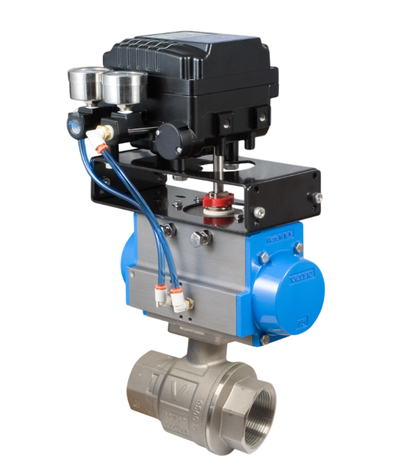
Delrin, also referred to as Acetal, is known for its high rigidity, minimal cold flow compared to other fluoropolymers, and radiation resistance up to 106 rads. Its operating range is narrow, however, at -70°F to 180°F. It can handle pressures up to 5000 psi, depending on size. It is, however, restricted from use in oxygen service unless you have an oxygen-clean, manufacturer-approved valve design and a documented compatibility/ignition-risk review. The Bonomi 3000 - 2-Way, 2 Piece ball valve has Delrin seats.
Nylon
Nylon (yes, this one you see in clothes) has some good properties as a seal/seat. It has high pressure capacity at lower temperatures. It’s also compatible with high-pressure air, oil, and gas. Nylon’s operating temperature range is -30°F to 200°F. It is, however, sensitive to strong oxidizing agents and tends to absorb moisture. Nylon can also lead to issues with gas decompression.

PEEK (Polyether Ether Ketone)
PEEK has outstanding mechanical strength with good chemical resistance and electrical/thermal endurance. Its operating temperature range is up to 600°F and 6000 psi. It should, however, never be used with concentrated sulfuric acid. The AVCO 1100 Series 2-Way Ball Valve shown is available with PEEK seats.
UHMWPE (Ultra-High-Molecular-Weight Polyethylene)

UHMWPE is known for its exceptional wear/abrasion resistance, along with its radiation resistance up to 108 rads. It can handle -70°F to 200°F. However, it’s not suitable for steam applications. UHMWPE is commonly used in oilfields. The Bonomi 741 LL Ball Valve shown has UHMW-PE seats as an option.
50/50 Seats (50% 316 Stainless Steel / 50% TFE)
It’s possible to fill self-lubricating and extremely slick PTFE with stainless steel powder. So a 50% 316 SS powder blend is used to improve mechanical pressure/temperature handling. 50/50 seats work well from -20°F to about 500°F (250 WSP rating, only where stated by manufacturer).
Viton (FKM Elastomer)
Viton is a little different from what we’ve been looking at: it’s an elastomer instead of a polymer. It's high-temperature and effective for many applications where a tight shut-off is necessary. It can handle temps from -20°F to 400°F, but can be incompatible with steam services.
GRAPHOIL / Graphite Seats
Graphite seats made from flexible graphite are a standard fire-safe sealing material across high-heat environments that can handle temperature limits from -70°F to 1000°F in inert, non-oxidizing, or reducing media. GRAPHOIL (aka GRAFOIL) will start to oxidize and degrade above 850°F in the presence of air or oxidizing atmospheres.
Metal Seats
For severe service, abrasive slurries, hydraulic shock, flashing, or trapped solids, the best option is probably going to be a metal seat. These are available in FCI 70-2 / ANSI Class IV and V shut-off. While Class VI (bubble-tight) is achievable with specialized precision lapping or severe-service triple-offset designs, achieving Class VI with metal-to-metal seating requires strict qualification.
Here are some of the common metals used:
-
Stainless Steel: Provides good rust resistance and strength for general industrial use
-
Stellite: A cobalt-based alloy that resists extreme heat and hard wear very well
-
Bronze: Works well in water and marine systems because it resists saltwater corrosion
-
Monel: A nickel-copper alloy that handles harsh chemicals and acids safely
-
Carbon Steel: Offers strong support and low cost for standard oil and gas lines

The Watson McDaniel HSP Series Pilot-Operated Pressure Regulating Valve shown to the right is available with optional Stellite trim.
Master Material Comparison Matrix
What follows are some tables of information about the most common materials used for valve seals and seats. Note that some of the values are representative and may vary according to the exact material and grade used. Also note that the pressures are valve-specific, so they are not included in the tables.
All temperature, pressure, leakage, and compatibility values are representative only. Confirm the exact seat compound and valve assembly against the manufacturer’s current pressure-temperature rating and chemical-compatibility documentation.
Soft Thermoplastics & Fluoropolymers
| Material & Classification | Temperature Range | Key Features & Strengths | Applications & Limitations |
|---|---|---|---|
| Virgin Teflon (TFE / PTFE) (Fluoropolymer) | -50°F to 400°F | Exceptional chemical resistance, extremely low coefficient of friction, bubble-tight sealing in clean services. |
Apps: General chemical service, food & beverage.
Avoid: Thermal cycling >200°F, steam, cold flow risk; non-reusable.
|
| Reinforced Teflon (RTFE) (Filled Fluoropolymer) | –50°F to 450°F | 15% glass-fiber fill enhances pressure-temperature resistance, reduces cold flow, and extends cycle life over virgin TFE. |
Apps: Chemical process lines, general industrial steam & utility service.
Avoid: Hydrofluoric acid, strong hot caustics.
|
| Kel-F (PCTFE) (Fluorocarbon Polymer) | Cryogenic service to ~300°F (Depending on grade & valve design) | Exceptional low-temperature dimensional stability, zero moisture absorption, excellent resistance to cold deformation. |
Apps: Cryogenic liquid gas (LNG, liquid nitrogen, liquid oxygen).
Avoid: High-temperature applications (>300°F).
|
High-Performance Engineering Polymers
| Material & Classification | Temperature Range | Key Features & Strengths | Applications & Limitations |
|---|---|---|---|
| Super-Tek (TFM) (Modified PTFE) | -100°F to 500°F (Varies by grade & design) | Lower operating torque, significantly reduced permeability, superior surface finish, and improved thermal recovery. |
Apps: High-purity chemical processing, semiconductor, aggressive solvents.
Avoid: Extremely severe abrasives.
|
| Super-Tek II (TFM + Graphite) | -320°F to 550°F | 75% TFM, 20% glass-reinforced, 5% EPDM; extended cycle life in high-temperature steam and severe thermal cycling. |
Apps: Process steam, hot gases, thermal fluids, general process chemistry.
Avoid: Hydrofluoric acid service.
|
| Super-Tek III (TFM + Glass + Bronze + Graphite) | -300°F to 550°F | Proprietary TFM composite with glass, bronze powder, and graphite; ultra-low thermal expansion rate. |
Apps: High-temperature steam, hot thermal fluids, power generation.
Avoid: Highly oxidizing chemical streams.
|
| Delrin (POM / Acetal) (Homopolymer Acetal) | -70°F to 180°F | Exceptional structural rigidity, zero cold flow, high impact strength, radiation resistant up to 106 rads. |
Apps: High-pressure oil & gas pipelines, nuclear environments.
Avoid: Oxygen service, high heat (>180°F), strong acids.
|
| Nylon (Polyamide) | -30°F to 200°F | High mechanical strength and fatigue resistance in high-pressure gas/liquid service at moderate temperatures. |
Apps: High-pressure compressed air, natural gas, hydraulic oil lines.
Avoid: Strong oxidizing agents, acids, steam.
|
| PEEK (Polyether Ether Ketone) | -70°F to 550°F (Higher if manufacturer-qualified) | Unmatched combination of mechanical strength, chemical inertness, high thermal stability, and wear endurance. |
Apps: Severe oilfield service, superheated steam, chemical refining.
Avoid: Concentrated sulfuric acid, nitric acid.
|
| UHMWPE (Ultra-High Polyethylene) | -70°F to 200°F | Superior wear and abrasion resistance, high radiation tolerance (>108 rads), excellent impact toughness. |
Apps: Abrasive slurries, nuclear facilities, tobacco processing, low-temp media.
Avoid: Steam service, elevated temperatures (>200°F).
|
Composite & Stainless Steel Filled Compounds
| Material & Classification | Temperature Range | Key Features & Strengths | Applications & Limitations |
|---|---|---|---|
| 50/50 Stainless Seats (50% 316 SS + 50% TFE) | -20°F to 500°F (If supplier-qualified) | Blends metal abrasion durability with PTFE lubricity and tightness; greatly improved mechanical creep resistance. |
Apps: Saturated steam, thermal fluid, slurries with mild solids.
Avoid: Corrosive media aggressive to 316 Stainless Steel.
|
Elastomer, Graphite & Extreme Service Seats
| Material & Classification | Temperature Range | Key Features & Strengths | Applications & Limitations |
|---|---|---|---|
| Viton (FKM) (Fluoroelastomer) | -15°F to 400°F | Resilient elastomeric shut-off, high resistance to oils, fuels, and aliphatic hydrocarbons at high temperatures. |
Apps: Hydrocarbon fuels, oil handling, vacuum applications.
Avoid: Steam, hot water, amines, esters, ketones.
|
| GRAPHOIL / Graphite (Flexible Graphite) | -70°F to 1,000°F (In non-oxidizing service) | Extreme high-temperature capability, fire-safe compliance (API 607), impervious to thermal shock. |
Apps: Fire-safe valves, high-temp steam, petroleum refining, power plants.
Avoid: Highly oxidizing environments at elevated heat.
|
| Metal Seats (e.g., Hardened SS / Stellite) | Cryogenic to high temperature (Alloy & valve-design specific) | Maximum mechanical durability, immune to severe flashing, hydraulic shock, trapped solids, and extreme heat. |
Apps: Abrasive slurries, catalytic cracking, extreme steam, hydraulic shock.
Avoid: Tight Class VI soft-seat shutoff requirements (typically Class IV/V).
|
Failure Modes of Common Valve Seals and Seat Materials
Early in this article, we went over the basic failure modes of valve seals and seats. The table below summarizes these key failure modes and what the critical operating boundary is for some of the materials we’ve been discussing.

| Material Class | Key Failure Mode | Critical Operating Boundary |
|---|---|---|
| Virgin PTFE | Failure: Creep / Cold Flow under load | Poor performance in thermal cycling; low steam capability. |
| TFM (Modified PTFE) | Failure: Thermal expansion if unconstrained | Reduced permeation and superior deformation recovery vs. PTFE. |
| PCTFE (Kel-F) | Failure: Brittle cracking if cycled above max temp | Excellent cryogenic toughness; unsuitable above 300°F. |
| Delrin (POM) | Failure: Chemical degradation / stress cracking | Restricted from oxygen service, steam, and strong mineral acids. |
| PEEK | Failure: High seat torque / scoring | Susceptible to concentrated sulfuric and nitric acids. |
| FKM (Viton) | Failure: Explosive decompression / steam swelling | Incompatible with steam, hot water, amines, and polar solvents. |
| Graphite | Failure: Oxidation and loss of mass | Oxidizes above 850°F in the presence of atmospheric oxygen. |
Conclusion
If you need help sizing or ordering the right seat or seal for your valve, contact us here at ValveMan. We’ll put 60+ years of experience to work for you!.