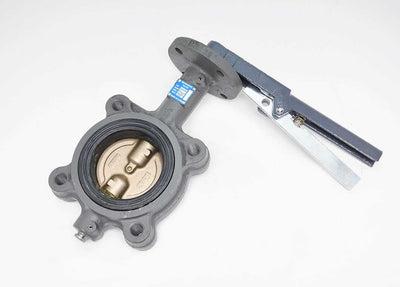


ANSI refers to the American National Standards Institute, the U.S. standards and conformity assessment system. In the valve industry, we often have to adhere to different ANSI classes, such as ANSI 300, ANSI 600, ANSI 900, or even higher. But what do these classes mean? Does it tell us how strong the valve is? Is it even important?
The answer to those questions and more can be found in this article.
Why ANSI Valve Classes are Important
ANSI Valve Classes establish a highly regulated framework. That framework ensures safety, mechanical integrity, regulatory compliance, and physical interchangeability across the global supply chain of valves. Here’s what that means to us:
Interchangeability: Thanks to standard dimensional rules (such as ASME B16.10), any valve of a given size, type, configuration, and pressure class is going to physically fit into the same pipe spool space, regardless of who manufactured it or where it came from.
Safety Protocols: Using recognized classes helps to prevent things like catastrophic failures in highly volatile environments. When design codes mandate compliance with a 'listed standard,' these classes carry the force of law wherever the adopting jurisdiction has incorporated them by reference into its pressure-vessel or piping code.
Consistent Trade: These valve classes work to provide a universal engineering language. A universal language streamlines cross-border transactions and cuts customization costs for suppliers and end-users like you.
What do ANSI Valve Classes Tell Us?
In a nutshell, an ANSI Valve Class tells the physical connection dimensions and the maximum allowable working pressure a valve can handle across a range of operating conditions. Basically, it’s a pressure-temperature rating instead of a fixed pressure limit. A rating system is needed because the load handling capabilities of valves change with temperature.
The chart from Engineering Toolbox gives us a visual of that very thing. Even for Class 2500 valves, you’ll notice the drop in strength after about 200°C (about 400°F). Note that it says Group 1.2 toward the bottom left of the chart. That designation is important. It tells us that this applies to carbon and alloy steel valves, which we’ll talk about in a minute.

What Does the Class Mean If it Isn’t the MAWP?
On a measurement chart, standard ANSI ratings are identified by a three-digit number, running between 100 and 900. Higher class ratings are in the 1000s and up. Now let’s see what exactly those numbers are.
Here’s a typical ANSI class specification for valves: 1-inch carbon steel ball valve, 150# flanged valve.
The "150" doesn’t mean a strict limit of 150 psi. It is a class name linked to rules by groups like ASME. The actual maximum allowable working pressure (MAWP) of a valve class is defined by a dynamic relationship governed by two variables: body material and operating temperature.
Body Material Group
Valves are made of different alloys that have widely varying stress limits. For example, at an ambient temperature of 100°F (38°C), a Class 150 carbon steel (ASTM A216 WCB) valve can handle 19.8 bar (285 psig), whereas a Class 150 stainless steel (ASTM A351 CF8M) valve is only rated for 15.9 bar (275 psig) because of lower allowable material stresses.
The material groups are further divided, though. The number after the decimal subdivides materials that belong to the same base family but have different strength levels or specifications. Because of this, they have different allowable stress values and therefore different pressure-temperature ratings. For example, forged materials have different strengths than cast.
There are three main material categories:
-
Group 1: Carbon & Alloy Steels (e.g., A105, WCB, Chrome-Moly)
Carbon and alloy steels are the industry baseline for general piping, high-pressure steam, and power generation. Excellent strength at standard temperatures, but derates significantly above 750°F. -
Group 2: Stainless Steels (e.g., 304, 316, Duplex)
Stainless steel is used where corrosion resistance, high-temperature oxidation resistance, or cryogenic toughness (down to -425°F) is required. -
Group 3: Nickel Alloys (e.g., Monel, Inconel, Hastelloy)
There are high-cost superalloys designed for severe chemical processing, strong acid service, seawater, and extreme thermal environments where carbon and stainless steels fail.
Operating Temperature (Derating)
As metals get hotter, they get softer and lose their tensile strength. So, as process temperatures rise, the maximum allowable pressure drops along a temperature-derating curve. For example, a Class 600 carbon steel valve rated for 102.1 bar at 100°F (38°C) is derated to 79.6 bar at 572°F (300°C) and further down to 70.0 bar at 752°F (400°C).
Now here’s where it gets interesting: there’s a different chart/table for each class of materials represented in the standard.
Here’s an example of a temperature derating curve for ANSI Class 150 for Groups 1, Group 2, and Group 3.
| Temperature (°F) | Group 1 — A105 carbon steel (Group 1.1) | Group 2 — A182 F304/F316 stainless (Group 2.1) | Group 3 — Inconel 625 (Group 3.8) |
|---|---|---|---|
| 100 | 285 | 275 | 290 |
| 200 | 260 | 230 | 260 |
| 300 | 230 | 205 | 229 |
| 400 | 200 | 190 | 198 |
| 500 | 170 | 170 | 170 |
| 600 | 140 | 140 | 140 |
| 700 | 110 | 110 | 110 |
| 800 | 80 | 80 | 79 |
| 900 | 50 | 50 | 50 |
| 1000 | 20 | 20 | 20 |
Here’s a plot to better illustrate the behavior of the three materials.

Example: Specifying an ANSI Valve
For example, consider specifying a 4" gate valve for a carbon steel water/steam line operating at 150 psig and 300°F. For general carbon steel service, standard material selections include ASTM A105 (forged) or ASTM A216 Grade WCB (cast). Both options fall under ASME Material Group 1.1.
Checking the pressure-temperature rating table (ASME B16.5 / B16.34 Table 2-1.1) for Group 1.1:
-
Class 150 MAWP at 300°F: 230 psig
-
System Operating Pressure: 150 psig
| Temperature (°F) | Group 1 — A105 carbon steel (Group 1.1) |
|---|---|
| 100 | 285 |
| 200 | 260 |
| 300 | 230 |
| 400 | 200 |
Because the Maximum Allowable Working Pressure of 230 psig exceeds our design requirement of 150 psig, an ASME Class 150 gate valve is fully compliant, safe, and the most cost-effective choice for this application. Note: Always select the lowest class whose MAWP at the design temperature meets or exceeds the operating pressure. Over-specifying (jumping to Class 300 unnecessarily) adds cost and weight without any benefit.
Step-by-Step Breakdown of the Check
-
Material Classification: Identify that A105 / A216 WCB corresponds to Material Group 1.1.
-
Temperature Lookup: Locate the 300°F row in the Group 1.1 rating chart.
-
Pressure Comparison: Verify that the Class 150 allowable rating (230 psig) is greater than the operating pressure (150 psig).
-
Final Selection: Confirm Class 150 (no need to step up to Class 300, which would offer 655 psig MAWP at 300°F but add unnecessary weight and cost).
How ANSI Valve Classes Work
So we know these ratings are based on a valve material and the way in which the body was cast.
Each material has limits for pressure and temperatures and therefore associated ANSI ratings. This way, customers are assured that they are not only buying parts that fit, but that they are purchasing parts which will stand up to the conditions under which they will be placed.
Conclusion
To learn more about ANSI Standards for valves, check out our blog post on What Are ANSI Standards for Valves and Are They Mandatory? And if you have any questions, the valve experts at ValveMan are ready to help! Contact us today.