

Electric actuation improves the efficiency of processes by maintaining the accuracy of the repetitive opening and closing of the ball valves. Electric actuators are compact and scalable valve operators that can deliver varying torque. Each actuator is rated for a specific duty cycle, which defines how long it can run before it must rest.
If you haven't heard much about duty cycles, no worries. That's our topic for today.
What is a Duty Cycle?
The duty cycle of a valve actuator has an impact on the service life of the actuator. Each actuator has an appropriate usage rate that guarantees the safe operation of the actuator under diverse operating conditions. Exceeding the recommended duty cycle can cause the electric motor to overheat, leading to premature failure of brushes (in brushed motors), motor windings, insulation, lubricants, and other actuation components. The electric motor is likely to overheat, causing damage to electrode brushes and other actuation components.
Duty cycle is the ratio of actuator on‑time to total cycle time (on‑time plus off‑time), usually expressed as a percentage. Mathematically, this takes the form of:

An actuator with a higher duty cycle operates for a longer period than that with a lower duty cycle. For example, scaling the concept of duty cycle to the duration of one minute, the actuator with a duty cycle of 90% will be operational for 54 seconds and have a rest time of 6 seconds. The one with a duty cycle of 25% will operate for 15 seconds and rest for 45 seconds before coming back on. In practice, duty‑cycle calculations are usually based on seconds or minutes per cycle, even though actuators may be used in processes that run for hours, days, or longer. It implies that the actuator needs sufficient time to cool off before coming back to operation. Frequently cycled piping operations such as flow modulation processes require the valves to open and close at an almost constant or continuous basis. To maintain the reliability of such flow conditions, the use of actuators with higher duty cycle ratings and those that require lower maintenance becomes inevitable.
Factors Affecting the Duty Cycle
There are two main factors that affect the duty cycles of electric ball valve actuators. First is the quantity of fluid load acting on the valves. When there is an increase in the amount of valve load, or a sharp rise in the operating speed of the actuator, the duty cycle reduces. Conversely, when the actuator operates slowly and supports a smaller valve load, then the duty cycle of the actuator goes up. The actuator approaches the peak efficiency point.
Next is the temperature and humidity of the operating environment. Higher temperatures make it harder for the valve actuators to dissipate any heat it generates when operating.

Why is Duty Cycle Important in Valve Applications?
Every actuator has an operating threshold beyond which a further temperature rise will cause damage or impede its actuating characteristics. For example, an actuator with a duty cycle of 25% should not operate continuously at maximum loading and at a rate equal to or higher than the designated value of 25%.
Duty Cycle as Relating to Electric Ball Valves
There are different types of valves existing in the market with diverse actuation mechanisms to suit industrial applications. Electric, pneumatic, hydraulic, and electro-hydraulic actuators provide means for automating valve operations. Electric valve actuators, just like other electronic components, generate heat during operation.
Automated control mechanisms rely on process signals to alter the position of the valve to initiate, stop, or vary the flow rates of the working media. Duty cycles vary for each actuator depending on the loading characteristics and the ambient operating temperatures.
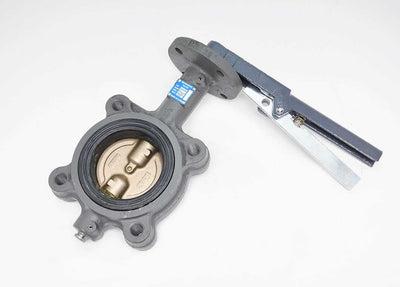
Installing electrically actuated ball valves can provide a low pressure drop when properly sized and fully open, making them well suited for many process applications. As fast-acting flow control devices, slight displacement of the valve initiates quick conveyance of the working fluid. The actuators convert electric current into pulses that respond to pipeline pressure conditions to open or close the valves.
Electric ball valves can be driven by AC or DC power, and many modern actuators use pulse‑width modulation (PWM) techniques to control the motor speed and torque by varying the duty cycle of the DC signal. The quarter-turn flow control devices provide tight seals that are necessary for eliminating contamination. They’re commonly used in large port connections and can handle heavier media (semi-solid fluids, slurry) and convey larger volumes than solenoid valves. Electric ball valves have long cycle lives, provide excellent sealing characteristics and efficient flow control for thousands of rotations. They’re a preference for most industrial applications like chemical handling, food and beverage processing, power plants, and oil pipelines since they allow high inlet pressures and have a higher magnitude of backpressure.

Improving the performance of an electric actuator often involves controlling the average power delivered to the motor, so it provides enough torque without excessive heating. When there is excessive power, heating occurs, increasing the probability of actuator failure. Electric ball valves use pulse width modulation (PWM) techniques to reduce non-uniform power distribution. Electric ball valves often use PWM, which rapidly switches the power on and off at a fixed frequency while varying the duty cycle. This controls the average voltage and power delivered to the actuator, improving efficiency and reducing heat.
Solenoid valves and electric actuators respond quickly to input signals (electrical pulses). When the frequency of the pulses increases, the oscillation of the motor armature increases. Pulse width modulation ensures that the input signals have the same operating frequencies as the solenoid valve or electric actuator. When the frequencies vary, valve components tend to chase after (lag) the oscillating input signal. Applying a uniform signal frequency throughout the actuation cycle protects mechanical parts of the valve from overruns which increase thermal loads on the valve body.
Additional Selection Criteria for Electric Ball Valves
By now, it is clear that the duty cycles are crucial when it comes to the selection of actuators for electric ball valves. Ball valve selection will depend on the type of working media, ease of maintenance, power consumption, and fast action. There are several other factors for consideration.
One of them is the motor speed. Faster motors guarantee a quick response to input signals when dealing with fluid modulating service. While fast actuator response is critical, it affects the stability of the electric actuators. A quick-acting actuator is likely to overshoot beyond its operating limit. Solving this problem requires the use of a motor with lower revolutions per minute. Alternatively, a speed reduction mechanism will facilitate a perfect balance between stability and responsiveness.
Another is the valve shut-off characteristics. For on-off fluid service, the actuator needs to operate at maximum speed. As the valve approaches its closed position, fluid turbulence rises. The quick movement within the transition zone increases sleeve wear, reducing the operating characteristics of the valve over time. Electric actuators using pulse width modulators cater for this by optimizing the drop-out conditions.
Where to Buy Electric Ball Valves?
While not perfect for every job, electric ball valves are nonetheless an irreproachable solution for numerous media dilemmas. Heavy-duty, reliable, and known for their longevity, electric actuators have proven themselves to be tried and true. Several top manufacturers offer electric actuated ball valves, including Bonomi, J Flow Controls, and more. And ValveMan.com has them ready. We've been selling industrial-grade valves for over 60 years.