
 888-825-8800


Process Solenoid Valves
A process solenoid is an electromechanical device that controls the flow of liquids or gases using a simple electrical signal to power an electromagnet. They are essential for automated flow systems.
The solenoid part of the valve is essentially an electromagnetic coil with a plunger and seal. The coil creates a magnetic field when current passes through it. When magnetized, it pulls a metal plunger (a spindle) up or down to control the flow.
The plunger is attached to a seal that will either block or unblock one or more orifices in the valve body. The seal is typically made from NBR, EPDM, or Viton, depending on the media involved. The valve body is usually manufactured from brass, stainless steel, or a polymer such as PTFE.
Common Process Solenoid Valve Configurations
Process Solenoid Valves can be classified according to their default state or how many ports they have. Here’s a summary of default states:
- Normally Closed (NC): valve stays closed until power is applied (most common for safety)
- Normally Open (NO): valve stays open and only closes when powered
- Latching (Bi-stable): Uses a pulse of power to open and another to close; stays in its last position without constant electricity (which is great for battery-powered systems)
Solenoids can also be classified by the number of ports and ways:
- 2-Way: 1 Inlet, 1 Outlet: Used for simple On/Off control
- 3-Way: 3 Ports: Used to divert flow from one path to another or to vent pressure from an actuator
- 4-Way / 5-Way: Primarily used to control hydraulic or pneumatic cylinders (5-Way is pneumatic only)
Direct-Acting Process Solenoid Valves
Direct-acting solenoid valves are among the most reliable and simplest. They get their name from the fact that the plunger is directly connected to the valve disc. When the electromagnetic coil is energized, the seal is lifted directly from the seat.
One of the features that sets direct-acting process solenoid valves apart from others is that they operate from zero pressure, which means they don’t require any help from the fluid pressure to open. This makes them a great option for low-pressure systems, small pipe sizes under 1”, and vacuum applications. In addition, they offer an extremely fast response time and have fewer moving parts that can fail. They are, however, limited in size. As the pipe size or pressure increases, the coil would need to be much larger to overcome the force resisting the metal plunger and seal.
Pilot-Operated Process Solenoid Valves
Pilot-operated process solenoid valves, also known as servo-assisted valves, use the pressure of the fluid. The solenoid only has to open a tiny pilot hole that creates the pressure imbalance needed to force the main piston or diaphragm to open. They do require a minimum pressure differential to operate, usually between 5 and 15 psi. If the pressure happens to be low, the valve may not be able to fully open or stay open.
These solenoid valves work best for high-pressure and high flow applications that involve larger pipe sizes. In fact, they can control very large flows using just a small, low-power coil. On the other hand, they are going to have a slower response time than direct-acting solenoid valves.
Speciality Process Solenoid Valves
This refers to a very broad category of solenoid valves that are needed when general-purpose valves would fail. Here are some examples:
|
Type |
Specialized Feature |
Typical Application |
|
Cryogenic |
Materials (like PTFE) that don't shatter at -320°F. |
Liquid Nitrogen, Liquid CO2. |
|
Steam / High Temp |
Heat-resistant coils and metal seals. |
Sterilizers, industrial boilers. |
|
Explosion-Proof |
Heavy-duty housing to contain internal sparks. |
Oil refineries, chemical plants. |
|
Proportional |
Varies the flow based on voltage (not just On/Off). |
Precise gas mixing, burner control. |
|
NAMUR Mount |
Specific bolt pattern to mount directly to actuators. |
Automated ball/butterfly valves. |
|
Intrinsically Safe |
Limits electrical energy to prevent ignition. |
Hazardous "Zone 0" environments. |
ValveMan is your one-stop shop for all your process solenoid valve needs. Our team of experts can help you configure the valve components you need – and if you don't see what you're looking for, just ask us, and we’ll source and order it. ValveMan is waiting to hear from you!
Our Posts
View All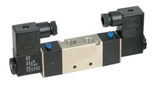
What is a Spool Valve and How Does It Work?
Spool valves are incredibly useful. They are a simple directional control valve used in hydraulic an …
Read More
What is the cracking pressure of a check valve?
Check valves, regardless of their individual design, serve the specific purpose of permitting the fl …
Read More
Smart Water Valves: Futuristic Flow Control Technology
Leaks can range from annoying to devastating, and the longer they go unaddressed, the more costly th …
Read More
How to Calculate Flow Rate In Water Systems
Flow rate is critical in water systems, from simple home plumbing to complex industrial water system …
Read More
What Is a Valve Pressure Rating? Definition and Guide
Pressure ratings are important considerations when designing a system that uses valves, but they can …
Read More
Special Pricing and Services for OEM - the ValveMan Valve Store
OEMs or Original Equipment Manufacturers make up a large portion of our clients at ValveMan. With th …
Read More
Data Cooling Centers and Sanitary Valves
Overheated data centers pose a massive challenge, and the global data center cooling market is growi …
Read More
Valve Materials for Gaseous Oxygen Service
Oxygen may seem safe because it is colorless, tasteless, and odorless, but in the wrong conditions, …
Read More
Pneumatic Actuators Valve Types
Have you ever stopped to think about what makes an automated assembly line push, pull, lift, and rot …
Read More
-320°F Liquid Nitrogen Cryogenic Control Valve Setup
Need a valve that can handle -320°F liquid nitrogen without freezing up — and still control flow? He …
Read More
Why Fall is the Perfect Time for Valve Maintenance (And What Happens If You Wait)
We're well into fall now, which means it's time for that conversation nobody wants to have: winter p …
Read More
From the DMZ to Bonomi: Rick Wentzel’s Valve Legacy
In the inaugural episode of the Fully Open podcast, host Gil Welsford sits down with Rick Wentzel of …
Read More
Check Valve vs Backflow Preventer Comparison | ValveMan
If you need to make sure that fluid in your pipe system flows in one direction only, and prevent rev …
Read More
Different Types of Gas Shut Off Valves | ValveMan
Whether you're upgrading your residential gas system, looking for the best gas shut off valve for yo …
Read More
Globe Valve vs Ball Valve Comparison Guide | ValveMan
Valves are widely used in industrial and manufacturing facilities, but they’re also used in utilitie …
Read More
NEMA Ratings Explained | ValveMan
Have you ever wondered what that little NEMA number on your electric actuator meant? Or perhaps, you …
Read More
Gate Valve vs Ball Valve Comparison Guide | ValveMan
Valves are widely used in industrial and manufacturing facilities, but they’re also used in utilitie …
Read More
Valve Inspection - Main Points of Valve Inspection and Testing in Manufacturing Settings
Industrial facilities rely on different types of valves (such as gate valves, check valves and ball …
Read More
Can Ball Valves Be Used For Flow Control?
Ball valves are widely used in plumbing and piping systems, in fact, they are one of the most common …
Read More
Introducing Bonomi Valves
The Bonomi Group is a leader in industrial sectors including oil and gas, hydraulics, heating and en …
Read More