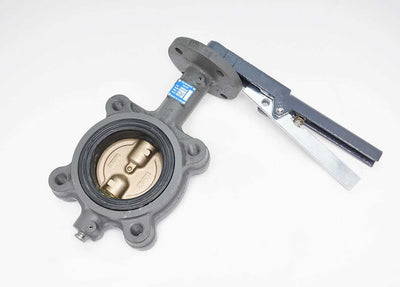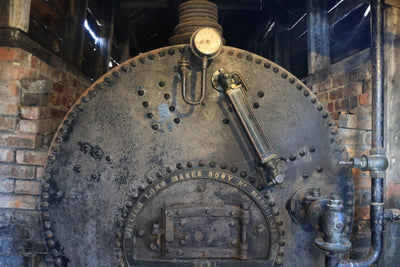


Steam condensate looks harmless on a P&ID: hot water heading back to the boiler. In the pipe, it's liquid sitting at or near its saturation temperature, so any pressure drop can turn part of it to vapor right at and just past the valve seat. Valves specced for ordinary hot water service get eaten alive here. This guide covers how condensate kills valves, how to run the flash-steam math that drives every spec decision, and which valve types and materials actually last.
⚙️ Key Takeaways
- Flash steam forms automatically when pressure drops below saturation, so valve selection must withstand two-phase erosive flow rather than try to prevent it.
- Globe valves with hardened trim handle throttling and continuous drainage; gate and ball valves are strictly for isolation; silent check valves prevent backflow without water hammer.
- Standard 13Cr trim suits only mild or intermittent duty, whereas continuous throttling requires 17-4PH or Trim 5 Stellite to prevent erosion and wire-drawing.
- Standard WCB carbon steel suits mild conditions, WC6 chrome-moly handles typical condensate, WC9 fits high-pressure drains, and 316 stainless resists corrosive or body-washing flow.
Why Steam Condensate Destroys Ordinary Valves
Condensate at boiler pressures runs far above the atmospheric boiling point. Drop its pressure across a valve and the liquid can no longer hold all that heat as liquid, so a fraction flashes to steam instantly. Downstream of the valve you've got a two-phase mixture of hot water and vapor moving fast.
Three failure modes do most of the damage we see. Flashing erosion scours the trim and the valve outlet with high-velocity wet vapor. Water hammer, usually from a condensate slug released by a check valve that wouldn't open at low differential, cracks bodies and bends stems. Wire-drawing cuts a groove through the seat of any valve left barely open against hot condensate.
Material matters from the first day of service. Field experience and the published data agree: 316 stainless and chrome-moly bodies hold up far better than plain carbon steel in flashing condensate; 316 stainless is the choice where corrosion is the driver. We'll put specific grades to that claim below.
The selection sequence that works is simple. Diagnose the damage mechanism, run the flash math, pick the valve type for the function, pick body and trim materials, then spec the class and end connection.
Flashing vs Cavitation: Know Which One You're Fighting
Both start the same way. Flow accelerates through the valve's narrowest point, the vena contracta, and static pressure dips below the liquid's vapor pressure. Vapor bubbles form. What happens next decides which damage mechanism you get.
In cavitation, downstream pressure recovers above the vapor pressure and the bubbles implode against the metal. Cavitation damage is rough, pitted, and cinder-like. In flashing, downstream pressure stays below the vapor pressure, so the bubbles never collapse and two-phase flow continues down the line. Condensate service is almost always flashing service, because a condensate line runs to a lower-pressure destination.

You can diagnose which one you have from the trim in your hand. Flashing erosion is smooth and shiny, as if someone sandblasted the seat and the surfaces downstream of the plug. Flashing service also runs noticeably quieter than cavitating service. That damage pattern is a buying signal: smooth, polished wear tells you to spec harder trim and check your outlet velocity rather than hunt for a cavitation-control valve.
The velocity numbers explain the wear. Downstream velocity in flashing service can reach several hundred feet per second, which is why the valve outlet and the first downstream fittings take the worst beating.
One point has to be stated plainly, because buyers keep asking for a valve that "stops" flashing. Flashing comes entirely from process conditions. If P2 sits below the vapor pressure, flash steam forms regardless of what hardware you install. Valve selection decides whether the valve survives it.
Worked Example: How Much Flash Steam Are You Really Making?
The flash fraction comes straight from steam tables like this one at Engineering ToolBox:
Flash steam % = (hf1 − hf2) / hfg2
Here hf1 is the specific enthalpy of the saturated liquid at the upstream pressure, hf2 is the same property at the downstream pressure, and hfg2 is the enthalpy of evaporation at the downstream pressure. The liquid arrives carrying more heat than it can hold at the lower pressure, and the surplus boils off a fraction of it.
Run it for a common case. Condensate at 7 bar g (roughly 100 psig) dropping to atmospheric pressure produces about 13.4% flash steam by mass. That sounds modest. Then you account for volume: the flash steam occupies roughly 250 times the volume of the remaining liquid (about 1,600 times per kilogram of water converted), so the downstream line is more than 99% vapor by volume. The downstream pipe is effectively a steam line with water entrained in it.
That one calculation drives three purchasing decisions. The bigger the pressure drop, the higher the flash percentage and the harder the trim needs to be. The valve outlet and return line must carry the two-phase mixture, and a line sized for liquid alone will erode at the first elbow. And a high flash fraction tells you throttling duty belongs in a globe valve with replaceable hardened trim, because whatever sits in that flow path is a wear item.
Run your P1 and P2 and not sure what the flash number means for your trim? Call a ValveMan engineer at 888-825-8800 — real engineers, not call centers.
Valve Types Compared for Condensate Service
Globe Valves for Throttling and Drains
The globe valve is the workhorse for condensate throttling and drain duty, and it earns the job twice over. The seat and plug are replaceable, which matters enormously in a service that consumes trim. The flow path also forces the pressure drop to happen at the seat, where you can put hard material, instead of along the body wall. Angle style valves are also common for flashing surfaces as they move the flash zone downstream of the trim.
Our recommendation after 60+ years of specifying these: standard 13Cr trim is acceptable only where the flash math from the previous section says the drop is small and the service is intermittent, such as an occasional manual drain at low differential. Any continuously throttled condensate drop with meaningful flash belongs in hardened trim, either 17-4PH or Stellite-faced Trim 5. The trim upgrade costs a fraction of the repeated rebuilds it replaces.
Check Valves on Condensate Return Lines
Condensate return lines often run at very low differential pressure. A conventional check valve with a stiff spring stays shut until enough condensate pools upstream to force it open, and the slug that finally releases is a water hammer event waiting for a pipe elbow to hit.
The right spec is an in-line silent check valve with a typical cracking pressure around 0.5 psi (this varies by valve design). It opens at the low differentials a return line actually produces and closes before reverse flow gets started, which protects condensate pumps and traps alike. For a broader look at check valve designs and where each fits, read our rundown of the top check valves by application.
Ball and Gate Valves: Isolation Only
A steam-rated ball valve is a fine isolation valve on condensate, fully open or fully closed, with metal or reinforced seats and a blowout-proof stem rated per ASME B16.34 for the saturation temperature. Throttle one, though, and the flashing jet cuts a path across the ball and seats in short order, because the seats sit directly in the erosion path and none of it is economically repairable.
Gate valves follow the same rule. They belong in isolation duty, period. A gate cracked open against hot condensate wire-draws its seat, and once the sealing surface is grooved, the valve passes forever. If you're weighing quarter-turn against multi-turn for a steam-side application, select by function first: isolation goes quarter-turn or gate, and anything that modulates goes globe.
Valves Don't Replace Steam Traps (and Vice Versa)
A steam trap discharges condensate automatically as it forms while holding back live steam. A drain or isolation valve is a manual device. Both jobs exist in the same system. The trap handles continuous discharge, and the valves around it handle isolation for maintenance and manual blowdown. Specify the trap by application, whether that's a float and thermostatic trap on a heat exchanger or an inverted bucket on a drip leg, and you can browse the full range of steam traps by type.
Body and Trim Materials That Survive Flashing and Erosion
Flashing erosion is mechanical scouring by wet vapor moving at several hundred feet per second. The controlling property is surface hardness at temperature, which is why material selection settles most condensate valve arguments.
For bodies, WCB carbon steel is adequate only in mild, low-pressure duty with little flashing. ASTM A217 WC6 chrome-moly (1.25Cr-0.5Mo) is the typical spec for feedwater heater and steam condensate bodies, and WC9 (2.25Cr-1Mo) steps in for superheater drains and high-pressure steam. Both carry pressure-temperature ratings per ASME B16.34. Where the condensate is corrosive, or the body itself sees washing flow, 316 stainless earns its premium. The same chrome-moly logic applies on the supply side of the boiler, which we cover in our guide to valves for boiler feedwater.
For trim, 17-4PH stainless holds up well in flashing service at moderate drops. The standard answer for erosive, high-differential service is API 600 Trim 5: Stellite 6 hard-faced disc and seat with a 13Cr stem. Stellite retains its hardness at very high temperatures, so it keeps resisting the scouring long after softer trim has washed out.
| Service | Body | Trim |
|---|---|---|
| Low-pressure condensate, small drop, little flashing | WCB carbon steel | 13Cr standard |
| Typical condensate and feedwater heater duty with flashing drops | WC6 chrome-moly | 17-4PH |
| High-pressure drains, superheater drains, large flashing drops | WC9 chrome-moly | Trim 5 (Stellite 6 seat & disc) |
| Corrosive condensate or washing flow on the body | 316SS | 17-4PH or Trim 5 |
Treat the table as a starting point and let the flash math move you up a row when the drop is severe. Stuck between two rows on body or trim? Tell us your numbers at 888-825-8800 and we'll tell you where you land.
Sizing, Pressure Class, and End Connections
Cv sizing gets tricky once flow flashes. Flow through the valve chokes at the vena contracta, and past that point a bigger pressure drop stops buying you more flow, so a straight liquid-service Cv calculation misleads you. Use ISA/IEC 60534 choked-flow sizing with FL and FF factors. Size on the choked condition and give the outlet velocity a hard look, because the outlet sees the two-phase mixture at its full 200-to-1 volume expansion. If you want a refresher on how Cv works before you size anything, start with the flow coefficient fundamentals and come back to the flashing correction.
Pressure class comes from ASME B16.34, and the governing condition is the saturation temperature at operating pressure with margin for startup transients. A cold gauge reading understates the real duty.
End connections follow line size and pressure. NPT threads are fine on small, low-pressure drains. Socket weld is the better call on small-bore lines that thermal-cycle, because threaded joints work loose and weep after enough heat-up and cool-down cycles. Larger condensate headers go flanged, typically Class 150 or 300 depending on where the saturation condition lands in the B16.34 tables.
Specify a Condensate Valve
Here are six straightforward steps to help you spec a condensate valve for your system.
Selection Checklist: Specify a Condensate Valve in Six Steps
-
1Calculate Flash Percentage
Establish P1, P2, and the condensate temperature, then calculate the flash percentage. That number tells you whether you have flashing service and how severe it is.
-
2Select the Valve Function
Pick the function: Isolation goes to a gate or steam-rated ball valve, Throttling & Drain duty goes to a globe valve, and Backflow Protection goes to a silent check valve with roughly 0.5 psi cracking pressure.
-
3Choose the Body Material
Pick the body material based on operating pressure and temperature: WCB for mild duty, WC6 for typical condensate, WC9 for high-pressure drains, and 316SS for corrosive service.
-
4Select the Valve Trim
Pick the trim: 13Cr for mild intermittent duty, 17-4PH for moderate flashing drops, and Trim 5 Stellite for erosive high-differential drops.
-
5Verify ASME Class & Connections
Confirm the ASME B16.34 pressure class from the saturation condition and match the end connection to the line size and thermal cycling duty.
-
6Lock Down the Specification
Send us the numbers. Our team in Exton, PA has been specifying condensate valves for 60+ years. Call 888-825-8800 or reach us through our contact page with your pressures, temperatures, and line size, and we'll help you lock down the spec.
ValveMan Has Steam Condensate Valves
Here's just a few examples of some of our best steam condensate valves.
| Valve Type | Model | Recommended Uses | Cautions |
|---|---|---|---|
| Globe Valve |
SVF Flow Control 505F-8 Series  |
Throttling, flow modulation, continuous condensate drains, and high-differential pressure drop service. Socket weld ends withstand severe thermal cycling without joint leakage. | Forged carbon steel body can suffer long-term body washing erosion under severe flashing; upgrade to WC6/WC9 Chrome-Moly or 316SS body if flash mass fraction is extremely high. |
| Globe Valve |
Chicago Valve Series 314  |
Low-pressure condensate throttling or intermittent manual drain/blowdown duty. | Standard 13Cr trim and WCB body will suffer premature flashing erosion and wire-drawing if continuously throttled across large pressure drops. Class 150 limits saturated steam service to ~170 psi. |
| In-line Silent Check Valve |
Apollo 62-503-01 Series  |
Backflow prevention on low-differential condensate return lines. Low 0.5 psi cracking pressure opens easily under low head pressure, protecting pumps/traps and preventing slug-induced water hammer. | Soft seat elastomer limits maximum operating temperature to 350°F (~120 psig saturated steam). Higher temperatures/pressures require an all-metal seated check valve. |
| Ball Valve |
AVCO 1100 Series  |
ON/OFF isolation service ONLY upstream/downstream of steam traps or equipment. 316SS body resists corrosive condensate. |
NEVER THROTTLE. Leaving a ball valve cracked open exposes soft seats to high-velocity flash steam, causing rapid wire-drawing and seat destruction.
|
| Gate Valve |
Chicago Valve Series 216 |
ON/OFF isolation service ONLY on flanged headers or steam trap isolation stations. 316SS material provides excellent corrosion and washing resistance. |
NEVER THROTTLE. Throttling or cracking open a gate valve against hot condensate causes high-velocity wet vapor to cut permanent grooves across the wedge and seating surfaces (wire-drawing).
|
Get the Spec Right the First Time
Condensate eats valves that were specced on gauge pressure and a liquid Cv. Give us P1, P2, temperature, and line size, and real engineers in Exton, PA — not a call center — will walk the flash math and materials with you. Call 888-825-8800 or reach us through our contact page.