

Have you ever wondered what that little NEMA number on your electric actuator meant? Or perhaps you’ve seen a 4X stenciled on your valve actuator nameplates, without ever realizing that there was a deeper meaning behind it. Maybe you’re unsure if a NEMA 4 or NEMA 4X enclosure is the best solution for your project? Let’s clear things up for you.
What Are NEMA Enclosures?
The National Electrical Manufacturers Association (NEMA) is the largest trade association of electrical equipment manufacturers in the United States. NEMA publishes guidelines and standards for electrical products used in North America. The NEMA Standards Publication ANSI/NEMA 250-2020, titled ‘Enclosures for Electrical Equipment (1000 Volts Maximum)’ prescribes standards for electrical enclosures used in industrial applications. The standard designates alpha-numerical enclosure ratings, which describe the environment an electrical enclosure may be used in, as well as the enclosure's ability to withstand various operational and environmental hazards.
By way of example, an electrical enclosure might need to be installed indoors, outdoors, or in a hazardous location. It may be installed underwater, or might be exposed to dust, rain, ice, corrosive atmospheres, or weather hazards. How would you specify a pump motor, valve electric actuator, or other electrical component to suit these conditions? Well, that’s easy. You’d use the NEMA rating system to ensure that the NEMA rating matches (or exceeds) the installation requirements.

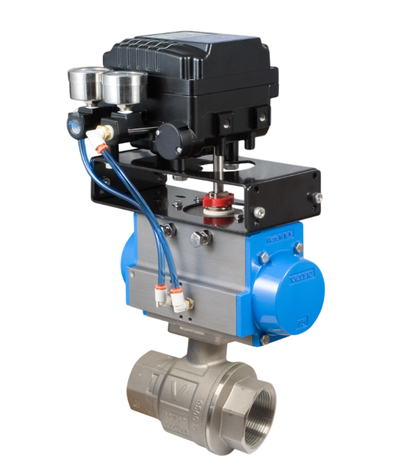
Ball valve with electric actuator mounted in a NEMA enclosure
What Are NEMA Enclosure Ratings?
NEMA ratings describe the different NEMA electrical enclosure types, their installation locations, and the environmental conditions they can safely withstand. It should be noted that NEMA-rated enclosures will only provide the stated degree of protection if they are installed and maintained correctly.
NEMA Rating Types
NEMA enclosure ratings are typically grouped by installation location, such as indoor, outdoor, or hazardous locations. Other rating descriptors relate to the degree of protection against access to hazardous parts, protection from the ingress of solid foreign objects such as dirt and dust, and protection against environmental hazards including rain, snow, ice, and corrosion.
NEMA Type Definitions
The NEMA enclosure rating type definitions are reproduced below. Note that the definitions have been sourced directly from NEMA documentation, particularly NEMA enclosure types. The NEMA type ratings have been grouped by location, as indoor non-hazardous locations, indoor or outdoor non-hazardous locations, and hazardous locations. For detailed and complete information, refer to the Standards Publication ANSI/NEMA 250-2020, titled ‘Enclosures for Electrical Equipment (1000 Volts Maximum)’.
NEMA Enclosures For Indoor Non-hazardous Locations
Indoor non-hazardous locations include NEMA Type 1, 2, 5, 12, 12K, and 13 enclosures. Detailed descriptions for these NEMA electrical enclosure ratings follow.
NEMA Type 1
Enclosures constructed for indoor use to provide a degree of protection to personnel against access to hazardous parts and to provide a degree of protection of the equipment inside the enclosure against ingress of solid foreign objects (falling dirt).
NEMA Type 2
Enclosures constructed for indoor use to provide a degree of protection to personnel against access to hazardous parts; to provide a degree of protection of the equipment inside the enclosure against ingress of solid foreign objects (falling dirt); and to provide a degree of protection with respect to harmful effects on the equipment due to the ingress of water (dripping and light splashing).
NEMA Type 5
Enclosures constructed for indoor use to provide a degree of protection to personnel against access to hazardous parts; to provide a degree of protection of the equipment inside the enclosure against ingress of solid foreign objects (falling dirt and settling airborne dust, lint, fibers, and flyings); and to provide a degree of protection with respect to harmful effects on the equipment due to the ingress of water (dripping and light splashing).
NEMA Type 12
Enclosures constructed (without knockouts) for indoor use to provide a degree of protection to personnel against access to hazardous parts; to provide a degree of protection of the equipment inside the enclosure against ingress of solid foreign objects (falling dirt and circulating dust, lint, fibers, and flyings); and to provide a degree of protection with respect to harmful effects on the equipment due to the ingress of water (dripping and light splashing).
NEMA Type 12K
Enclosures constructed (with knockouts) for indoor use to provide a degree of protection to personnel against access to hazardous parts; to provide a degree of protection of the equipment inside the enclosure against ingress of solid foreign objects (falling dirt and circulating dust, lint, fibers, and flyings); and to provide a degree of protection with respect to harmful effects on the equipment due to the ingress of water (dripping and light splashing).
NEMA Type 13
Enclosures constructed for indoor use to provide a degree of protection to personnel against access to hazardous parts; to provide a degree of protection of the equipment inside the enclosure against ingress of solid foreign objects (falling dirt and circulating dust, lint, fibers, and flyings); to provide a degree of protection with respect to harmful effects on the equipment due to the ingress of water (dripping and light splashing); and to provide a degree of protection against the spraying, splashing, and seepage of oil and non-corrosive coolants.
NEMA Enclosures for Indoor Nonhazardous Locations

NEMA Enclosures For Indoor or Outdoor Non-hazardous Locations
Indoor or outdoor non-hazardous locations include NEMA Type 3, 3X, 3R, 3RX, 3S, 3SX, 4, 4X, 6 and 6P enclosures. Detailed descriptions for these NEMA enclosure ratings follow.
NEMA Type 3
Enclosures constructed for either indoor or outdoor use to provide a degree of protection to personnel against access to hazardous parts; to provide a degree of protection of the equipment inside the enclosure against ingress of solid foreign objects (falling dirt and windblown dust); to provide a degree of protection with respect to harmful effects on the equipment due to the ingress of water (rain, sleet, snow); and that will be undamaged by the external formation of ice on the enclosure.
NEMA Type 3X
Enclosures constructed for either indoor or outdoor use to provide a degree of protection to personnel against access to hazardous parts; to provide a degree of protection of the equipment inside the enclosure against ingress of solid foreign objects (falling dirt and windblown dust); to provide a degree of protection with respect to harmful effects on the equipment due to the ingress of water (rain, sleet, snow); that provides an additional level of protection against corrosion and that will be undamaged by external ice formation on the enclosure.
NEMA Type 3R
Enclosures constructed for either indoor or outdoor use to provide a degree of protection to personnel against access to hazardous parts; to provide a degree of protection of the equipment inside the enclosure against ingress of solid foreign objects (falling dirt); to provide a degree of protection with respect to harmful effects on the equipment due to the ingress of water (rain, sleet, snow); and that will be undamaged by the external formation of ice on the enclosure.
NEMA Type 3RX
Enclosures constructed for either indoor or outdoor use to provide a degree of protection to personnel against access to hazardous parts; to provide a degree of protection of the equipment inside the enclosure against ingress of solid foreign objects (falling dirt); to provide a degree of protection with respect to harmful effects on the equipment due to the ingress of water (rain, sleet, snow); that provides an additional level of protection against corrosion; and that will be undamaged by the external formation of ice on the enclosure.
NEMA Type 3S
Enclosures constructed for either indoor or outdoor use to provide a degree of protection to personnel against access to hazardous parts; to provide a degree of protection of the equipment inside the enclosure against ingress of solid foreign objects (falling dirt and windblown dust); to provide a degree of protection with respect to harmful effects on the equipment due to the ingress of water (rain, sleet, snow); and for which the external mechanism(s) remain operable when ice laden.
NEMA Type 3SX
Enclosures constructed for either indoor or outdoor use to provide a degree of protection to personnel against access to hazardous parts; to provide a degree of protection of the equipment inside the enclosure against ingress of solid foreign objects (falling dirt and windblown dust); to provide a degree of protection with respect to harmful effects on the equipment due to the ingress of water (rain, sleet, snow); that provides an additional level of protectoin against corrosion; and for which the external mechanism(s) remain operable when ice laden.
NEMA Type 4
Enclosures constructed for either indoor or outdoor use to provide a degree of protection to personnel against access to hazardous parts; to provide a degree of protection of the equipment inside the enclosure against ingress of solid foreign objects (falling dirt and windblown dust); to provide a degree of protection with respect to harmful effects on the equipment due to the ingress of water (rain, sleet, snow, splashing water, and hose directed water); and that will be undamaged by the external formation of ice on the enclosure.
NEMA Type 4X
Enclosures constructed for either indoor or outdoor use to provide a degree of protection to personnel against access to hazardous parts; to provide a degree of protection of the equipment inside the enclosure against ingress of solid foreign objects (falling dirt and windblown dust); to provide a degree of protection with respect to harmful effects on the equipment due to the ingress of water (rain, sleet, snow, splashing water, and hose directed water); that provides an additional level of protection against corrosion; and that will be undamaged by the external formation of ice on the enclosure.
NEMA Type 6
Enclosures constructed for either indoor or outdoor use to provide a degree of protection to personnel against access to hazardous parts; to provide a degree of protection of the equipment inside the enclosure against ingress of solid foreign objects (falling dirt); to provide a degree of protection with respect to harmful effects on the equipment due to the ingress of water (hose directed water and the entry of water during occasional temporary submersion at a limited depth); and that will be undamaged by the external formation of ice on the enclosure.
NEMA Type 6P
Enclosures constructed for either indoor or outdoor use to provide a degree of protection to personnel against access to hazardous parts; to provide a degree of protection of the equipment inside the enclosure against ingress of solid foreign objects (falling dirt); to provide a degree of protection with respect to harmful effects on the equipment due to the ingress of water (hose directed water and the entry of water during prolonged submersion at a limited depth); that provides an additional level of protection against corrosion and that will be undamaged by the external formation of ice on the enclosure.
NEMA Enclosures for Indoor or Outdoor Nonhazardous Locations

NEMA Enclosures For Hazardous Locations
NEMA hazardous locations, also referred to as classified locations, are locations where combustion or explosion hazards exist due to the presence of flammable gases, vapors, dusts, or other ignition sources. NEMA hazardous location classifications are made up of different classes and divisions, corresponding to the type and frequency of ignition sources.
NEMA enclosures for hazardous locations include NEMA Type 7, 8, 9 and 10.
NEMA Type 7
Enclosures constructed for indoor use in hazardous (classified) locations classified as Class I, Division 1, Groups A, B, C, or D as defined in NFPA 70.
NEMA Type 8
Enclosures constructed for either indoor or outdoor use in hazardous (classified) locations classified as Class I, Division 1, Groups A, B, C, and D as defined in NFPA 70.
NEMA Type 9
Enclosures constructed for indoor use in hazardous (classified) locations classified as Class II, Division 1, Groups E, F, or G as defined in NFPA 70.
NEMA Type 10
Enclosures constructed to meet the requirements of the Mine Safety and Health Administration, 30 CFR, Part 18.
Comparing NEMA and IEC Enclosure Ratings
The International Electrotechnical Commission (IEC) designates ingress protection (IP) ratings for electrical enclosures. IP ratings specify an electrical enclosure’s level of protection against the solid objects and water. IP ratings are globally used and recognized, and take the form of the letter IP followed by two numbers. The first number relates to the degree of protection an enclosure provides against solid objects, while the second number relates to the degree of protection from the harmful ingress of water.
In general, NEMA electrical enclosure ratings consider a broader range of environmental factors compared to IP ratings. For example, an IP 65 rated enclosure may be considered dust tight, and protected against low pressure jets of water. NEMA ratings may consider the enclosure location, as well as a broader range of environmental factors such as exposure to corrosion, ice, oils and coolants. As such, IEC IP ratings can not be directly equated with NEMA enclosure classifications.

NEMA 4X Electric Actuator
Final Thoughts on NEMA Ratings
Whether you’re specifying an actuated ball valve for cryogenic application, installing an emergency shut down valve in a hazardous location, or simply ordering an electric actuated gate valve for indoor use, proper knowledge and application of NEMA enclosure ratings ensure that you specify the right valve and electrical enclosure for the job. And if you’re still not sure, reach out to ValveMan with any questions you might have! With 6 decades of valve and actuator experience, we’re ideally suited to helping you navigate anything valve-related.