

Check valves for water applications require just as much thought as you would put into any other valve selection. Like every liquid and other various media, water has its own peculiar characteristics which should be coupled with a valve that addresses these specifically. Granted, this is an obvious assumption, but selecting the perfect check valve for water may depend upon some not-so-obvious reasons. And that's what we're about to discuss.
Problems With Transporting Water
Water Hammer
While this hydraulic phenomenon can be observed in other liquids, water hammering occurs when a fluid is forced to suddenly stop or change direction. As the water or other fluid is trapped within the pipeline with only two directions in which to travel, this occurrence comes with a vibration in the line and very often a loud noise. Both can cause damage.
This event is sometimes called check valve slam, which is one of the most common causes of water hammer. And while transporting water is a commonplace event in our world, in numerous applications, it remains a tricky job to this day because maintaining a steady flow rate indefinitely is practically impossible. The most likely cause of water hammering is when a pump stops without warning. Water reverses, traveling backwards toward the pump because the check valve could not close fast enough.
Reverse Flow
Unchecked, reverse flow of water (or any media for that matter) can cause a pump to spin backwards, doing irreparable damage. As well, when water travels in the wrong direction for any amount of time, it can cause serious damage throughout an entire distribution system. Unlike a backflow preventer, which is comprised of, and works in unison with, several check valves, a single check valve is not always foolproof. Reverse flow can and does happen.
Valve Chatter
Valve chatter occurs when there is a constant and frequent opening and closing of a valve. Valve chatter can cause damage to the valve and the line, and can lead to total failure.
Checking the Problems with Water
While check valves are incredibly dependable, and newer, better, and more innovative models come out every year, they all seek to prevent the same three problems listed above. Check valves, due to their simplicity, will work regardless of outside factors--such as a power failure--but are still subject to the direction of flow and check valve design characteristics and/or flaws.
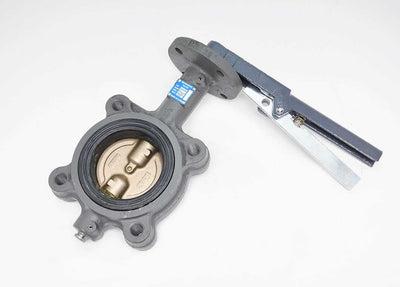
There are several basic designs for check valves, most commonly the swing check (a hinged disc that swings open with forward flow), the lift or piston check (a disc guided in a straight line off the seat), the ball check (a free-floating or spring-assisted ball), and the dual-plate check (two spring-loaded half-discs that pivot open from the center). They are all single-directional, meaning their job is to prevent water from flowing backwards through a line or system. Each type presents its own pros and cons, but they all perform the same job with fairly equal success (though manufacturers of one design or another may seek to prove otherwise).
In the end, however, a check valve's success depends on an action that is not too fast, but not too slow, either of which can lead to water hammering or backflow. As well, valve chatter is due to the common mistake of oversizing--just because a valve fits doesn't mean it is appropriate for the application. Finally, like most valves, a check valve's success depends on how well it seals. All of these things should be taken into consideration when choosing a check valve.
Conclusion
If you're looking for a check valve to use in a water-processing application, you've come to the right place. The valve engineers here at ValveMan are ready to help you!
And if you found this article informational and entertaining, and would like to read something similar, you may enjoy: