

How a Ball Valve Works (30-Second Refresher)
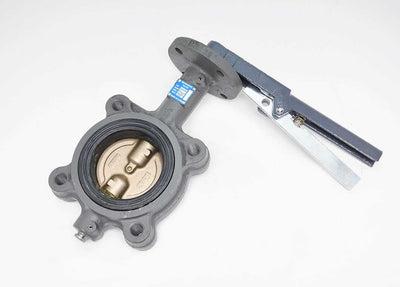
Every ball valve does the same basic thing. A drilled ball rotates 90 degrees between two seats: handle parallel to the pipe means open, perpendicular means closed. Three design variables drive every spec decision after that: the bore diameter, the drilling pattern in the ball, and the body construction. Add venting and actuation and you have five decisions that fully define the valve. Work through them in order and the spec writes itself.
Full Port vs Reduced Port: The Flow Numbers Nobody Publishes

A full port ball valve (full bore is the other correct name) has a bore that matches the pipe inner diameter, so media passes through with minimal pressure drop. A reduced port ball valve (also known as a standard port valve) typically steps the bore down one pipe size. A 3/4-inch reduced port valve carries roughly a 1/2-inch bore.
That step-down has a price. At the same pressure drop, a 3/4-bore reduced port cuts flow capacity roughly 30 percent versus full port, and a 1/2-bore cuts it roughly 50 percent. On a 1-inch line, a valve passes half the flow a full port unit would at the same ΔP. If your pump was sized against the full-port assumption, the missing capacity comes back as extra head, and extra head means a bigger pump or a slower process.
Full port is mandatory anywhere the line gets pigged, since a pig will jam in a reduced bore. Slurries and tight pressure-drop budgets push the same way. For plain on/off isolation on water, air, or gas, buy the reduced port valve. It's lighter and cheaper, and the few psi you give up cost nothing in a line that runs fully open or fully shut. We've compared the two porting styles in more depth in our guide to full port versus standard porting.
Not sure the reduced bore will hold your flow numbers? Talk to a ValveMan engineer — 888-825-8800. Real engineers, not a call center.
L-Port vs T-Port: 3-Way Flow Patterns and the Actuation Trap

An L-port ball valve diverts. It connects the common port to one of two outlets, and a 90-degree turn switches destinations. Put the common port on the bottom leg and one valve feeds Tank A or Tank B with a quarter turn. A T-port ball valve can connect all three ports at once, which allows mixing two streams, splitting one stream, or running straight through while a branch stays live.
Watch for the trap that catches people at the actuation stage, though: a T-port often needs a 180-degree actuator to reach all three flow patterns. Bolt on a standard 90-degree actuator and you've locked the valve to two of its three paths. Spec the rotation range and the actuator together.
And here's one more design-review item that almost nobody publishes. As any 3-way ball rotates, the drilling sweeps past ports it will connect only momentarily, so for a few degrees of travel both outlets can see each other. If Tank A holds caustic and Tank B holds acid, those few degrees matter. Keep chemically incompatible media off the same 3-way valve, or isolate each branch separately. And if you need bubble-tight shutoff of all three ports, use an L-port or add a dedicated isolation valve, because the T drilling works against you there.
2-Piece vs 3-Piece Body Construction
A 2-piece ball valve joins two body sections around the ball. It generally costs less and has fewer leak paths. And when the seats wear out, the valve comes off the line for service. A 3-piece ball valve bolts a center section between two end caps. The end caps stay welded or threaded to the pipe while the center body unbolts and swings out, so seats and seals get replaced in-line without touching the pipework.
Weld-in installs tip the scale hard. Pull the center section before you strike an arc and the weld heat never reaches the seats. Expect to pay roughly 20 to 40 percent more upfront for 3-piece construction. And in high-cycle or frequently serviced systems, that premium pays back the first time a seat change happens without cutting pipe. Our position after 60+ years of watching maintenance budgets: welded ends plus any planned seat service means 3-piece, full stop. Our breakdown of 1, 2, and 3-piece body styles walks through the construction differences in detail.
Weighing the 2-piece savings against in-line serviceability? Call 888-825-8800 and we'll help you run the payback for your cycle count.
Vented Ball Valves: Cavity Relief and Why Direction Matters

Close a standard ball valve and you trap a slug of media in the body cavity around the ball. Warm that trapped volume and it expands with nowhere to go. You get distorted seats at best and a failed body at worst. A vented ball valve solves this with a hole drilled in the ball that relieves cavity pressure to the upstream side whenever the valve sits closed. Steam, cryogenic, chlorine, and hydrogen peroxide services all demand it, and the cryogenic standard BS 6364 (along with Shell MESC) requires automatic cavity overpressure relief, typically a pressure-equalizing hole of at least 3 mm.
The vent hole makes the valve unidirectional. Install it with the vent relieving upstream, per the flow arrow on the body, or the relief works against you and the protection is gone. We cover the failure mode and orientation in our post on the purpose of a vented ball valve, and you can review our vented ball valves to see how manufacturers mark them.
Actuated Ball Valves: Pneumatic vs Electric
The first question for any actuated ball valve is what happens when power or air disappears. A spring-return pneumatic actuator drives the valve to a defined safe position on air or signal loss. A double-acting pneumatic unit is smaller and cheaper for the same torque, but stops wherever it was. Electric actuators suit sites without compressed air and run on common voltages of 120VAC, 24VDC, and 12VDC; getting fail-safe behavior from one requires a battery backup.
Remember to size the actuator against breakaway torque with margin because breakaway rises with pressure differential and seat material. Breakaway always exceeds running torque, too. And carry the T-port lesson forward: 3-way actuation packages go wrong on rotation range more than anything else. If you're new to electric packages, start with our beginner's guide to electrically actuated ball valves.
Building an actuated package and want the torque and fail position checked before you buy? Call 888-825-8800 — you'll reach real engineers in Exton, PA, not a call center.
Worked Example: Specifying a Valve From Scratch

Take a 1-inch 316SS steam-cleaning line with welded pipe, simple on/off isolation, seats serviced annually, and a requirement to fail closed on plant-air loss. The five decisions resolve in order. Routing is one inlet to one outlet, so a standard 2-way valve wins; an L-port would apply only if the line alternated destinations. The steam pressure-drop budget is tight, so full port avoids the 30 to 50 percent capacity penalty a reduced bore imposes. Welded ends plus annual seat service dictate 3-piece, and the center section comes out before welding to protect the seats. Condensate trapped in a closed cavity expands on reheat, so the ball gets a vent, installed with the vent facing upstream. Fail-closed on air loss means a spring-return pneumatic actuator sized with margin over steam-service breakaway torque.
The finished PO line reads: 1-inch 3-piece full port 2-way ball valve, 316SS body, vented ball (unidirectional), socket-weld ends, spring-return pneumatic actuator, and fail closed.
Getting the Spec Right the First Time
Run every ball valve requirement through the same five gates: flow routing, port size, body construction, cavity venting, and actuation. Miss one, and the valve either overperforms your budget or underperforms your process. You can browse industrial ball valves across all of these configurations, and if a requirement doesn't map cleanly, run it past the ValveMan team in Exton, PA.
Talk to a Real Engineer Before You Cut the PO

Bring us the service conditions — media, pressure, temperature, end connections, fail position — and we'll match the valve to the job. Call 888-825-8800 Mon–Fri 8:30 AM–6:00 PM to reach real engineers in Exton, PA, or contact the ValveMan team online. We've been matching valves to service conditions since 1965.