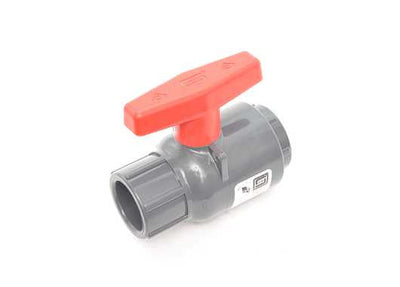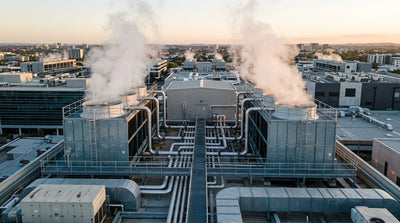


Oxygen may seem safe because it is colorless, tasteless, and odorless, but in the wrong conditions, it can become one of the most hazardous industrial gases in use today. Oxygen supports and accelerates combustion, so when gaseous oxygen comes into contact with incompatible materials, even small ignition sources can trigger violent combustion or catastrophic failure.
That’s why selecting the correct materials for oxygen service valves is not simply a matter of performance or cost but a critical safety decision rooted in chemistry, thermodynamics, and materials science.
This article examines how gaseous oxygen is used, why its unique reactivity requires heavy emphasis on material compatibility, and what materials are typically used.
Uses of Gaseous Oxygen
Gaseous oxygen uses can be divided into two basic categories: life support/healthcare and industrial processes. In healthcare, it is used in oxygen therapy, hyperbaric therapy, surgery, trauma care, and life support systems for aircraft and spacecraft. In industrial processes, it is extensively used in steel manufacturing, chemical processing, rocket propellant production, environmental and waste management, fertilizers, and pharmaceuticals.
Oxygen and Its Dangers

Even though oxygen doesn’t burn (it’s non-flammable), materials that burn in air are going to burn at an accelerated rate when mixed with oxygen. Many organic and inorganic materials can react with gaseous oxygen (GOX) under certain pressure and temperature conditions, potentially leading to fire or explosion. Because of these inherent hazards, selecting oxygen‑compatible valves and soft goods is critical. Because of these inherent hazards, selecting oxygen-compatible valves is critical.
For an oxygen fire to occur, three elements must be present: an ignition source, oxygen, and fuel. The primary danger associated with gaseous oxygen service valves is ignition caused by abnormal localized high temperatures, often resulting from:
- High flow velocity interacting with valve trim
- Foreign particle impingement (e.g., weld spatter)
- Ignition from nearby burning components
- Vibration causing friction heating
- Static electricity discharge
- Adiabatic (rapid) gas compression
This reinforces the seriousness of choosing the right oxygen valve materials.
Organic Materials for Oxygen Service Valves
The main dangers associated with organic materials in oxygen service include adiabatic compression, vibration, friction, and mechanical impact. Lubricants are strongly discouraged, especially petroleum-based products.
To reduce risk, organic materials should be shielded by metals acting as heat sinks, kept out of direct flow paths, and prevented from excessive movement.
Common oxygen-safe polymers include PTFE, TFM, FKM, and glass-filled PTFE.
PTFE (Polytetrafluoroethylene)
PTFE (Teflon®) is chemically inert, self-lubricating, and highly resistant to ignition, making it a standard choice for oxygen service valve seats, seals, and packing.
Glass-Filled PTFE
Glass-filled PTFE improves wear resistance and dimensional stability while maintaining excellent oxygen compatibility.
TFM (Modified PTFE)
TFM is a denser, less porous PTFE variant offering superior cold-flow resistance and ignition safety.
FKM (Fluorocarbon Rubber)
FKM (e.g., Viton®) provides good oxidation resistance and elasticity, making it suitable for many gaseous oxygen applications when properly cleaned and used within tested pressure and temperature limits. It is generally not used in liquid oxygen service unless specifically qualified by testing.
Metals for Oxygen Service Valves
Here are some details about the most commonly used metals for oxygen service valves.
Most compatible / lowest burn-propagation: Copper and copper alloys, nickel alloys – difficult to ignite and, once ignited, tend not to propagate combustion; widely used for high‑pressure/velocity GOX service in trims and piping.
Moderately compatible: Austenitic stainless steels (e.g., 304, 316) – acceptable for many gaseous oxygen systems at controlled pressure, temperature, and velocity; can burn and propagate at higher pressures or under particle impact, so velocity and impingement limits must be observed.”
Conditionally compatible: Carbon steels – suitable at lower pressures/temperatures and moderate velocities but more prone to ignition and burn propagation than copper or stainless at high pressures or under particle impact.
Metals such as magnesium, titanium, and many aluminum alloys are relatively easy to ignite. They should generally be avoided in high‑pressure oxygen service unless they have been specifically tested and qualified for the intended conditions.
Related Standards
Standards and guidelines such as ASTM G94, CGA G‑4.4, and EIGA Doc 13 provide guidance on evaluating metals and nonmetals for oxygen service, including velocity limits, impact tests, and material selection criteria for valves and piping.
Conclusion
Material compatibility is the foundation of safe oxygen system design. The right valve construction can prevent failures before they occur. Contact ValveMan for expert assistance. Call or text 888-825-8800.