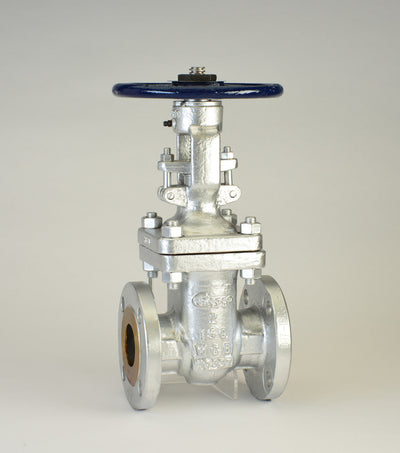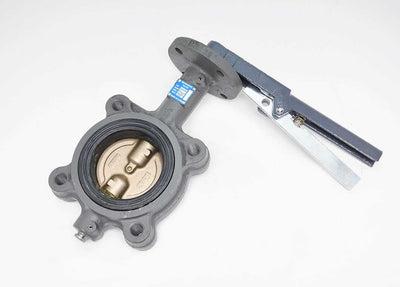


STAMPED helps you make sure you’re considering the right parameters when selecting a valve. From choosing the right size to ensuring your delivery arrives on time, STAMPED is a great guide that works equally well for both new and experienced engineers. In this article, we review the STAMPED method and look at an example of its use.
What is the STAMPED Method for Valve Selection?
- S – Size: Match connection size and verify capacity with flow coefficient (Cv).
- T – Temperature: Assess media/ambient temps for material & seal ratings.
- A – Application: Select valve style based on isolation or regulation needs.
- M – Media: Ensure chemical compatibility between fluid and valve body/seals.
- P – Pressure: Check normal pressure, pressure spikes, and pressure class.
- E – Ends: Choose fitting types (NPT, Flanged, Welded) for leak-tight fit.
- D – Delivery: Confirm supplier lead times meet project turnaround dates.
S: Size
The valve connection size should match the piping system unless hydraulic calculations indicate otherwise. The physical dimensions aren’t all you need to consider, however.
Cv is the flow coefficient: the volume of water in gpm that will flow through the valve with a 1 psi pressure drop across the valve with the water at a temperature of about 60°F. You should verify the flow capacity by using the valve's Cv rather than relying just on the pipe diameter. The Cv value is pretty easy to calculate for incompressible fluids like water, but much more challenging for compressible fluids like natural gas. The good news is that there are Cv calculators that can account for both, and ValveMan has just such a Cv calculator.
The valve should then be sized to minimize pressure losses, maintain adequate flow, and avoid excessive fluid velocity (this can increase turbulence, noise, erosion, and heat generation). If the valve internal flow path is too small, it restricts flow; if it's too large, it can lead to wasted money. For example, ball valves typically have higher Cvs than needle valves because it is more difficult for media to pass through a needle valve, even though both valves may have the same connection size.

T: Temperature
You have to account for two distinct variables here: the process media temperature and the ambient temperature outside the pipe. Extreme heat or extreme cold can change material strength, compromise elastomer seals, and cause components to expand and contract. In addition, a valve rated to 600 psi at room temperature may not still be rated to 600 psi at 400°F. Temperature ratings are usually based on pressure-temperature charts provided by valve manufacturers.
The chart below shows the allowable pressure versus operating temperature for a 2-1/2" Bonomi 8P0130 as provided in its specification sheet. Note how the allowable pressure begins to drop after 176°F.

A: Application
Your system's core function (application) dictates the valve style. Here’s a short guideline to help guide you:
- On/Off Isolation: If you need to start or stop flow quickly, start looking at ball or butterfly valves.
- Throttling/Regulation: Globe, needle, and V-port valves are built to modulate flow levels.
- Backflow Prevention: Check valves are the standard here.
- Overpressure Protection: Relief valves are your insurance policy against system failure.
M: Media or Material
This focuses on the compatibility between the system fluid (media) and internal components (bodies, stems, seats, and seals). Proper material selection prevents issues like corrosion, embrittlement, or stress corrosion cracking. And keep in mind that failure to account for these factors can lead to expensive production issues and, even worse, safety risks.
The valve and its accessories must also be compatible with where it will be used. This can include whether it will be used outdoors, or perhaps in a harsh operating environment such as salt-water exposure, direct sunlight, or extreme temperature fluctuations.
P: Pressure
Pressure includes the normal working pressure and the maximum design pressure of the system. Components must be rated to safely contain the system's pressure, especially during potential spikes. This also includes pressure differentials (ΔP): the higher the pressure change, the more wear is experienced by the internal valve components. And don’t forget that temperature changes can impact the pressure differential.
A pressure class is a standardized designation system (like Class 150 or Class 600) that defines the maximum allowable pressure a pipe, valve, or fitting can withstand safely at a specific operating temperature. These classes are governed by ASME/ANSI standards (such as ASME B16.5).
Because these classes are directly related to temperature and the material being used, the actual safe working pressure changes as conditions heat up or cool down. To ensure safety, engineers must consult official temperature charts to match the correct components to their system's requirements.
E: Ends (or End Connections)

Ends refer to the type of fittings needed to connect the valve to the system. Examples include integral tube fittings, pipe threads, flanges, and welded ends, and they must be selected considering the system's ability to maintain leak-tight performance and simplify installation and maintenance (when possible).
D: Delivery
The best valve in the world is useless if it arrives three weeks after your scheduled turnaround. Vetting suppliers for reliable lead times, stocking programs, and custom tagging is critical. If you are racing against a tight deadline, suppliers like ValveMan are specifically structured for rapid fulfillment and technical troubleshooting
STAMPED Example

Let’s look at an example of using STAMPED to specify an automated valve for a high-pressure industrial washdown system, an on/off isolation valve at a food plant. The media is hot water containing 3% caustic cleaner (sodium hydroxide, SG=1.0), with a target flow rate of 35 GPM. Inlet pressure is 400 psi, and the outlet pressure should be around 395 psi with a spike pressure estimated at 600 psi. Note that the fluid temperature is 180°F. Finally, 5 units are needed on-site within 2 weeks for a scheduled maintenance shutdown.
1. Size
You need to match the physical plumbing and ensure the valve can handle the required volume without creating a massive pressure drop. Here’s what we know:
- Pipe Size / Connection: 1-inch NPT (National Pipe Thread) female connections to match the existing piping.
- Flow Rate Required: 35 gallons per minute (GPM).
- Flow Coefficient (Cv): As shown below, you calculate a Cv of around 16 to keep the pressure drop across the valve under 5 PSI. A ball valve is recommended.
Choosing a valve with a Cv lower than the required minimum creates excessive pressure drop and restricts flow. Oversizing, on the other hand, can reduce control accuracy in throttling applications. However, for on/off applications, it's common to select a standard full-port ball valve with a higher Cv. Narrow your search to 1” Full Port Ball Valves. This maximizes flow and easily delivers a high Cv (often ranging from 30 to 60+ for a 1-inch size), which will drop your pressure loss even further below 5 PSI.

2. Temperature
Both the fluid temperature and the ambient environment temperature affect the valve's seals and body material.
- Media Temperature: The system runs hot water at 180°F for sanitization.
- Ambient Temperature: A typical factory floor environment ranges from 50°F to 100°F.
- Impact:
- Seat Material: You will need PTFE (Teflon) or RPTFE (Reinforced PTFE) because of the caustic nature of the media.
- Stem/O-ring Seals: See above.
- Body Material: Stainless steel lasts longer, handles thermal cycling better, and is the industry standard for sanitization environments.
- Application
- Valve Type & Function: On/Off isolation valve (not used for throttling).
- Actuation: Needs to be automated. An electric or pneumatic actuator is required so the control room can remotely control it.
- Environment: The outside of the valve will be sprayed with harsh cleaning chemicals during plant washdowns. The actuator enclosure must be NEMA 4X / IP66 (waterproof and corrosion-resistant).
4. Media
What is flowing through the valve dictates chemical compatibility.
- Fluid: Water mixed with a 3% concentration of a caustic cleaning agent (Sodium Hydroxide).
- Impact: Carbon steel will rust, and brass can suffer dezincification and attack under caustic conditions. Brass is generally not recommended for prolonged service in hot caustic solutions. The valve body and ball must be made of 316 Stainless Steel, as concluded earlier.

5. Pressure
With a working pressure of 400 PSI and a 600 PSI spike potential from closing water hammer, the entire valve assembly must be explicitly rated for at least 600 PSI at the 180°F operating temperature.
6. End Connections
For a 1-inch line at 400 PSI, standard threaded female NPT connections are perfectly acceptable, leak-tight, and simplify the physical layout.
7. Delivery (and Special Requirements)
Logistically, we have a firm 2-week window to get 5 completed assemblies on-site. The valve must also comply with basic food safety proximity standards (such as FDA or 3-A guidelines) alongside standard ASME pressure construction ratings.
The Final Specification Sheet
By running through STAMPED, your final request to a valve manufacturer looks professional and precise:
Wanted: (5) 1" Full-Port 316 Stainless Steel Ball Valves with female NPT ends. Must feature PTFE/RPTFE seals, a minimum Cv of 16, and be rated for 600 PSI at 180°F. Automation requires a 120VAC electric actuator housed in a NEMA 4X enclosure. Delivery required within 14 days.
And here are a few potential valve solutions from ValveMan:
- 1" AVCO 500 Industrial Ball Valve, 3 Piece, 316 Stainless Steel Body, Full Port, NPT with Locking Handle- No Mount Pad
- 1" AVCO 500 Industrial Ball Valve, 3 Piece, 316 Stainless Steel Body, Full Port, NPT with Direct Mount Pad and Locking Handle

Conclusion
Don’t just keep using the kind of valve you’ve always used. When a valve fails prematurely, try using the STAMPED checklist to make sure you’re using the right type. And don’t forget that the experts at ValveMan are just a message or phone call away. We’d be more than happy to help you with the STAMPED process for your valve.
STAMPED Methodology Frequently Asked Questions
What does the STAMPED acronym stand for in valve selection?
STAMPED is an engineering acronym that stands for Size, Temperature, Application, Media, Pressure, Ends, and Delivery. It serves as a standardized checklist to evaluate all critical operating and procurement parameters before purchasing a valve.
How does operating temperature affect a valve’s pressure rating?
A valve’s allowable pressure decreases as operating temperature increases. Extreme heat can weaken body materials, expand components, and degrade elastomer seals. Engineers must consult manufacturer pressure-temperature charts (governed by standards like ASME B16.5) to ensure the valve handles peak pressure at the system's actual operating temperature.
Why should I use the flow coefficient Cv instead of pipe diameter to size a valve?
Sizing a valve solely by pipe connection diameter can lead to flow restriction or excessive pressure drop. The flow coefficient Cv measures the volume of water (in GPM) that flows through a valve with a 1 PSI pressure drop. Verifying Cv ensures the valve accommodates the required volume, minimizes pressure losses, and prevents fluid velocity issues like noise and erosion.
What is the difference between valve selection for isolation vs. regulation applications?
System application dictates the valve design:
- On/Off Isolation: Fast-acting valves like ball or butterfly valves are ideal for starting or stopping flow quickly.
- Throttling/Regulation: Globe, needle, and V-port valves are specially built to modulate and control flow levels continuously.
Why is the "D" (Delivery) step in STAMPED essential for engineering projects?
Even a correctly specified valve is useless if long lead times cause project delays or operational downtime. Vetting suppliers for stocking programs, rapid fulfillment, and reliable delivery dates ensures critical components arrive on-site in time for scheduled plant turnarounds or maintenance windows.