
 888-825-8800


Manual ball valves are among the most commonly used flow-control valves worldwide, valued for their simplicity, durability, and reliable shutoff. From residential plumbing to oil industries, chemical processing, manufacturing, and HVAC, they provide dependable manual control over fluid and gas flow.
What Are Manual Ball Valves?
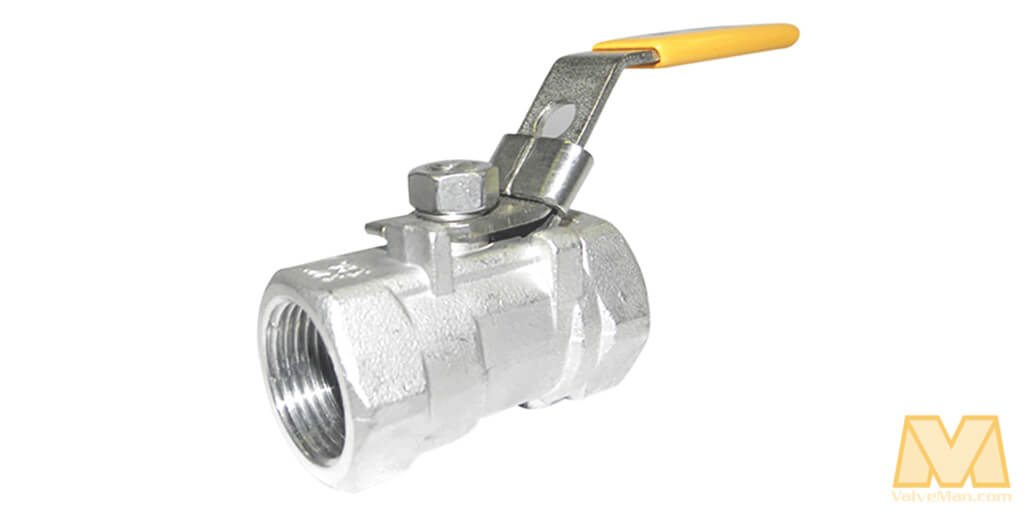
Manual Ball Valves are mechanical flow-control devices operated by hand to start, stop, or regulate fluid movement through a process. Known for durability and quick shutoff, they include manual 2 way ball valves as the most common type, along with 3-way, multi-port, full-port, and reduced-port configurations used across residential, commercial, and industrial applications.
How Does a Manual Ball Valve Work?
A manual ball valve uses a rotating ball with a drilled hole to control fluid flow. When the handle turns 90 degrees, the ball either aligns with the pipeline to allow flow or rotates perpendicular to block it.
The handle position provides a clear indication of whether the valve is open or closed. Manual ball valves also come in full-port and reduced-port designs, where full-port valves allow maximum flow with minimal restriction, while reduced-port valves slightly narrow the flow path for standard applications.
Common Applications of 2 Way Manual Ball Valves
- Residential Plumbing
- HVAC Systems
- Oil & Gas Industry
- Chemical Processing
- Water & Wastewater Treatment
- Food & Beverage Production
- Manufacturing & Industrial Plants
Available Sizes
Our valves are available in a wide range of sizes to fit specific requirements, ensuring proper compatibility and optimal performance. We offer the following manual ball valve sizes in our 2-way category:
These sizes cover the majority of typical flow control needs, with ½ inch, ¾ inch, and 1 inch being the most widely used size in everyday plumbing and general-purpose applications.
Commonly Used Connection Standards
Available Body Materials
It’s important to choose the right body material based on your application, operating pressures, and the type of media being handled because the weight of manual ball valves will vary based on the material. Valveman offers a wide range of manual ball valve body materials to ensure optimal performance across different environments:
- Carbon Steel
- Brass
- Lead-Free Brass
- Bronze
- Lead-Free Bronze
- PVC
- CPVC
- Polypropylene
- 304 Stainless Steel
- 316 Stainless Steel
- 316L Stainless Steel
- 316 Stainless Steel (CF8M Cast)
- CF8M Stainless Steel
What Are the Advantages of Manual Ball Valves?
Manual ball valves offer numerous advantages that make them an excellent choice for industries worldwide. Some of the key benefits include:
- Reliable Shutoff: Provides tight sealing with minimal leakage, especially when paired with NPT threaded connections that create a secure, leak-resistant fit for safe and controlled operation.
- Simple Operation: Quarter-turn handle allows quick and easy manual control without additional tools.
- Durable Construction: Built with strong body materials that withstand high pressure and temperature variations, this type of valve delivers long-lasting reliability in demanding applications.
- Low Maintenance: Fewer moving parts reduce wear, leading to long service life and minimal upkeep.
- Versatile Application: Suitable for water, oil, chemicals, and industrial fluids, this valve type adapts to countless systems, including those using standard NPT piping connections.
- Cost-Effective: Offers dependable performance at an affordable price, making it a practical choice for many industries.
- Clear Open/Close Indication: The handle position clearly shows whether the valve is open or closed, which is helpful for all connection types, including NPT threaded connections.
- Smooth Flow Control: Full-bore and reduced-bore options minimize flow resistance and maintain performance
How to Choose a Manual Ball Valve: What To Look For
Before you order your valves, make sure you know which one to choose based on the following use cases:
1. Media Type (What’s Flowing Through the Valve?)
- Choose media type compatible with your use case.
- Examples:
- Stainless Steel: Corrosive chemicals, high-pressure fluids.
- PVC/CPVC: Light-duty fluid systems and mild chemicals.
2. Valve Body Material
- Match the valve body material to your operating environment and durability needs.
- Examples:
- Carbon Steel: High-pressure industrial applications.
- Polypropylene: Low-pressure corrosive chemicals.
3. Pipe Size & Flow Requirements
- L-Port for diverting flow
- T-Port for mixing or multi-line routing
4. Connection Type
- Select the end connection type that fits your installation.
- Examples:
- NPT Threaded: Standard plumbing and most general applications.
- Flanged: Larger pipelines needing frequent disassembly.
- Welded (Socket/Butt Weld): High-pressure or high-temperature service.
- PVC Solvent-Weld: Irrigation or low-pressure machinery.
5. Pressure Rating
- Confirm the valve can handle your operating pressure.
- Example: 500 WOG = rated for 500 PSI in water, oil, and gas applications.
6. Temperature Rating
- Ensure the valve’s material and seats can withstand your temperature range.
- Example: PTFE-seated stainless steel valves handle higher temperatures safely.
7. Handle & Operation Style
- Choose standard or locking handles depending on safety needs.
- Locking handles prevent accidental opening or closing.
8. Installation Environment
- Consider exposure to weather, chemicals, or outdoor conditions.
- Example: Stainless steel is ideal outdoors; brass suits indoor liquid flow.
Frequently Asked Questions
Are manual ball valves different from 2-way ball valves?
Yes. A manual ball valve refers to the type of operation while a 2-way ball valve refers to the type of flow path with one inlet and one outlet. Most manual valves are the 2-way type, and many are available with NPT threaded ends for standard installations.
Can manual ball valves handle high pressure?
Yes, many manual ball valves are designed to carry high fluid pressure depending on their material, type, and size. NPT threaded valves are commonly used in high-pressure lines because the taper creates a strong, leak-resistant seal. Always verify the PSI or WOG rating for your specific valve type.
Do manual ball valves require maintenance?
These valves require very little maintenance because they have few moving parts and are equipped for long-term reliability. Basic checks for seal wear, debris, and smooth handle operation help keep the valve performing well.
How long do manual ball valves last?
A high-quality manual ball valve can last many years, even decades—especially when made from corrosion-resistant materials like 316 stainless steel. NPT threaded connections also support long service life due to their secure seal.
Are manual ball valves leak-proof?
Manual ball valves are designed to provide a tight shutoff when fully open or closed. With proper installation, high-quality valves offer excellent leak prevention specially with npt threaded connections.
What is the difference between manual and actuated valves?
Manual valves use a handle for direct control, while actuated valves use electric, pneumatic, or hydraulic power depending on the automation type required. Manual valves with NPT ends are common in simple, hands-on systems, whereas actuated valves are used when remote or repetitive operation is needed.
You can shop from variety of manual ball valves available at ValveMan.
Manual Ball Valves - Related Articles
Gas Ball Valves In Industrial Applications - 5 Things to Keep in Mind
How To Correctly Use A 3 Way Valve In Different Applications
Industrial Ball Valves - 9 Questions To Make The Right Choice
Using an Actuated Ball Valve Or a Solenoid Valve For Best Fluid Control In The System
What is the Purpose of a Vented Ball Valve?
How Does A Floating Piston Valve Work?
Selecting the Best Apollo Ball Valve for Natural Gas Use
Difference Between a Vented Ball Valve and a Standard Ball Valve
Why Choose a Bonomi Ball Valve?
Choosing the Perfect Apollo 3 Way Valve
Why Choose a Namur Solenoid Valve for a Pneumatic Actuator
Difference Between a 1, 2, and 3 Piece Valve
What is the Difference Between Full Port and Standard Porting?
Our Posts
View All
Data Cooling Centers and Sanitary Valves
Overheated data centers pose a massive challenge, and the global data center cooling market is growi …
Read More
Valve Materials for Gaseous Oxygen Service
Oxygen may seem safe because it is colorless, tasteless, and odorless, but in the wrong conditions, …
Read More
Pneumatic Actuators Valve Types
Have you ever stopped to think about what makes an automated assembly line push, pull, lift, and rot …
Read More
-320°F Liquid Nitrogen Cryogenic Control Valve Setup
Need a valve that can handle -320°F liquid nitrogen without freezing up — and still control flow? He …
Read More
Why Fall is the Perfect Time for Valve Maintenance (And What Happens If You Wait)
We're well into fall now, which means it's time for that conversation nobody wants to have: winter p …
Read More
From the DMZ to Bonomi: Rick Wentzel’s Valve Legacy
In the inaugural episode of the Fully Open podcast, host Gil Welsford sits down with Rick Wentzel of …
Read More
Check Valve vs Backflow Preventer Comparison | ValveMan
If you need to make sure that fluid in your pipe system flows in one direction only, and prevent rev …
Read More
Different Types of Gas Shut Off Valves | ValveMan
Whether you're upgrading your residential gas system, looking for the best gas shut off valve for yo …
Read More
Globe Valve vs Ball Valve Comparison Guide | ValveMan
Valves are widely used in industrial and manufacturing facilities, but they’re also used in utilitie …
Read More
NEMA Ratings Explained | ValveMan
Have you ever wondered what that little NEMA number on your electric actuator meant? Or perhaps, you …
Read More
Gate Valve vs Ball Valve Comparison Guide | ValveMan
Valves are widely used in industrial and manufacturing facilities, but they’re also used in utilitie …
Read More
Valve Inspection - Main Points of Valve Inspection and Testing in Manufacturing Settings
Industrial facilities rely on different types of valves (such as gate valves, check valves and ball …
Read More
Can Ball Valves Be Used For Flow Control?
Ball valves are widely used in plumbing and piping systems, in fact, they are one of the most common …
Read More
Introducing Bonomi Valves
The Bonomi Group is a leader in industrial sectors including oil and gas, hydraulics, heating and en …
Read More
Understanding Valve Actuators: Manual, Electric, Pneumatic and Hydraulic
Are you a beginner new to the valve world, ready to learn more about the various types of valve actu …
Read More
3 Check Valve Mistakes to Avoid
So, you’re looking for a check valve, but you’re not sure if there’s any pitfalls to look out for? O …
Read More
Types of Valves in Plumbing
Have you ever wondered what goes into managing the flow of water in your home, or through a building …
Read More
Introducing Apollo Valves
Apollo Valves® inventory includes a wide range of valve products supplied to diverse markets. These …
Read More
Types of Water Valves
We all know that valves play a crucial role in regulating the flow of liquids and gasses in a broad …
Read More
Understanding Valve Sizes and Measurement
Sizing the appropriate valve is critical to ensuring the performance of your system. Whether you'r …
Read More